By emensah m
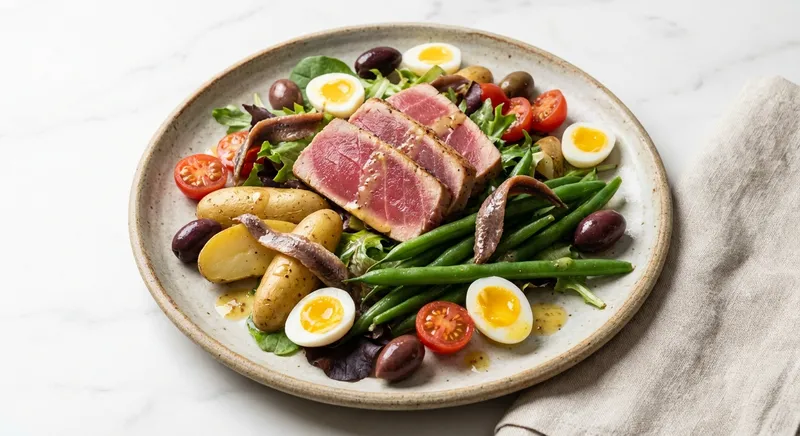
A bright, restaurant-quality Niçoise-style salad that celebrates firm, olive-oil–packed tuna, tender halved new potatoes, crisp blanched green beans and briny olives — all tied together with a punchy Dijon-lemon vinaigrette. Textural contrast (creamy tuna, tender potatoes, crisp greens) and bold savory notes (Dijon, olive oil, lemon, olives) make this an elegant, satisfying main course that’s quick enough for weeknights and special enough for guests.
If your potatoes and green beans aren't already cooked: simmer small new potatoes in salted water until just tender (12–15 minutes depending on size), then drain and halve; blanch green beans in boiling salted water for 2–3 minutes until bright green and still crisp, then shock immediately in an ice bath to stop cooking and preserve color and snap. Why: Cooking the potatoes through gives a creamy interior; blanching and shocking the beans preserves color, crunch and nutrients so they won't go mushy in the salad.
Warm the potatoes (optional): If you like a slightly warm salad, dry a large skillet over medium heat, add 1 tsp of reserved tuna oil or olive oil and toss the halved potatoes for 2–3 minutes until they get a light golden edge. Season with a pinch of salt. Why: Lightly warming and browning the potatoes adds caramelized flavor and contrast to the cool greens and tuna; if you prefer a fully chilled salad, skip this step.
Make the dressing: In a small jar or bowl whisk together the Dijon mustard and lemon juice to emulsify, then slowly whisk in the 3 tbsp olive oil (this can include the reserved tuna oil) until the dressing is glossy and slightly thickened. Season to taste with 1/4–1/2 tsp kosher salt and a few grinds of black pepper. Why: Whisking mustard with acid first helps the mustard act as an emulsifier, so the oil and lemon suspension binds and clings to vegetables instead of pooling on the plate.
Flake the tuna: Open and drain the tuna cans thoroughly, reserving about 1 tbsp of the oil if you'd like to use it in the dressing for extra savory depth. Gently flake the tuna with a fork into large, bite-sized chunks — avoid overworking so it remains meaty. Why: Large flakes keep the fish texturally interesting and prevent it from turning into a paste; reserved tuna oil adds umami and echo of flavor that ties the dish together.
Assemble the salad on a large platter or two plates: Start with the mixed greens as a bed, arrange halved potatoes, blanched green beans, halved cherry tomatoes and olives in separate small clusters for the classic Niçoise look. Nestle big flakes of tuna among the vegetables. Why: Arranging components separately lets each diner see and taste each element; it also creates a visually attractive, bistro-style presentation.
Dress and finish: Spoon the Dijon–lemon vinaigrette lightly over the potatoes and greens (you don’t need to saturate the tuna — a light drizzle is enough). Finish with a good crack of black pepper and another small pinch of flaky sea salt over the potatoes and tuna. Why: Dressing potatoes first helps them absorb flavor; finishing with flaky salt enhances texture and the perception of savory balance.
Serve: Offer extra lemon wedges and more olive oil at the table. If serving family-style, leave a small bowl of dressing so guests can add more. Why: Fresh lemon brightens the whole plate and allows each guest to tune acidity; extra oil/seasoning lets people adjust richness and saltiness to taste.
701
Calories
48g
Protein
47g
Carbs
37g
Fat
8g
Fiber
How did this recipe turn out? Let others know!
to rate this recipe
A bright, restaurant-quality Niçoise-style salad that celebrates firm, olive-oil–packed tuna, tender halved new potatoes, crisp blanched green beans and briny olives — all tied together with a punchy Dijon-lemon vinaigrette. Textural contrast (creamy tuna, tender potatoes, crisp greens) and bold savory notes (Dijon, olive oil, lemon, olives) make this an elegant, satisfying main course that’s quick enough for weeknights and special enough for guests.
If your potatoes and green beans aren't already cooked: simmer small new potatoes in salted water until just tender (12–15 minutes depending on size), then drain and halve; blanch green beans in boiling salted water for 2–3 minutes until bright green and still crisp, then shock immediately in an ice bath to stop cooking and preserve color and snap. Why: Cooking the potatoes through gives a creamy interior; blanching and shocking the beans preserves color, crunch and nutrients so they won't go mushy in the salad.
Warm the potatoes (optional): If you like a slightly warm salad, dry a large skillet over medium heat, add 1 tsp of reserved tuna oil or olive oil and toss the halved potatoes for 2–3 minutes until they get a light golden edge. Season with a pinch of salt. Why: Lightly warming and browning the potatoes adds caramelized flavor and contrast to the cool greens and tuna; if you prefer a fully chilled salad, skip this step.
Make the dressing: In a small jar or bowl whisk together the Dijon mustard and lemon juice to emulsify, then slowly whisk in the 3 tbsp olive oil (this can include the reserved tuna oil) until the dressing is glossy and slightly thickened. Season to taste with 1/4–1/2 tsp kosher salt and a few grinds of black pepper. Why: Whisking mustard with acid first helps the mustard act as an emulsifier, so the oil and lemon suspension binds and clings to vegetables instead of pooling on the plate.
Flake the tuna: Open and drain the tuna cans thoroughly, reserving about 1 tbsp of the oil if you'd like to use it in the dressing for extra savory depth. Gently flake the tuna with a fork into large, bite-sized chunks — avoid overworking so it remains meaty. Why: Large flakes keep the fish texturally interesting and prevent it from turning into a paste; reserved tuna oil adds umami and echo of flavor that ties the dish together.
Assemble the salad on a large platter or two plates: Start with the mixed greens as a bed, arrange halved potatoes, blanched green beans, halved cherry tomatoes and olives in separate small clusters for the classic Niçoise look. Nestle big flakes of tuna among the vegetables. Why: Arranging components separately lets each diner see and taste each element; it also creates a visually attractive, bistro-style presentation.
Dress and finish: Spoon the Dijon–lemon vinaigrette lightly over the potatoes and greens (you don’t need to saturate the tuna — a light drizzle is enough). Finish with a good crack of black pepper and another small pinch of flaky sea salt over the potatoes and tuna. Why: Dressing potatoes first helps them absorb flavor; finishing with flaky salt enhances texture and the perception of savory balance.
Serve: Offer extra lemon wedges and more olive oil at the table. If serving family-style, leave a small bowl of dressing so guests can add more. Why: Fresh lemon brightens the whole plate and allows each guest to tune acidity; extra oil/seasoning lets people adjust richness and saltiness to taste.
701
Calories
48g
Protein
47g
Carbs
37g
Fat
8g
Fiber
Your Rating:
