By Kathryn Scott
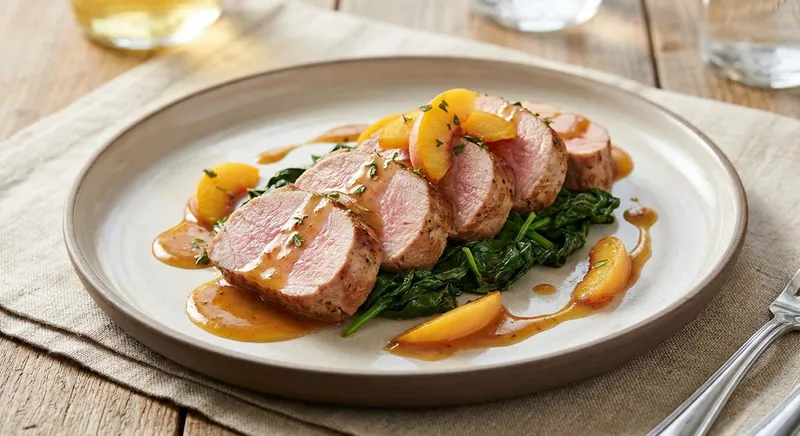
Tender, juicy pork medallions get a glossy, tangy-sweet lift from a Dijon-peach reduction—bright, silky, and just a touch of herb. Served on a bed of garlicky wilted spinach, this dish balances savory pork crust, fruity acidity, and a buttery sauce for an elegant weeknight or dinner-party main.
Bring the pork to room temperature: remove the pork medallions from the refrigerator 20–30 minutes before cooking and pat them dry with paper towels. Warming the meat and drying the surface ensures even cooking and promotes a better sear—moisture on the surface steams instead of browns.
Season the pork: sprinkle both sides of each 170 g medallion generously with salt and a few grinds of black pepper. Press the seasoning gently into the meat so it adheres. Salt at this stage helps the meat retain juices and enhances flavor during searing.
Prep the produce: thinly slice the peaches (or pears) into roughly 3–4 mm slices so they break down evenly during the quick reduction. Mince the shallot and garlic, and strip thyme leaves off stems. Uniform cuts help the fruit release sugars quickly and create a smooth sauce.
Start the spinach: in a large sauté pan over medium heat add 1 tablespoon olive oil. When the oil shimmers, add the minced garlic and a pinch of salt; cook 20–30 seconds until fragrant (don’t let it brown). Add the spinach in batches, tossing with tongs until just wilted—about 1–2 minutes per batch. Transfer wilted spinach to a warmed plate and keep covered. Quick, high-heat wilting preserves bright color and prevents sogginess.
Sear the pork: heat a heavy skillet (cast-iron preferred) over medium-high heat until hot. Add 3 tablespoons olive oil and swirl to coat. Add pork medallions spaced so they don’t touch; sear without moving 2–3 minutes until a deep golden-brown crust forms. Flip and cook another 2–3 minutes. Why this works: a hot pan and minimal movement allow the Maillard reaction to create flavor and color.
Check doneness and rest: transfer medallions to a plate and tent loosely with foil. Pork tenderloin is best at 60–62°C (140–144°F) for slightly pink, juicy meat. If your medallions aren’t at temperature, reduce heat to medium and cook another minute per side in the pan. Resting for 5 minutes lets juices redistribute so they don’t run out when you slice.
Make the Dijon-peach reduction: reduce heat to medium. In the same skillet with the fond (browned bits), add the minced shallot and sauté 1–2 minutes until softened—this picks up flavor from the pan. Add sliced peaches and sauté 2 minutes to release juices. Stir in Dijon mustard and fresh thyme; let the mustard bloom in the warm pan for 20–30 seconds to deepen its tang.
Deglaze and reduce: pour in the low-sodium chicken stock, scraping the pan with a wooden spoon to lift the browned bits (those are concentrated flavor). Bring to a simmer and reduce by about half—roughly 4–6 minutes—until slightly syrupy. Reducing concentrates the fruit’s natural sugars and blends them with the savory pan flavors.
Finish the sauce: remove from heat and swirl in the tablespoon of cold butter to emulsify and give the sauce a glossy, silky mouthfeel. Taste and adjust seasoning with salt and pepper. If the sauce is too tart, a tiny pinch of sugar or drizzle of honey (optional) will balance it.
Rewarm spinach if needed: quickly reheat the plated spinach in the skillet for 20–30 seconds with a splash of the pan sauce or a drop of olive oil to refresh its warmth and flavor. This integrates the components and ensures everything is served just-warm.
Plate and serve: arrange a bed of wilted spinach on each plate, place two pork medallions per serving (or one large), and spoon the Dijon-peach reduction over the pork and around the spinach. Garnish with a few fresh thyme leaves and a grind of black pepper. Serve immediately so the sauce remains glossy and the pork warm.
444
Calories
41g
Protein
11g
Carbs
27g
Fat
3g
Fiber
How did this recipe turn out? Let others know!
to rate this recipe
By Kathryn Scott
Tender, juicy pork medallions get a glossy, tangy-sweet lift from a Dijon-peach reduction—bright, silky, and just a touch of herb. Served on a bed of garlicky wilted spinach, this dish balances savory pork crust, fruity acidity, and a buttery sauce for an elegant weeknight or dinner-party main.
Bring the pork to room temperature: remove the pork medallions from the refrigerator 20–30 minutes before cooking and pat them dry with paper towels. Warming the meat and drying the surface ensures even cooking and promotes a better sear—moisture on the surface steams instead of browns.
Season the pork: sprinkle both sides of each 170 g medallion generously with salt and a few grinds of black pepper. Press the seasoning gently into the meat so it adheres. Salt at this stage helps the meat retain juices and enhances flavor during searing.
Prep the produce: thinly slice the peaches (or pears) into roughly 3–4 mm slices so they break down evenly during the quick reduction. Mince the shallot and garlic, and strip thyme leaves off stems. Uniform cuts help the fruit release sugars quickly and create a smooth sauce.
Start the spinach: in a large sauté pan over medium heat add 1 tablespoon olive oil. When the oil shimmers, add the minced garlic and a pinch of salt; cook 20–30 seconds until fragrant (don’t let it brown). Add the spinach in batches, tossing with tongs until just wilted—about 1–2 minutes per batch. Transfer wilted spinach to a warmed plate and keep covered. Quick, high-heat wilting preserves bright color and prevents sogginess.
Sear the pork: heat a heavy skillet (cast-iron preferred) over medium-high heat until hot. Add 3 tablespoons olive oil and swirl to coat. Add pork medallions spaced so they don’t touch; sear without moving 2–3 minutes until a deep golden-brown crust forms. Flip and cook another 2–3 minutes. Why this works: a hot pan and minimal movement allow the Maillard reaction to create flavor and color.
Check doneness and rest: transfer medallions to a plate and tent loosely with foil. Pork tenderloin is best at 60–62°C (140–144°F) for slightly pink, juicy meat. If your medallions aren’t at temperature, reduce heat to medium and cook another minute per side in the pan. Resting for 5 minutes lets juices redistribute so they don’t run out when you slice.
Make the Dijon-peach reduction: reduce heat to medium. In the same skillet with the fond (browned bits), add the minced shallot and sauté 1–2 minutes until softened—this picks up flavor from the pan. Add sliced peaches and sauté 2 minutes to release juices. Stir in Dijon mustard and fresh thyme; let the mustard bloom in the warm pan for 20–30 seconds to deepen its tang.
Deglaze and reduce: pour in the low-sodium chicken stock, scraping the pan with a wooden spoon to lift the browned bits (those are concentrated flavor). Bring to a simmer and reduce by about half—roughly 4–6 minutes—until slightly syrupy. Reducing concentrates the fruit’s natural sugars and blends them with the savory pan flavors.
Finish the sauce: remove from heat and swirl in the tablespoon of cold butter to emulsify and give the sauce a glossy, silky mouthfeel. Taste and adjust seasoning with salt and pepper. If the sauce is too tart, a tiny pinch of sugar or drizzle of honey (optional) will balance it.
Rewarm spinach if needed: quickly reheat the plated spinach in the skillet for 20–30 seconds with a splash of the pan sauce or a drop of olive oil to refresh its warmth and flavor. This integrates the components and ensures everything is served just-warm.
Plate and serve: arrange a bed of wilted spinach on each plate, place two pork medallions per serving (or one large), and spoon the Dijon-peach reduction over the pork and around the spinach. Garnish with a few fresh thyme leaves and a grind of black pepper. Serve immediately so the sauce remains glossy and the pork warm.
444
Calories
41g
Protein
11g
Carbs
27g
Fat
3g
Fiber
Your Rating:
