By emensah m
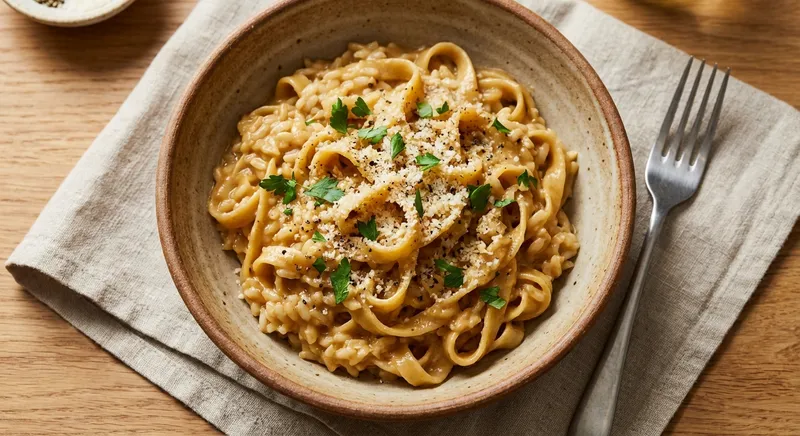
An inventive Italian-inspired dish that transforms arborio rice into a silky, pasta-like experience: nutty toasted rice grains fold into a luxuriously creamy rice purée and brown-butter emulsion. The result has the comforting chew of al dente pasta with the glossy, rich mouthfeel of a cream sauce—pure comfort, made with pantry basics.
Bring water to a simmer in a kettle or saucepan so it’s hot but not boiling. Keeping the cooking liquid hot shortens the time between additions and helps the rice release starch evenly—this is the foundation of a creamy texture.
Warm a wide, heavy-bottomed sauté pan or shallow pot over medium heat and add 1 tablespoon olive oil and 1 tablespoon butter. Add the finely diced onion and 1/4 teaspoon of the salt. Cook, stirring occasionally, until the onion is translucent and just starting to color (about 4–5 minutes). Cooking the onion slowly builds a sweet savory base without burning—onion flavor becomes a backbone for the sauce.
Add the minced garlic and sauté 30–45 seconds until fragrant. Garlic browns quickly; you only want to bloom its aromatics into the fat so it complements the rice without turning bitter.
Add the arborio rice to the pan and stir to coat every grain with the butter and oil. Toast the rice, stirring, for 1–2 minutes until the edges become translucent and the center looks a little opaque. Toasting (tostatura) seals the surface and starts the release of flavor while ensuring the grains will remain plump and toothsome.
Add 1 cup (240 ml) of the hot water and immediately lower heat to medium-low. Stir gently and continuously until most of the liquid is absorbed (2–3 minutes). The initial addition wakes the starch and begins the creamy emulsion — frequent stirring encourages the grains to release surface starch.
Continue adding the hot water, 1 cup at a time, stirring frequently and waiting until the rice has almost absorbed the liquid before the next addition. After about 18–22 minutes the rice should be tender with a slight chew (al dente) and the pan will look glossy. Cooking arborio this way releases starch and yields a natural creaminess; patience and stirring are what make this silkier than a simple boiled rice.
When the rice is cooked through but still a touch firm at the center, spoon out about 1 cup of the rice (with its cooking liquid) into a blender or use an immersion blender in a tall container. Purée until totally smooth — this rice purée will act like a thick cream or liaison and coat the remaining rice like a sauce. Puréeing some of the cooked rice leverages its starch to create a true creamy, clingy emulsion without adding dairy.
Return the purée to the pan with the remaining rice, add the remaining 2 tablespoons butter, the remaining 1 tablespoon olive oil, lemon juice, the pinch of nutmeg, and the 1/4 teaspoon kosher salt (taste and adjust). Stir vigorously off the heat for 1 minute to emulsify — the agitation and fat will bind to the starch of the purée to make a velvet sauce that clings to each grain.
If using Parmesan, add it now and stir until melted and integrated; taste and adjust seasoning with salt and pepper. Cheese adds umami and silkiness—if you skip it, boost with an extra tablespoon of butter or a splash of olive oil for richness.
Serve hot, spooning the creamy rice onto warm plates. Finish with a grinding of black pepper and an optional shaving of extra butter or Parmigiano. Because there’s no pasta, treat each grain like a strand—serve immediately: as the dish cools the emulsion tightens and becomes less glossy.
450
Calories
6g
Protein
64g
Carbs
19g
Fat
1.5g
Fiber
How did this recipe turn out? Let others know!
to rate this recipe
By emensah m
An inventive Italian-inspired dish that transforms arborio rice into a silky, pasta-like experience: nutty toasted rice grains fold into a luxuriously creamy rice purée and brown-butter emulsion. The result has the comforting chew of al dente pasta with the glossy, rich mouthfeel of a cream sauce—pure comfort, made with pantry basics.
Bring water to a simmer in a kettle or saucepan so it’s hot but not boiling. Keeping the cooking liquid hot shortens the time between additions and helps the rice release starch evenly—this is the foundation of a creamy texture.
Warm a wide, heavy-bottomed sauté pan or shallow pot over medium heat and add 1 tablespoon olive oil and 1 tablespoon butter. Add the finely diced onion and 1/4 teaspoon of the salt. Cook, stirring occasionally, until the onion is translucent and just starting to color (about 4–5 minutes). Cooking the onion slowly builds a sweet savory base without burning—onion flavor becomes a backbone for the sauce.
Add the minced garlic and sauté 30–45 seconds until fragrant. Garlic browns quickly; you only want to bloom its aromatics into the fat so it complements the rice without turning bitter.
Add the arborio rice to the pan and stir to coat every grain with the butter and oil. Toast the rice, stirring, for 1–2 minutes until the edges become translucent and the center looks a little opaque. Toasting (tostatura) seals the surface and starts the release of flavor while ensuring the grains will remain plump and toothsome.
Add 1 cup (240 ml) of the hot water and immediately lower heat to medium-low. Stir gently and continuously until most of the liquid is absorbed (2–3 minutes). The initial addition wakes the starch and begins the creamy emulsion — frequent stirring encourages the grains to release surface starch.
Continue adding the hot water, 1 cup at a time, stirring frequently and waiting until the rice has almost absorbed the liquid before the next addition. After about 18–22 minutes the rice should be tender with a slight chew (al dente) and the pan will look glossy. Cooking arborio this way releases starch and yields a natural creaminess; patience and stirring are what make this silkier than a simple boiled rice.
When the rice is cooked through but still a touch firm at the center, spoon out about 1 cup of the rice (with its cooking liquid) into a blender or use an immersion blender in a tall container. Purée until totally smooth — this rice purée will act like a thick cream or liaison and coat the remaining rice like a sauce. Puréeing some of the cooked rice leverages its starch to create a true creamy, clingy emulsion without adding dairy.
Return the purée to the pan with the remaining rice, add the remaining 2 tablespoons butter, the remaining 1 tablespoon olive oil, lemon juice, the pinch of nutmeg, and the 1/4 teaspoon kosher salt (taste and adjust). Stir vigorously off the heat for 1 minute to emulsify — the agitation and fat will bind to the starch of the purée to make a velvet sauce that clings to each grain.
If using Parmesan, add it now and stir until melted and integrated; taste and adjust seasoning with salt and pepper. Cheese adds umami and silkiness—if you skip it, boost with an extra tablespoon of butter or a splash of olive oil for richness.
Serve hot, spooning the creamy rice onto warm plates. Finish with a grinding of black pepper and an optional shaving of extra butter or Parmigiano. Because there’s no pasta, treat each grain like a strand—serve immediately: as the dish cools the emulsion tightens and becomes less glossy.
450
Calories
6g
Protein
64g
Carbs
19g
Fat
1.5g
Fiber
Your Rating:
