By Johnny Beth
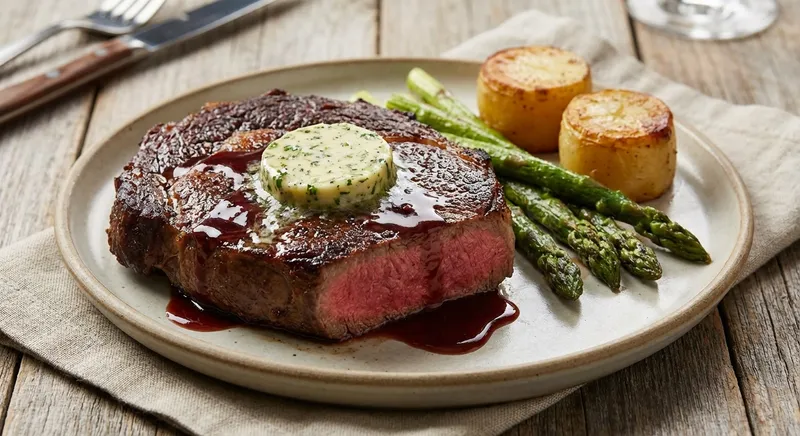
A restaurant-quality steak: richly marbled ribeye is seared to a caramelized crust, then finished with a glossy red wine–shallot reduction and a spoonful of warm herb‑garlic butter. The contrast of the deeply browned exterior, silky savory sauce and melting herb butter creates layers of flavor and a luxurious mouthfeel that make this a special weeknight centerpiece or dinner-party showstopper.
Bring the steaks to room temperature (about 30–45 minutes out of the fridge). Pat them very dry with paper towels and season generously on both sides with kosher salt and freshly ground black pepper. WHY: Allowing the steaks to warm prevents a cold center that lengthens cooking time; drying them and salting early helps develop a better sear and more even seasoning.
Make the herb-garlic butter: in a small bowl combine 2 tablespoons softened unsalted butter, half the crushed garlic (2 cloves, minced finely), and half the chopped parsley. Season lightly with a pinch of salt and set in the fridge. WHY: Preparing this ahead lets the flavors meld and gives you a cold compound butter that will melt into the steak at the finish for a glossy, flavored finish.
Heat a heavy skillet (cast-iron preferred) over medium-high heat until smoking lightly. Add 2 tablespoons olive oil and swirl to coat. WHY: A very hot pan is essential to trigger the Maillard reaction and form the brown crust that carries most of the steak’s flavor; cast iron holds heat well and gives a more consistent sear.
Place the steaks in the skillet, pressing down briefly to ensure contact. Sear without moving for 3–4 minutes to form an even brown crust, then flip and sear the other side 3–4 minutes for medium-rare (internal temp ~125–128°F / 52–53°C). For thicker steaks or desired doneness, sear then transfer to a 400°F (200°C) oven for a few minutes. WHY: Searing undisturbed encourages an even crust; use an instant-read thermometer to remove steaks slightly below target temps because carryover heat will raise it while resting.
During the last 60–90 seconds of cooking, add 3 tablespoons unsalted butter, the remaining crushed garlic, and the thyme and rosemary sprigs to the pan. Tilt the pan and spoon (baste) the melted butter over the steaks repeatedly for 30–60 seconds. WHY: Basting with hot butter infuses the steak with fragrant, nutty browned butter and herbs and helps finish the top surface evenly while building flavor.
Transfer the steaks to a warm plate and loosely tent with foil to rest for 5–7 minutes. WHY: Resting lets muscle fibers relax and reabsorb juices so they don’t run out when you slice the meat; it also allows internal temperature to rise a few degrees for ideal doneness.
Make the red wine–shallot reduction in the same skillet while the steaks rest: pour off any excess fat but keep a thin coating and all browned fond (those brown bits stuck to the pan) — that’s flavor. If there is more than 2 tablespoons fat, discard some, leaving about 1 tablespoon. WHY: The fond dissolved into the sauce is the concentrated flavor base; leaving a little fat carries flavor and helps the sauce finish silky.
Over medium heat add the minced shallot to the pan and sweat for 60–90 seconds until soft and fragrant (don’t let it burn). Deglaze with the red wine, scraping the fond with a wooden spoon, and bring to a simmer. WHY: Sweating breaks down raw harshness in the shallot and deglazing lifts the concentrated browned flavors into the liquid for a cohesive sauce.
Lower the heat and add the beef stock. Simmer gently until the liquid reduces by about half and coats the back of a spoon (about 6–8 minutes). Taste and season with salt and pepper. WHY: Reduction concentrates flavor and gives the sauce body; finishing it to coat the spoon indicates the right viscosity so it will cling to the steak.
Finish the sauce by whisking in the remaining 1 tablespoon cold unsalted butter and the chopped parsley off the heat to emulsify and give the sauce a glossy sheen. WHY: Adding cold butter and whisking emulsifies and slightly thickens the sauce while mellowing acidity, producing a smooth, restaurant-style finish.
Slice the rested steaks against the grain into 1/2-inch slices and fan on warmed plates. Spoon a little of the red wine–shallot reduction on each steak and place a dollop (about 1/2 tablespoon) of the herb-garlic butter on top so it melts. Finish with a pinch of flaky sea salt and a grind of pepper. WHY: Slicing against the grain shortens muscle fibers for tenderness; the warm sauce and melting butter elevate mouthfeel and flavor immediately before serving.
Serve immediately with sides of your choice (roasted potatoes, steamed green beans, or a simple arugula salad). WHY: Steak tastes best hot and freshly sauced; lighter sides keep the plate balanced and let the steak shine.
870
Calories
45g
Protein
4g
Carbs
72g
Fat
1g
Fiber
How did this recipe turn out? Let others know!
to rate this recipe
By Johnny Beth
A restaurant-quality steak: richly marbled ribeye is seared to a caramelized crust, then finished with a glossy red wine–shallot reduction and a spoonful of warm herb‑garlic butter. The contrast of the deeply browned exterior, silky savory sauce and melting herb butter creates layers of flavor and a luxurious mouthfeel that make this a special weeknight centerpiece or dinner-party showstopper.
Bring the steaks to room temperature (about 30–45 minutes out of the fridge). Pat them very dry with paper towels and season generously on both sides with kosher salt and freshly ground black pepper. WHY: Allowing the steaks to warm prevents a cold center that lengthens cooking time; drying them and salting early helps develop a better sear and more even seasoning.
Make the herb-garlic butter: in a small bowl combine 2 tablespoons softened unsalted butter, half the crushed garlic (2 cloves, minced finely), and half the chopped parsley. Season lightly with a pinch of salt and set in the fridge. WHY: Preparing this ahead lets the flavors meld and gives you a cold compound butter that will melt into the steak at the finish for a glossy, flavored finish.
Heat a heavy skillet (cast-iron preferred) over medium-high heat until smoking lightly. Add 2 tablespoons olive oil and swirl to coat. WHY: A very hot pan is essential to trigger the Maillard reaction and form the brown crust that carries most of the steak’s flavor; cast iron holds heat well and gives a more consistent sear.
Place the steaks in the skillet, pressing down briefly to ensure contact. Sear without moving for 3–4 minutes to form an even brown crust, then flip and sear the other side 3–4 minutes for medium-rare (internal temp ~125–128°F / 52–53°C). For thicker steaks or desired doneness, sear then transfer to a 400°F (200°C) oven for a few minutes. WHY: Searing undisturbed encourages an even crust; use an instant-read thermometer to remove steaks slightly below target temps because carryover heat will raise it while resting.
During the last 60–90 seconds of cooking, add 3 tablespoons unsalted butter, the remaining crushed garlic, and the thyme and rosemary sprigs to the pan. Tilt the pan and spoon (baste) the melted butter over the steaks repeatedly for 30–60 seconds. WHY: Basting with hot butter infuses the steak with fragrant, nutty browned butter and herbs and helps finish the top surface evenly while building flavor.
Transfer the steaks to a warm plate and loosely tent with foil to rest for 5–7 minutes. WHY: Resting lets muscle fibers relax and reabsorb juices so they don’t run out when you slice the meat; it also allows internal temperature to rise a few degrees for ideal doneness.
Make the red wine–shallot reduction in the same skillet while the steaks rest: pour off any excess fat but keep a thin coating and all browned fond (those brown bits stuck to the pan) — that’s flavor. If there is more than 2 tablespoons fat, discard some, leaving about 1 tablespoon. WHY: The fond dissolved into the sauce is the concentrated flavor base; leaving a little fat carries flavor and helps the sauce finish silky.
Over medium heat add the minced shallot to the pan and sweat for 60–90 seconds until soft and fragrant (don’t let it burn). Deglaze with the red wine, scraping the fond with a wooden spoon, and bring to a simmer. WHY: Sweating breaks down raw harshness in the shallot and deglazing lifts the concentrated browned flavors into the liquid for a cohesive sauce.
Lower the heat and add the beef stock. Simmer gently until the liquid reduces by about half and coats the back of a spoon (about 6–8 minutes). Taste and season with salt and pepper. WHY: Reduction concentrates flavor and gives the sauce body; finishing it to coat the spoon indicates the right viscosity so it will cling to the steak.
Finish the sauce by whisking in the remaining 1 tablespoon cold unsalted butter and the chopped parsley off the heat to emulsify and give the sauce a glossy sheen. WHY: Adding cold butter and whisking emulsifies and slightly thickens the sauce while mellowing acidity, producing a smooth, restaurant-style finish.
Slice the rested steaks against the grain into 1/2-inch slices and fan on warmed plates. Spoon a little of the red wine–shallot reduction on each steak and place a dollop (about 1/2 tablespoon) of the herb-garlic butter on top so it melts. Finish with a pinch of flaky sea salt and a grind of pepper. WHY: Slicing against the grain shortens muscle fibers for tenderness; the warm sauce and melting butter elevate mouthfeel and flavor immediately before serving.
Serve immediately with sides of your choice (roasted potatoes, steamed green beans, or a simple arugula salad). WHY: Steak tastes best hot and freshly sauced; lighter sides keep the plate balanced and let the steak shine.
870
Calories
45g
Protein
4g
Carbs
72g
Fat
1g
Fiber
Your Rating:
