By ashley cotton
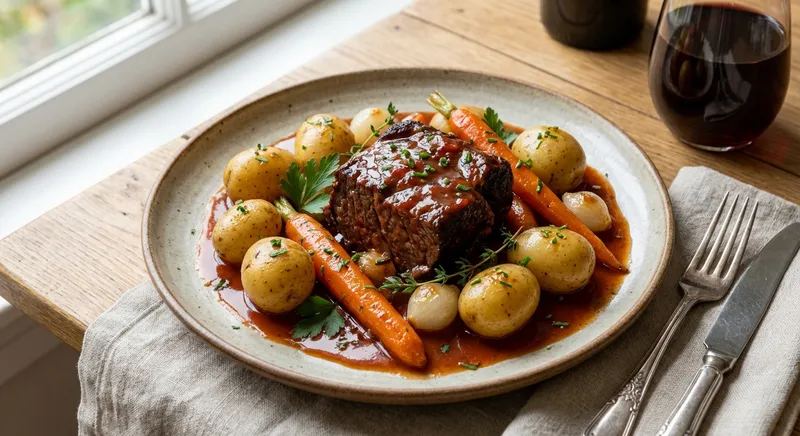
A deeply savory, restaurant-style braise where fork-tender beef meets sweet roasted carrots, silky potatoes and a bright tomato jus. Long, low cooking melts connective tissue into unctuous richness while fresh tomatoes and a splash of tomato paste cut the fat—resulting in a homey yet sophisticated dish that’s perfect for a special weeknight or dinner guests.
Trim any large exterior fat from the beef chuck and pat the meat dry with paper towels—drying ensures a better sear. Season generously with 1 1/2 teaspoons kosher salt and 3/4 teaspoon black pepper, then lightly dust all sides with 1 tablespoon of flour. The salt seasons the meat; the flour helps produce a deeper brown crust and will also help slightly thicken the braising liquid.
Heat a large Dutch oven over medium-high heat and add 2 tablespoons olive oil. When the oil shimmers (but before it smokes), add the beef and sear undisturbed for 3–4 minutes per side until a rich mahogany crust forms. Searing at high heat creates the Maillard reaction, building the savory base flavor that makes braises taste meaty and complex.
Remove the beef to a plate and lower the heat to medium. Add 1 tablespoon butter to the pot; when foaming subsides, add the sliced onion and a pinch of salt. Sweat the onion 6–8 minutes until translucent and lightly caramelized. Caramelizing releases natural sugars that round out the finished sauce.
Add the minced garlic and cook 30–45 seconds to bloom its aromatics—don’t let it brown. Stir in 1 tablespoon tomato paste and cook 1 minute to cook off the raw edge and deepen its flavor; this step adds umami and a concentrated tomato backbone to the jus.
If using red wine, raise the heat to medium-high and pour in 100 ml to deglaze the pan, scraping up the browned bits (fond) with a wooden spoon. Let it reduce by about half (2–3 minutes). Deglazing lifts concentrated flavor from the bottom of the pot into the sauce—this is flavor gold.
Roughly chop the 400 g ripe tomatoes and add them to the pot along with the beef stock (500 ml), 1 bay leaf and the thyme sprigs. Return the seared beef to the pot so it sits snugly in the liquid (liquid should come about halfway up the meat). The combination of stock and tomatoes provides both cooking liquid and acid to help break down connective tissue during the long braise.
Bring to a simmer on the stovetop, then cover and transfer to a 160°C/325°F oven (or reduce to low on the stovetop) and braise for 1 hour. Low-and-slow cooking converts collagen into gelatin—this is what yields tender, silky mouthfeel in the finished beef.
After 1 hour, add the carrots (300 g). Nestle the carrots around the beef, re-cover and continue braising for 30 more minutes. Adding the carrots later prevents them from turning to mush while still allowing them to soften and soak up braising flavors.
After that 30 minutes, add the potatoes (800 g) around the beef and braise uncovered for an additional 30–40 minutes, until the beef is fork-tender (an internal probe should slide in with almost no resistance) and the potatoes are tender when pierced. Uncovering concentrates the sauce and allows the potatoes to cook in the braising liquid for flavor.
Remove the pot from the oven. Transfer the beef to a cutting board and tent loosely with foil to rest 10–15 minutes—resting allows juices to redistribute. Skim any excess fat from the surface of the sauce with a spoon (or chill briefly and remove solidified fat), then return the pot to medium heat to reduce the braising liquid if it is very thin, 3–6 minutes.
If you prefer a silky sauce, remove and discard the bay leaf and thyme stems, then swirl in 1 tablespoon cold butter off the heat to enrich and slightly thicken the jus. Taste and adjust seasoning with the remaining 1/2 teaspoon kosher salt and black pepper as needed. Finishing with cold butter (monter au beurre) rounds flavors and gives the sauce a glossy sheen.
Slice the beef across the grain into 1–1.5 cm slices (or shred if it falls apart). Arrange slices over the potatoes and carrots and spoon generous amounts of tomato jus over the top. Sprinkle chopped parsley for brightness and serve immediately. Cutting across the grain shortens muscle fibers and makes the meat feel more tender in each bite.
944
Calories
72g
Protein
52g
Carbs
53g
Fat
8g
Fiber
How did this recipe turn out? Let others know!
to rate this recipe
By ashley cotton
A deeply savory, restaurant-style braise where fork-tender beef meets sweet roasted carrots, silky potatoes and a bright tomato jus. Long, low cooking melts connective tissue into unctuous richness while fresh tomatoes and a splash of tomato paste cut the fat—resulting in a homey yet sophisticated dish that’s perfect for a special weeknight or dinner guests.
Trim any large exterior fat from the beef chuck and pat the meat dry with paper towels—drying ensures a better sear. Season generously with 1 1/2 teaspoons kosher salt and 3/4 teaspoon black pepper, then lightly dust all sides with 1 tablespoon of flour. The salt seasons the meat; the flour helps produce a deeper brown crust and will also help slightly thicken the braising liquid.
Heat a large Dutch oven over medium-high heat and add 2 tablespoons olive oil. When the oil shimmers (but before it smokes), add the beef and sear undisturbed for 3–4 minutes per side until a rich mahogany crust forms. Searing at high heat creates the Maillard reaction, building the savory base flavor that makes braises taste meaty and complex.
Remove the beef to a plate and lower the heat to medium. Add 1 tablespoon butter to the pot; when foaming subsides, add the sliced onion and a pinch of salt. Sweat the onion 6–8 minutes until translucent and lightly caramelized. Caramelizing releases natural sugars that round out the finished sauce.
Add the minced garlic and cook 30–45 seconds to bloom its aromatics—don’t let it brown. Stir in 1 tablespoon tomato paste and cook 1 minute to cook off the raw edge and deepen its flavor; this step adds umami and a concentrated tomato backbone to the jus.
If using red wine, raise the heat to medium-high and pour in 100 ml to deglaze the pan, scraping up the browned bits (fond) with a wooden spoon. Let it reduce by about half (2–3 minutes). Deglazing lifts concentrated flavor from the bottom of the pot into the sauce—this is flavor gold.
Roughly chop the 400 g ripe tomatoes and add them to the pot along with the beef stock (500 ml), 1 bay leaf and the thyme sprigs. Return the seared beef to the pot so it sits snugly in the liquid (liquid should come about halfway up the meat). The combination of stock and tomatoes provides both cooking liquid and acid to help break down connective tissue during the long braise.
Bring to a simmer on the stovetop, then cover and transfer to a 160°C/325°F oven (or reduce to low on the stovetop) and braise for 1 hour. Low-and-slow cooking converts collagen into gelatin—this is what yields tender, silky mouthfeel in the finished beef.
After 1 hour, add the carrots (300 g). Nestle the carrots around the beef, re-cover and continue braising for 30 more minutes. Adding the carrots later prevents them from turning to mush while still allowing them to soften and soak up braising flavors.
After that 30 minutes, add the potatoes (800 g) around the beef and braise uncovered for an additional 30–40 minutes, until the beef is fork-tender (an internal probe should slide in with almost no resistance) and the potatoes are tender when pierced. Uncovering concentrates the sauce and allows the potatoes to cook in the braising liquid for flavor.
Remove the pot from the oven. Transfer the beef to a cutting board and tent loosely with foil to rest 10–15 minutes—resting allows juices to redistribute. Skim any excess fat from the surface of the sauce with a spoon (or chill briefly and remove solidified fat), then return the pot to medium heat to reduce the braising liquid if it is very thin, 3–6 minutes.
If you prefer a silky sauce, remove and discard the bay leaf and thyme stems, then swirl in 1 tablespoon cold butter off the heat to enrich and slightly thicken the jus. Taste and adjust seasoning with the remaining 1/2 teaspoon kosher salt and black pepper as needed. Finishing with cold butter (monter au beurre) rounds flavors and gives the sauce a glossy sheen.
Slice the beef across the grain into 1–1.5 cm slices (or shred if it falls apart). Arrange slices over the potatoes and carrots and spoon generous amounts of tomato jus over the top. Sprinkle chopped parsley for brightness and serve immediately. Cutting across the grain shortens muscle fibers and makes the meat feel more tender in each bite.
944
Calories
72g
Protein
52g
Carbs
53g
Fat
8g
Fiber
Your Rating:
