By Melissa Nevoraski
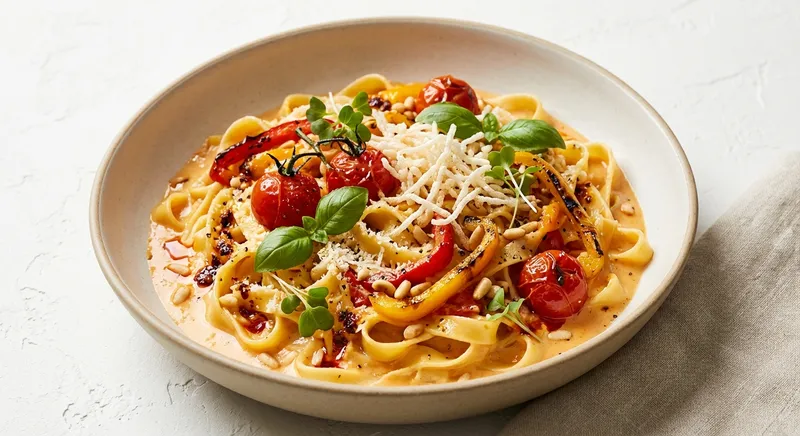
A silky, restaurant-quality creamy pasta where roasted red peppers and cooked rice are blended with milk to create a luxuriously smooth, cheese-free sauce. The peppers add sweet, smoky depth while the rice-milk emulsion gives body and silkiness that clings to ridged pasta — brightened with a butter finish and fresh herbs for balance.
Prep and roast the peppers: preheat the broiler (or a gas flame). Halve and seed the peppers and toss with 1 tbsp olive oil and a pinch of salt. Broil skin-side up on a foil-lined tray 8–12 minutes until the skin is deeply blistered and black in spots. Why: charring concentrates the pepper’s sweet flavors and adds smoky complexity — steaming and peeling after charring produces a smoother sauce without bitter burnt skin.
Steam, peel and cool the peppers: transfer the charred peppers to a bowl and cover with plastic wrap (or a bowl over the peppers) for 10 minutes. Peel away the loosened skin, discard seeds and tough membranes, and roughly chop. Why: steaming loosens the skin for easy removal; removing seeds and membranes keeps the sauce silky and free of bitterness.
Cook the rice: rinse the rice briefly until the water runs nearly clear. Combine rice with 1 cup (240 ml) water and 1/4 tsp salt in a small saucepan, bring to a simmer, cover, and cook 12–15 minutes until tender and the water is absorbed. Fluff and let cool for 5 minutes. Why: fully cooked rice releases starch when blended, which is the key thickening agent — you need it tender so the sauce becomes completely smooth.
Blend the sauce base: in a blender or high-speed food processor combine the roasted peppers, cooked rice, 2 cups (480 ml) whole milk, smoked paprika, 1 tsp salt, and 1/4 tsp black pepper. Blend on high until completely smooth and velvety (30–60 seconds). Why: blending rice + milk + peppers creates a creamy, emulsified base without needing cream or cheese; the rice starch thickens and stabilizes the sauce so it clings to pasta.
Cook the pasta and reserve pasta water: bring a large pot of water to a rolling boil, salt it generously (approx 1 tbsp per 4–5 liters), and cook the pasta until 1–2 minutes shy of al dente according to package directions. Reserve 1 cup (240 ml) pasta cooking water, then drain. Why: salting seasons the pasta from the inside; cooking slightly under al dente allows it to finish in the sauce without becoming mushy. Reserved pasta water contains starch that helps bind and loosen the sauce.
Sweat the aromatics: while pasta cooks, heat 1 tbsp olive oil and 2 tbsp butter in a wide sauté pan over medium heat. Add the chopped onion and a pinch of salt and sweat 6–8 minutes until very soft and translucent (don’t brown). Add minced garlic and crushed red pepper (if using) and cook 30–45 seconds until fragrant. Why: gently sweating builds a sweet, mellow background flavor; avoid browning to keep the sauce bright and smooth rather than caramelized.
Combine sauce and aromatics: pour the blended pepper–rice–milk mixture into the sauté pan with the softened onion and bring to a gentle simmer over medium-low heat, whisking constantly. Simmer 6–8 minutes until the sauce thickens to a loose cream that coats the back of a spoon. If it becomes too thick, whisk in reserved pasta water 1–2 tbsp at a time to reach desired consistency. Why: simmering evaporates excess water to concentrate flavor and activates rice starches to create a silky mouthfeel; adding pasta water adjusts viscosity and helps the sauce bind to the pasta.
Finish the sauce and toss with pasta: add the cooked pasta directly to the pan and toss vigorously for 1–2 minutes over low heat, adding up to 1/3 cup reserved pasta water to loosen if needed. Stir in remaining 1 tbsp butter to finish and gloss the sauce; check seasoning and add additional salt and pepper to taste. Why: tossing allows the pasta to absorb flavor and the sauce to cling to each piece; the finishing butter enriches and creates a silky sheen.
Plate and garnish: divide among 4 warmed bowls, sprinkle with chopped basil or parsley, a crack of black pepper, and a light drizzle of olive oil. Serve immediately. Why: serving warm keeps the sauce at its best texture; fresh herbs provide brightness to balance the creamy, sweet pepper sauce.
Storage and reheating: cool leftovers quickly, store in an airtight container in the fridge up to 3 days. Reheat gently over low heat with a splash of milk or pasta water, stirring until warmed through. Why: rice-thickened sauces can tighten when cold; a little liquid and low heat restore creaminess without breaking the emulsion.
625
Calories
18g
Protein
97g
Carbs
18g
Fat
5g
Fiber
How did this recipe turn out? Let others know!
to rate this recipe
By Melissa Nevoraski
A silky, restaurant-quality creamy pasta where roasted red peppers and cooked rice are blended with milk to create a luxuriously smooth, cheese-free sauce. The peppers add sweet, smoky depth while the rice-milk emulsion gives body and silkiness that clings to ridged pasta — brightened with a butter finish and fresh herbs for balance.
Prep and roast the peppers: preheat the broiler (or a gas flame). Halve and seed the peppers and toss with 1 tbsp olive oil and a pinch of salt. Broil skin-side up on a foil-lined tray 8–12 minutes until the skin is deeply blistered and black in spots. Why: charring concentrates the pepper’s sweet flavors and adds smoky complexity — steaming and peeling after charring produces a smoother sauce without bitter burnt skin.
Steam, peel and cool the peppers: transfer the charred peppers to a bowl and cover with plastic wrap (or a bowl over the peppers) for 10 minutes. Peel away the loosened skin, discard seeds and tough membranes, and roughly chop. Why: steaming loosens the skin for easy removal; removing seeds and membranes keeps the sauce silky and free of bitterness.
Cook the rice: rinse the rice briefly until the water runs nearly clear. Combine rice with 1 cup (240 ml) water and 1/4 tsp salt in a small saucepan, bring to a simmer, cover, and cook 12–15 minutes until tender and the water is absorbed. Fluff and let cool for 5 minutes. Why: fully cooked rice releases starch when blended, which is the key thickening agent — you need it tender so the sauce becomes completely smooth.
Blend the sauce base: in a blender or high-speed food processor combine the roasted peppers, cooked rice, 2 cups (480 ml) whole milk, smoked paprika, 1 tsp salt, and 1/4 tsp black pepper. Blend on high until completely smooth and velvety (30–60 seconds). Why: blending rice + milk + peppers creates a creamy, emulsified base without needing cream or cheese; the rice starch thickens and stabilizes the sauce so it clings to pasta.
Cook the pasta and reserve pasta water: bring a large pot of water to a rolling boil, salt it generously (approx 1 tbsp per 4–5 liters), and cook the pasta until 1–2 minutes shy of al dente according to package directions. Reserve 1 cup (240 ml) pasta cooking water, then drain. Why: salting seasons the pasta from the inside; cooking slightly under al dente allows it to finish in the sauce without becoming mushy. Reserved pasta water contains starch that helps bind and loosen the sauce.
Sweat the aromatics: while pasta cooks, heat 1 tbsp olive oil and 2 tbsp butter in a wide sauté pan over medium heat. Add the chopped onion and a pinch of salt and sweat 6–8 minutes until very soft and translucent (don’t brown). Add minced garlic and crushed red pepper (if using) and cook 30–45 seconds until fragrant. Why: gently sweating builds a sweet, mellow background flavor; avoid browning to keep the sauce bright and smooth rather than caramelized.
Combine sauce and aromatics: pour the blended pepper–rice–milk mixture into the sauté pan with the softened onion and bring to a gentle simmer over medium-low heat, whisking constantly. Simmer 6–8 minutes until the sauce thickens to a loose cream that coats the back of a spoon. If it becomes too thick, whisk in reserved pasta water 1–2 tbsp at a time to reach desired consistency. Why: simmering evaporates excess water to concentrate flavor and activates rice starches to create a silky mouthfeel; adding pasta water adjusts viscosity and helps the sauce bind to the pasta.
Finish the sauce and toss with pasta: add the cooked pasta directly to the pan and toss vigorously for 1–2 minutes over low heat, adding up to 1/3 cup reserved pasta water to loosen if needed. Stir in remaining 1 tbsp butter to finish and gloss the sauce; check seasoning and add additional salt and pepper to taste. Why: tossing allows the pasta to absorb flavor and the sauce to cling to each piece; the finishing butter enriches and creates a silky sheen.
Plate and garnish: divide among 4 warmed bowls, sprinkle with chopped basil or parsley, a crack of black pepper, and a light drizzle of olive oil. Serve immediately. Why: serving warm keeps the sauce at its best texture; fresh herbs provide brightness to balance the creamy, sweet pepper sauce.
Storage and reheating: cool leftovers quickly, store in an airtight container in the fridge up to 3 days. Reheat gently over low heat with a splash of milk or pasta water, stirring until warmed through. Why: rice-thickened sauces can tighten when cold; a little liquid and low heat restore creaminess without breaking the emulsion.
625
Calories
18g
Protein
97g
Carbs
18g
Fat
5g
Fiber
Your Rating:
