By Jasmine Cueva
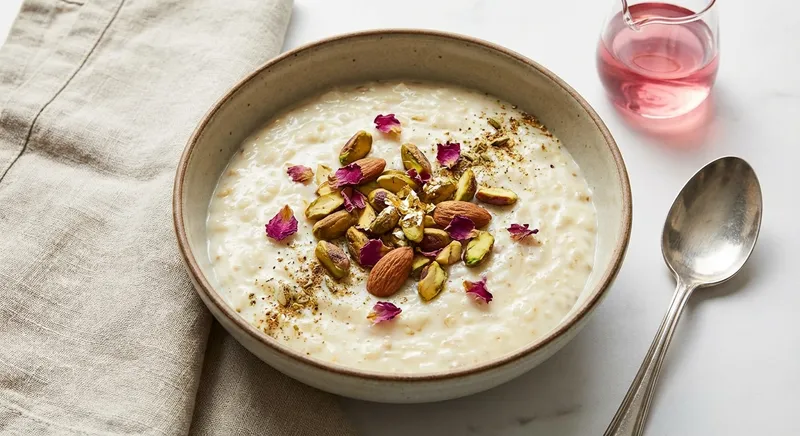
A lusciously creamy rice pudding scented with warm cardamom and vanilla — silky on the tongue with tender rice grains and a glossy, spoon-coating finish. Slow-simmering the rice in whole milk concentrates the dairy sweetness and creates a rich texture that feels indulgent yet simple; a sprinkle of toasted nuts or citrus zest adds a restaurant-style finish.
Rinse the rice: Place the rice in a fine-mesh sieve and rinse under cold running water until the water runs mostly clear (about 30–60 seconds). This removes excess surface starch so the finished pudding’s grains remain separate and tender rather than gluey.
Par-cook the rice: In a medium saucepan, combine the rinsed rice with 1 cup of water and a pinch of salt. Bring to a gentle boil, reduce heat to low, cover, and simmer 6–8 minutes — just until most of the water is absorbed but the rice is still firmer than al dente. Par-cooking shortens the long milk-simmer time and helps achieve tender grains without overcooking or breaking them apart.
Warm the milk: Meanwhile, pour the 4 cups of whole milk into a separate heavy-bottomed pot (a heavy pot prevents hot spots and scorching). Warm the milk over medium-low heat until you see steam and small bubbles forming at the edges — do not boil. Warming the milk before adding rice keeps the temperature steady and prevents the rice from shocking and seizing.
Combine rice and milk: Transfer the par-cooked rice into the warm milk, stir gently to combine, and bring to a bare simmer over medium-low heat. A gentle simmer allows the rice to release its starch slowly, thickening the milk into a creamy sauce without curdling or sticking.
Simmer slowly and stir: Reduce heat to low so the mixture simmers gently (one or two small bubbles breaking the surface). Cook uncovered, stirring every 4–6 minutes and scraping the bottom with a wooden spoon to prevent sticking. Total simmer time will be about 25–30 minutes; you want the rice tender and the milk reduced to a creamy, spoon-coating consistency. Stirring develops a glossy texture and prevents a scorched layer on the bottom.
Finish with sugar and flavor: When the rice is tender and the milk has reduced by roughly one-third, stir in the sugar, ground cardamom, and the butter. Continue to simmer on low for 4–6 minutes so the sugar dissolves fully and flavors meld. Adding sugar too early can make the milk harder to reduce because it raises the boiling point slightly; adding it near the end ensures controlled reduction and balanced sweetness.
Adjust texture and season: Remove the pot from heat and stir in the vanilla extract and a final pinch of salt to heighten flavors. If the pudding seems too thick (it will thicken further as it cools), stir in up to 1/4 cup warm milk to loosen to your preferred consistency. If you prefer it thicker, return to low heat and reduce another 2–3 minutes.
Plate and garnish: Spoon the pudding into bowls or a shallow serving dish. Sprinkle with toasted pistachios or almonds and a little citrus zest for contrast — the nuts add a crunchy, toasty note and the zest cuts through the richness. Serve warm, at room temperature, or chilled (chilling firms the pudding further).
Make-ahead and storage: Allow to cool to room temperature, then cover and refrigerate for up to 3 days. Reheat gently on the stove with a splash of milk, stirring constantly to restore silkiness.
468
Calories
11g
Protein
75g
Carbs
14g
Fat
1g
Fiber
How did this recipe turn out? Let others know!
to rate this recipe
By Jasmine Cueva
A lusciously creamy rice pudding scented with warm cardamom and vanilla — silky on the tongue with tender rice grains and a glossy, spoon-coating finish. Slow-simmering the rice in whole milk concentrates the dairy sweetness and creates a rich texture that feels indulgent yet simple; a sprinkle of toasted nuts or citrus zest adds a restaurant-style finish.
Rinse the rice: Place the rice in a fine-mesh sieve and rinse under cold running water until the water runs mostly clear (about 30–60 seconds). This removes excess surface starch so the finished pudding’s grains remain separate and tender rather than gluey.
Par-cook the rice: In a medium saucepan, combine the rinsed rice with 1 cup of water and a pinch of salt. Bring to a gentle boil, reduce heat to low, cover, and simmer 6–8 minutes — just until most of the water is absorbed but the rice is still firmer than al dente. Par-cooking shortens the long milk-simmer time and helps achieve tender grains without overcooking or breaking them apart.
Warm the milk: Meanwhile, pour the 4 cups of whole milk into a separate heavy-bottomed pot (a heavy pot prevents hot spots and scorching). Warm the milk over medium-low heat until you see steam and small bubbles forming at the edges — do not boil. Warming the milk before adding rice keeps the temperature steady and prevents the rice from shocking and seizing.
Combine rice and milk: Transfer the par-cooked rice into the warm milk, stir gently to combine, and bring to a bare simmer over medium-low heat. A gentle simmer allows the rice to release its starch slowly, thickening the milk into a creamy sauce without curdling or sticking.
Simmer slowly and stir: Reduce heat to low so the mixture simmers gently (one or two small bubbles breaking the surface). Cook uncovered, stirring every 4–6 minutes and scraping the bottom with a wooden spoon to prevent sticking. Total simmer time will be about 25–30 minutes; you want the rice tender and the milk reduced to a creamy, spoon-coating consistency. Stirring develops a glossy texture and prevents a scorched layer on the bottom.
Finish with sugar and flavor: When the rice is tender and the milk has reduced by roughly one-third, stir in the sugar, ground cardamom, and the butter. Continue to simmer on low for 4–6 minutes so the sugar dissolves fully and flavors meld. Adding sugar too early can make the milk harder to reduce because it raises the boiling point slightly; adding it near the end ensures controlled reduction and balanced sweetness.
Adjust texture and season: Remove the pot from heat and stir in the vanilla extract and a final pinch of salt to heighten flavors. If the pudding seems too thick (it will thicken further as it cools), stir in up to 1/4 cup warm milk to loosen to your preferred consistency. If you prefer it thicker, return to low heat and reduce another 2–3 minutes.
Plate and garnish: Spoon the pudding into bowls or a shallow serving dish. Sprinkle with toasted pistachios or almonds and a little citrus zest for contrast — the nuts add a crunchy, toasty note and the zest cuts through the richness. Serve warm, at room temperature, or chilled (chilling firms the pudding further).
Make-ahead and storage: Allow to cool to room temperature, then cover and refrigerate for up to 3 days. Reheat gently on the stove with a splash of milk, stirring constantly to restore silkiness.
468
Calories
11g
Protein
75g
Carbs
14g
Fat
1g
Fiber
Your Rating:
