By emensah m
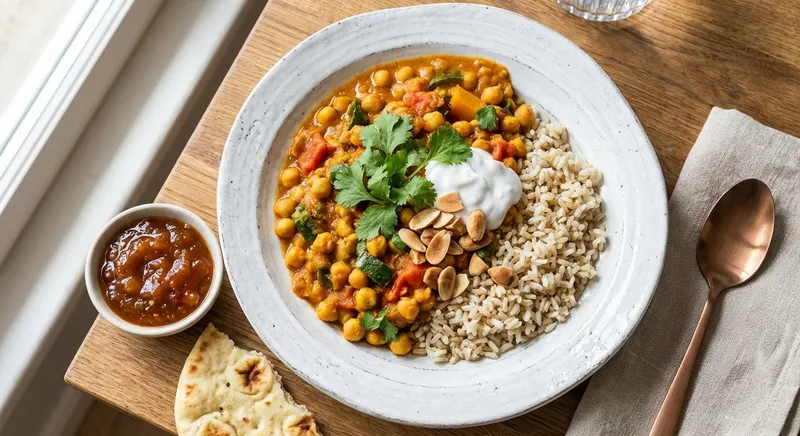
A cozy, restaurant-style chickpea curry: creamy light coconut milk, warm curry aromatics, tender chickpeas and bright vegetables served over nutty brown rice. The sauce is silky but light (we use half a can of light coconut milk), with a balance of spice, ginger-garlic freshness and cilantro brightness—comforting, nourishing, and quick enough for a weeknight.
Prep everything first: chop the onion, mince the garlic, grate the ginger, chop the vegetables, and drain & rinse the chickpeas. Doing mise en place shortens active time and prevents overcooking—once the pan is hot you’ll be moving quickly.
Heat a large sauté pan or shallow pot over medium heat and add 1 tablespoon vegetable oil. When the oil shimmers (about 30–60 seconds) add the chopped onion. Sauté the onion 5–7 minutes until translucent and just starting to brown at the edges. Cooking the onion slowly draws out natural sugars and builds a sweet, savory base for the curry.
Add the grated ginger and minced garlic and cook 30–45 seconds until fragrant. Stir constantly so garlic doesn't burn—browned garlic turns bitter. This step flavors the oil and infuses the whole dish with aromatics.
Add the curry paste (or if using curry powder: sprinkle it in and stir for 20–30 seconds). Toasting the curry paste/powder in the hot oil blooms the spices—releasing essential oils and deepening the flavor. If you’re using a paste, stir and let it sizzle until it darkens slightly; if powder, mix until it’s evenly fragrant.
Add the chopped mixed vegetables (bell pepper and carrots first; reserve the spinach to add later) and sauté 3–4 minutes to soften. This step develops a little caramelization on the vegetables that adds savory depth; adding spinach later prevents it from turning to mush.
Add the drained chickpeas and stir to coat in the aromatic base. Let the chickpeas cook 2–3 minutes so the outside warms and so they absorb the spice flavor. If you want a more textured bite, remove 1/3 cup of chickpeas, mash them lightly, and return them to the pan—this thickens the sauce naturally.
Pour in 1/2 can (≈200 ml) light coconut milk plus 1/4 to 1/2 cup water (start with 1/4 cup and add more if you prefer a saucier curry). Stir, bring to a gentle simmer, and reduce heat to medium-low. Simmer 6–8 minutes uncovered to gently thicken and let flavors marry. The coconut milk gives creaminess while keeping the curry light; simmering concentrates flavors and slightly reduces the liquid so it clings to the rice.
Add the cooked brown rice and reserved spinach (if using) to the pan. Stir to combine and warm the rice through—about 2–3 minutes. Adding rice at the end prevents it from overcooking and turning mushy while allowing it to soak up sauce for cohesive texture.
Taste and season with salt (start with the recipe amount, then adjust) and black pepper. If the curry needs brightness, squeeze a little fresh lime juice or add a teaspoon of vinegar. Bright acidity is key to balancing coconut richness and chickpea earthiness.
Finish with chopped cilantro and serve immediately, spooning the curry over bowls of steamed brown rice or mixing everything together. The cilantro adds fresh, herbaceous lift that lightens the dish and makes it restaurant-ready.
792
Calories
29g
Protein
123g
Carbs
22g
Fat
26g
Fiber
How did this recipe turn out? Let others know!
to rate this recipe
By emensah m
A cozy, restaurant-style chickpea curry: creamy light coconut milk, warm curry aromatics, tender chickpeas and bright vegetables served over nutty brown rice. The sauce is silky but light (we use half a can of light coconut milk), with a balance of spice, ginger-garlic freshness and cilantro brightness—comforting, nourishing, and quick enough for a weeknight.
Prep everything first: chop the onion, mince the garlic, grate the ginger, chop the vegetables, and drain & rinse the chickpeas. Doing mise en place shortens active time and prevents overcooking—once the pan is hot you’ll be moving quickly.
Heat a large sauté pan or shallow pot over medium heat and add 1 tablespoon vegetable oil. When the oil shimmers (about 30–60 seconds) add the chopped onion. Sauté the onion 5–7 minutes until translucent and just starting to brown at the edges. Cooking the onion slowly draws out natural sugars and builds a sweet, savory base for the curry.
Add the grated ginger and minced garlic and cook 30–45 seconds until fragrant. Stir constantly so garlic doesn't burn—browned garlic turns bitter. This step flavors the oil and infuses the whole dish with aromatics.
Add the curry paste (or if using curry powder: sprinkle it in and stir for 20–30 seconds). Toasting the curry paste/powder in the hot oil blooms the spices—releasing essential oils and deepening the flavor. If you’re using a paste, stir and let it sizzle until it darkens slightly; if powder, mix until it’s evenly fragrant.
Add the chopped mixed vegetables (bell pepper and carrots first; reserve the spinach to add later) and sauté 3–4 minutes to soften. This step develops a little caramelization on the vegetables that adds savory depth; adding spinach later prevents it from turning to mush.
Add the drained chickpeas and stir to coat in the aromatic base. Let the chickpeas cook 2–3 minutes so the outside warms and so they absorb the spice flavor. If you want a more textured bite, remove 1/3 cup of chickpeas, mash them lightly, and return them to the pan—this thickens the sauce naturally.
Pour in 1/2 can (≈200 ml) light coconut milk plus 1/4 to 1/2 cup water (start with 1/4 cup and add more if you prefer a saucier curry). Stir, bring to a gentle simmer, and reduce heat to medium-low. Simmer 6–8 minutes uncovered to gently thicken and let flavors marry. The coconut milk gives creaminess while keeping the curry light; simmering concentrates flavors and slightly reduces the liquid so it clings to the rice.
Add the cooked brown rice and reserved spinach (if using) to the pan. Stir to combine and warm the rice through—about 2–3 minutes. Adding rice at the end prevents it from overcooking and turning mushy while allowing it to soak up sauce for cohesive texture.
Taste and season with salt (start with the recipe amount, then adjust) and black pepper. If the curry needs brightness, squeeze a little fresh lime juice or add a teaspoon of vinegar. Bright acidity is key to balancing coconut richness and chickpea earthiness.
Finish with chopped cilantro and serve immediately, spooning the curry over bowls of steamed brown rice or mixing everything together. The cilantro adds fresh, herbaceous lift that lightens the dish and makes it restaurant-ready.
792
Calories
29g
Protein
123g
Carbs
22g
Fat
26g
Fiber
Your Rating:
