
Diabetes-Friendly meal plan
This guide is educational, not medical advice. Dietary needs vary — especially with medication involved. Work with your doctor or a registered dietitian on a plan that fits your situation.
For type 2 diabetes and prediabetes, the goal of meal planning is steady blood sugar: consistent, moderate carb portions spread through the day, paired with protein, fiber, and fat that slow glucose absorption.
The simplest framework is the ADA's plate method: half the plate non-starchy vegetables, a quarter lean protein, a quarter carbohydrate — ideally whole grains, beans, or starchy vegetables rather than refined starch.
Get a personalized diabetes-friendly week in about a minute
RecipeAI builds a full week of diabetes-friendly-friendly meals around your calories, portions, and dislikes — grocery list included. Free to try.
Build my meal planA sample diabetes-friendly day
Real recipes from our collection — tap any meal for the full recipe.

Breakfast
Lemon-Dill Soft Scrambled Eggs on Quick Herbed Cloud Bread with Spring Radish–Arugula Salad
350 cal per serving
Lunch
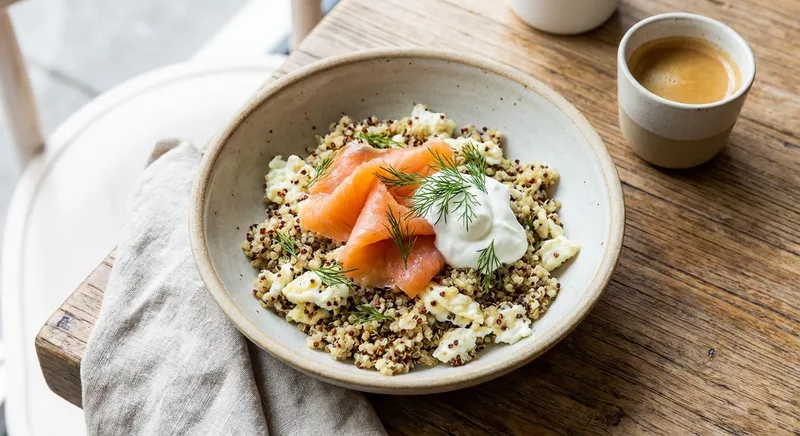
Protein-Packed Quinoa & Egg White Breakfast Bowl with Smoked Salmon and Lemony Greek Yogurt
490 cal per serving
Dinner
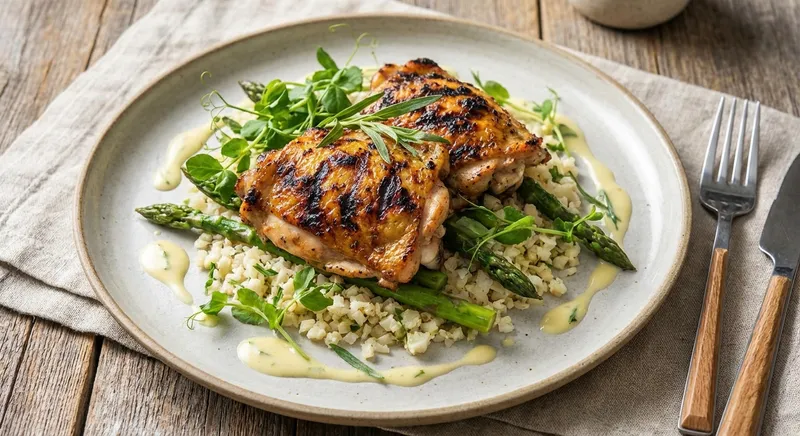
Grilled Lemon–Tarragon Chicken Thighs over Warm Asparagus & Cauliflower Rice with Pea Shoots
533 cal per serving
Eat freely
- Non-starchy vegetables in abundance: greens, broccoli, peppers, green beans
- Lean proteins: fish, poultry, eggs, tofu, legumes
- High-fiber carbs in measured portions: oats, quinoa, brown rice, beans, whole fruit
- Healthy fats: olive oil, nuts, avocado
- Water and unsweetened drinks
Limit or avoid
- Sugary drinks — the single biggest blood-sugar offender
- Refined carbs: white bread, white rice, most breakfast cereals
- Sweets and desserts as daily habits (occasional, portioned, with meals)
- Fruit juice and dried fruit in large amounts
- Heavily processed snack foods
Planning tips that actually help
Carb consistency beats carb elimination: roughly the same carb portion at each meal makes glucose (and medication) far more predictable.
Fiber is your ally — beans, vegetables, and whole grains blunt glucose spikes.
A 10-15 minute walk after meals measurably lowers post-meal blood sugar.
If you use insulin or sulfonylureas, never make large diet changes without your care team — medication doses may need adjusting.
Frequently asked questions
How many carbs should a diabetic eat per day?
There is no single number — many people do well at 130-180 g spread evenly across meals, and some choose lower-carb approaches. Your care team can personalize this to your medication and glucose data.
What is the plate method?
Fill half your plate with non-starchy vegetables, one quarter with lean protein, and one quarter with carbohydrate foods. It controls carb portions without weighing anything.
Is fruit OK for diabetics?
Whole fruit, in portions (e.g., a small apple or a cup of berries), fits most diabetes meal plans — its fiber slows sugar absorption. Juice and dried fruit are far easier to overdo.