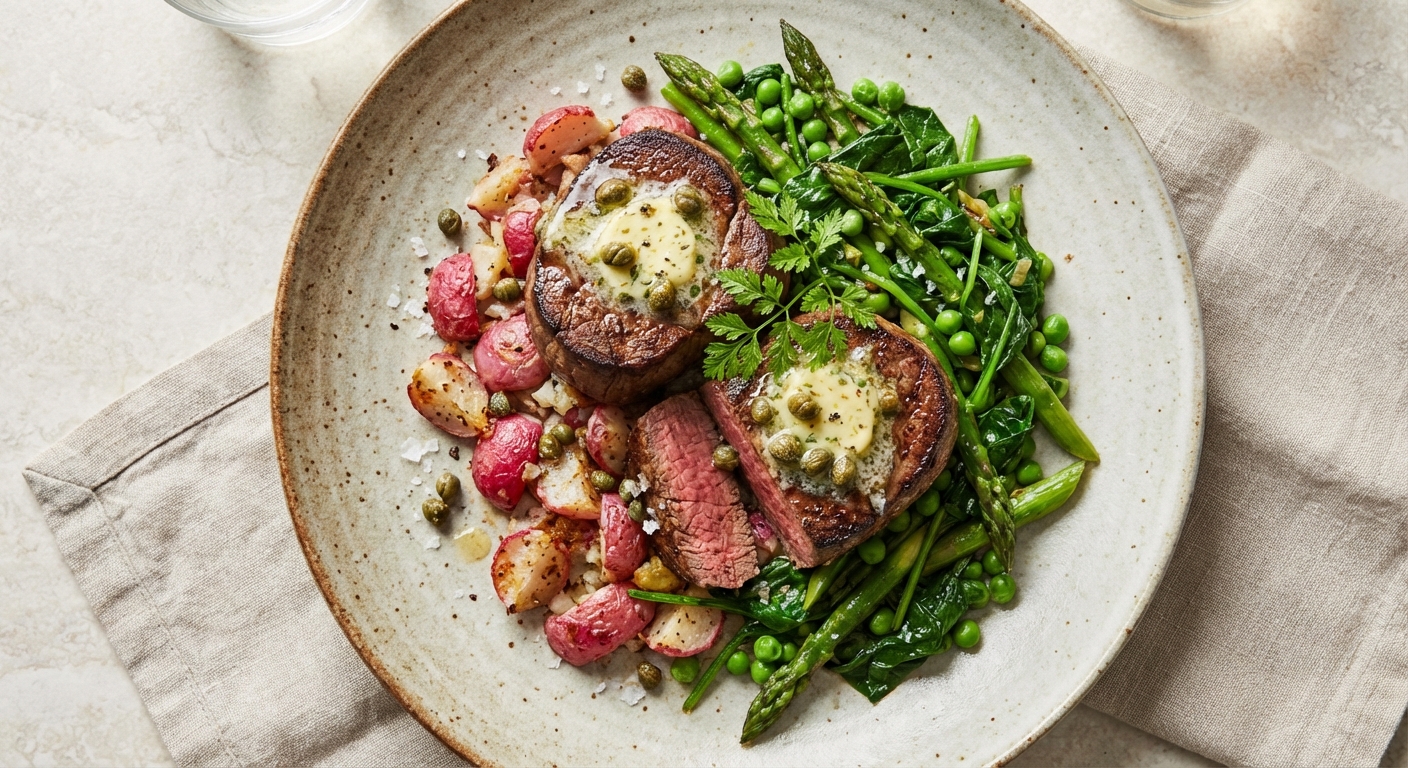
A 40-minute, gluten-free weeknight standout: pan-seared beef medallions with a glossy mustard–caper butter, crispy roasted radish smash, and garlicky lemon greens. Perfect balance of crust, brightness, and texture.
Ready to cook?
Get the complete ingredient list, step-by-step instructions, and nutritional info
View Recipe →There’s something electric about a fast, high-heat supper that feels both luxe and surprisingly approachable. Quick Pan-Seared Beef Medallions with Mustard–Caper Butter, Roasted Radish “Smash” and Sautéed Spring Greens is exactly that kind of dish. It arrives at your table in about 40 minutes, but it carries the elegance of a French bawn-bright dinner with minimal fuss. The beef gets a brisk, blistering crust that locks in juices, the mustard–caper butter adds a glossy tang, and the radishes, roasted until tender and caramelized, are then smashed into crisp-edged bites that taste almost like tiny potatoes. The greens—garlic-scented Swiss chard or baby kale—offer a peppery-clean counterpoint with a lemon lift that slices through the richness. It’s a complete plate: protein, veg, and a bright counterpoint in one skillet-and-sheet-pan moment.
What I love most about this recipe is its rhythm. You roast the radishes first, letting the oven do its magic while you sear the beef and whip up a quick pan sauce. The greens come together in minutes, bright and vibrant just as you plate. Resting the meat is non-negotiable here; it’s the quiet pause that lets all the juices redistribute, keeping every bite juicy and tender. And the dish is gluten-free by design, but it’s far from missing any texture or depth—think a glossy, peppery butter that clings to meat, and radishes that sneak up on you with their caramelized sweetness.
If you’re cooking for family, friends, or simply a personal celebration of 40 minutes well spent, this recipe is your new go-to. It looks and tastes like something you’d order in a bistro, yet you can pull it off with a skillet, a sheet pan, and a few pantry staples. Each bite is a small victory, and the entire plate comes together with such balance that you’ll want to repeat it next week. For readers who love the idea of shopping once and cooking smart, you’ll find this dish flexible with substitutions and friendly to those keeping a gluten-free kitchen. It’s also a wonderful way to showcase a few pantry staples, like capers and Dijon, which play beautifully off the beef’s natural sweetness.
For those curious about the culinary logic behind the technique, this experience is about momentum and contrast: a hot pan for a crust, butter for a glossy finish, and a lemony, garlicky greens component that brightens the plate without overpowering the meat. The radishes are the star transformation—roasted to concentrate their sweetness and then smashed for texture and drama. The result is a harmonious plate that feels indulgent, without needing a long, fussy menu. If you’re exploring this cuisine in a gluten-free context, you’ll appreciate how the dish relies on natural textures and robust flavors rather than flour-thickened sauces.
As you read on, you’ll find why each ingredient matters, how to time everything so it lands on the table hot, and how to tailor the recipe to your own kitchen notes. This is more than a recipe; it’s a small performance where every element has a purpose and a story worth telling. If you love where modern French cooking meets approachable weeknight meals, this dish deserves a spot on your regular rotation. And if you’re curious about other related dishes, you can explore more in the Beef and Modern French sections of the site. Or, if you’re building a gluten-free repertoire, this belongs in the Gluten-free collection.
Here’s a closer look at the star players in this dish and why they work so well together. I’ve included quick notes on what each component brings to the plate and a few ideas for swaps if you’re missing something in your pantry. Links are included to help you explore individual ingredients on the site.
Note how the radishes are roasted first, while the greens come together in a separate quick sauté. The mustard–caper butter comes together in the same skillet you used for the beef, making cleanup minimal and the sauce intensely flavorful. The result is a cohesive plate where every component feels like it belongs.
Plating this dish is half the fun. Spoon a generous dot of mustard–caper butter on each plate and nestle a medallion on top. Spoon more of the glossy sauce over the meat to glaze and intensify the crust’s flavor. Arrange 6–8 smashed radishes per plate—roughly 120 g cooked per serving—to echo the crusty edges and caramelized centers. A hearty mound of lemon-garlic greens on the side provides a verdant contrast and a hit of acidity to cut through the richness.
Garnish with extra drained capers for bursts of briny brightness and, if you like, an extra squeeze of lemon for a lift that carries through the entire plate. Serve immediately while the butter is still glossy and the meat stays warm. This dish pairs beautifully with crisp white wines that have a touch of bite—think a young Chardonnay or a Sauvignon Blanc with citrus notes. If you’re keeping things gluten-free, this plate already fits the bill, but you’ll notice that the texture and depth make it feel decidedly restaurant-worthy right at home.
For a broader culinary journey, you can view more recipes in the Main course category, or explore other beef-centered offerings in Beef. If you’re curious about how modern French cuisine can be approachable for weeknights, check out the Modern French collection. And if you’re building a gluten-free repertoire, the Gluten-free archive is a great place to discover similar recipes that don’t compromise on flavor or technique.
A: While the dish shines best when plated fresh, you can prep components ahead. Roast the radishes a day ahead and store them in a sealed container. Searing the beef should be done just before serving for optimal crust and juiciness. The greens can be prepped (washed, chopped) but are best sautéed fresh to maintain color and brightness. The butter sauce can be assembled in advance and reheated gently, but it’s most luxurious when finished in the pan right before serving.
A: For medium-rare, aim for an internal temp of 54–56°C (130–133°F) and remove the medallions from heat a few degrees early if you’ll rest them for 5–7 minutes. If you prefer medium, go 3–4 minutes per side, and finish in the oven for an extra 3–5 minutes if needed. Always let meat rest before slicing to maintain juiciness and flavor.
A: If you’re out of capers, a few minced cornichons or olives can bring a similar briny profile with a different texture. If you prefer less heat or a milder bite, swap Dijon for a milder mustard—though the sharpness is part of the dish’s charm. The key is to maintain the emulsified butter-and-sauce texture so the sauce still clings to the meat.
A: Yes. Baby kale and Swiss chard are perfect here, but you can substitute spinach or arugula for a different bite. If using spinach, reduce sauté time so the greens stay vibrant and not bruised.
Want to experiment further with this flavor profile? Try transforming the radish component with a quick pinch of smoked paprika or chili flakes for a subtle kick. The mustard–caper butter will happily take on extra aromatics if you want to tailor the dish to your pantry. Cooking, after all, is a personal conversation with your ingredients—this recipe is the script; your kitchen is the stage.
Discover similar recipes you'll love
