
A 40-minute skillet method that caramelizes onions, sears bone-in pork chops, and finishes with a glossy Dijon-chicken pan sauce for cozy weeknight comfort
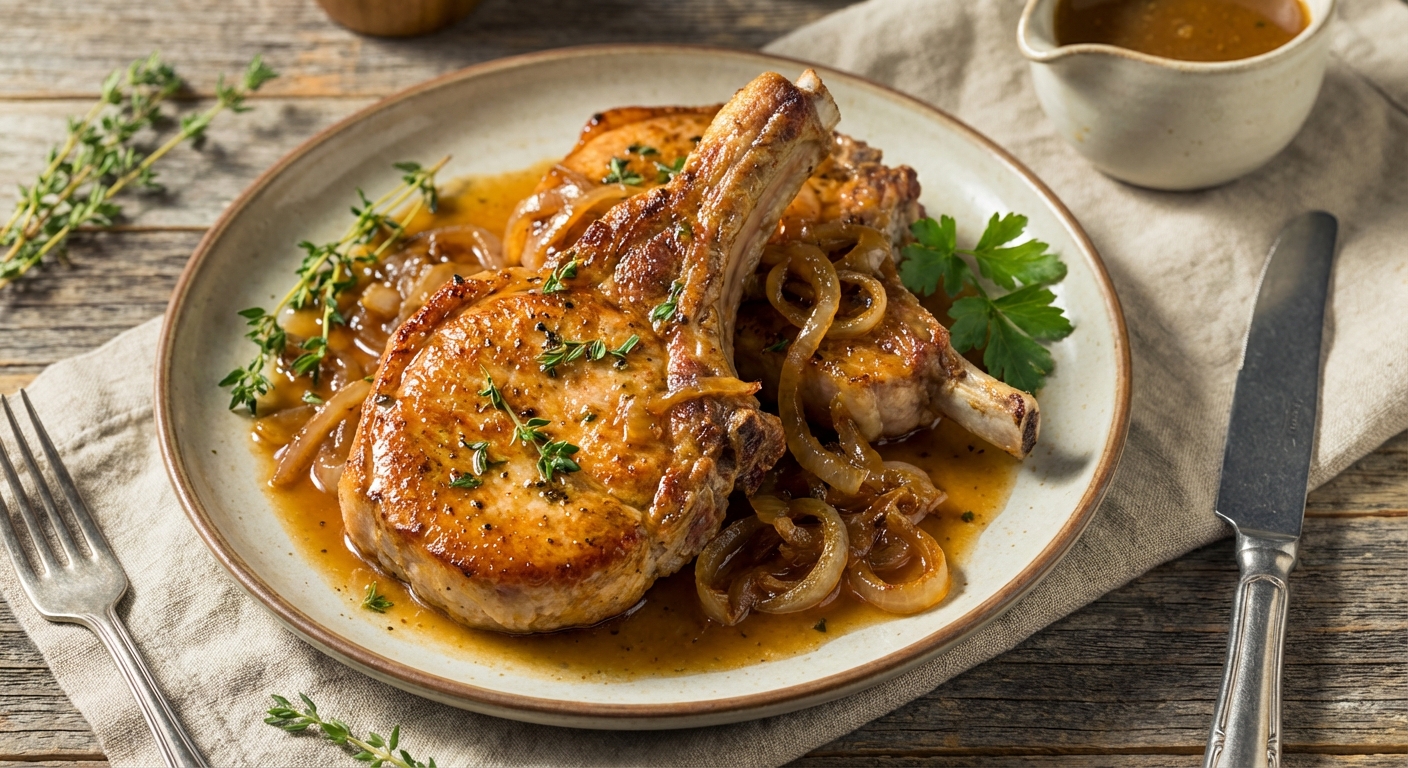
A 40-minute skillet method that caramelizes onions, sears bone-in pork chops, and finishes with a glossy Dijon-chicken pan sauce for cozy weeknight comfort
Ready to cook?
Get the complete ingredient list, step-by-step instructions, and nutritional info
View Recipe →In my kitchen, there are meals that feel like a hug at the end of a long day, and this Pan-Seared Bone-In Pork Chops with Caramelized Onions & Chicken Pan Sauce is one of those cozy, confident plates. I came to this method after chasing that perfect sear and a sauce that whispered “comfort” with every glossy spoonful. The beauty of this dish is how it builds flavor in layers—from the meticulous dry-brine of the chops to the slow, patient caramelization of onions, all finished with a silky, pan-struck sauce that ties everything together. It’s a weeknight hero that tastes like you spent hours in the kitchen, but it comes together in about 40 minutes, making it ideal for busy evenings that crave something homey and deeply satisfying. If you’re new to pan-searing, this is the recipe that teaches you the balance between high-heat precision and gentle, mindful cooking—the kind of technique that elevates simple ingredients into something memorable.
When you choose bone-in pork chops, you’re choosing flavor in color, texture, and moisture. The bone adds depth to the pan, leaving behind fond—those browned bits that are basically flavor gold. And the method here is designed to make the most of that fond, not just by deglazing, but by building a complete sauce that starts with caramelized onions and finishes with a Dijon-bright finish and a touch of acidity to balance richness. Think of the dish as a conversation between the meat, the onions, and the glossy pan sauce—each element amplifying the others until you arrive at a plate that looks as good as it tastes. This is comfort food with a chef’s mindset: precise technique, generous flavor, and a finish that makes you want to take another bite.
As you read through, you’ll notice I weave in my favorite little details—the timing, the resting period, the importance of scraping up the fond, and the final butter mount that gives the sauce its sheen. If you’re curious about where to find certain ingredients or how to categorize this dish, you can explore more by visiting the linked pages for key components and categories:
For the main players, I lean on the following ingredients with purpose, all of which you can learn more about by tapping the links below:
And because this dish lives in the world of categories—main course, pork, pan-seared, comfort food—feel free to explore more recipes within those spaces: main course, pork, pan-seared, comfort food.
Here’s why each element matters in this recipe, beyond simply “tasting good.” I break down a few key components and how they contribute to the magic you’ll experience in each bite.
In practice, these ingredients come together with intention. The onions caramelize slowly, the pork develops its crust with a precise sear, and the stock reduces into a velvety sauce that carries the mustard, vinegar, and butter to a glossy finish. It’s a balance of technique and ingredient harmony that makes this dish feel both approachable and a touch special.
Pro tip: if you’ve got leftovers, this dish shines on a steak night remix—toss with roasted vegetables, spoon over mashed potatoes, or even fold into warm, crusty bread for a quick pan sauce sandwich. The technique is adaptable and forgiving, as long as you respect the base principles of a good sear and a glossy, balanced sauce.
This dish shines best when plated proudly with a simple, yet elegant accompaniment. I like a starch that can soak up the sauce—think creamy mashed potatoes or a soft, buttered polenta. A side of roasted vegetables, like Brussels sprouts or green beans, adds color and crunch for contrast. If you’re feeling greens-forward, a quick sautéed kale or spinach with a touch of lemon can brighten the plate.
To plate, rest the chops, spoon the caramelized onions and the pan sauce over the meat, then finish with a sprinkle of chopped parsley for a pop of color. The warmth of the pan sauce will re-warm the onions on contact, creating a cohesive bite that carries the aromatic notes of thyme and garlic through the dish. The result is a glossy, flavorful plate that looks as good as it tastes and invites you to dig in with a fork and a smile.
If you’re curious about future experiments, this dish invites you to explore other protein pairings or sides within the same flavor family. It’s a meal you can adjust to suit your pantry, your preferences, or what’s on sale at the market. And if you want to keep exploring, long-term readers know I love encouraging readers to try making their own recipes. When you’re ready to craft your own culinary creations, head over to the Create page and start building your flavor file.
Q: Can I use boneless pork chops?
A: Yes. Boneless chops will cook a bit faster and won’t contribute the same bone-in fond, so you’ll want to adjust the searing time slightly and ensure you watch the internal temperature closely. The technique remains the same: dry, sear, baste, and finish in a shallow simmer with the sauce. If you use boneless chops, consider a shorter finish time in the simmer to avoid overcooking.
Q: Can I make this ahead?
A: You can prep components in advance: caramelized onions can be cooled and stored, the sauce can be made ahead and gently reheated, and pork chops can be seared and held briefly, then finished in the pan again if needed. For the best texture and taste, I recommend cooking and serving fresh, but the flavors will carry well if you plan ahead and reheat gently with a splash of stock or water to loosen the sauce.
Q: What can I substitute if I don’t have a thermometer?
A: Visual cues can help, but they’re less reliable. Look for a golden crust and juices that run slightly pink when pierced near the bone. A good method is to start checking the internal temperature around the 6-minute mark after adding stock. If you don’t have a thermometer, err on the side of a short rest and a small slice to check texture. Remember, carryover heat will raise the temperature a few degrees during resting.
Q: Can I adjust the acidity or sweetness in the sauce?
A: Absolutely. The optional sugar in the onions, Dijon mustard, and the apple cider vinegar are your levers. If you want a brighter, more tangy glaze, add a touch more vinegar or lemon juice at the end. If you’d prefer a smoother sweetness, let the onions caramelize longer and reduce the stock a bit more before finishing with butter. Taste as you go; balance is key.
Q: What about substitutions for dietary needs?
A: For dairy-free, you can replace butter with a high-heat-tolerant oil and finish with a dairy-free butter substitute or just a touch more oil. For a lighter version, you can reduce the butter in the sauce and rely more on the stock for body. If you’re cooking for kids, you might dial back the Dijon slightly, then garnish with extra herbs for aroma rather than tang.
Want more inspiration? I’d love for you to explore more recipes in these categories and discover your next favorite weeknight hero. And when you’re ready to put your own twist on things, remember there’s a whole world of flavor waiting for you at the Create page.
Discover similar recipes you'll love