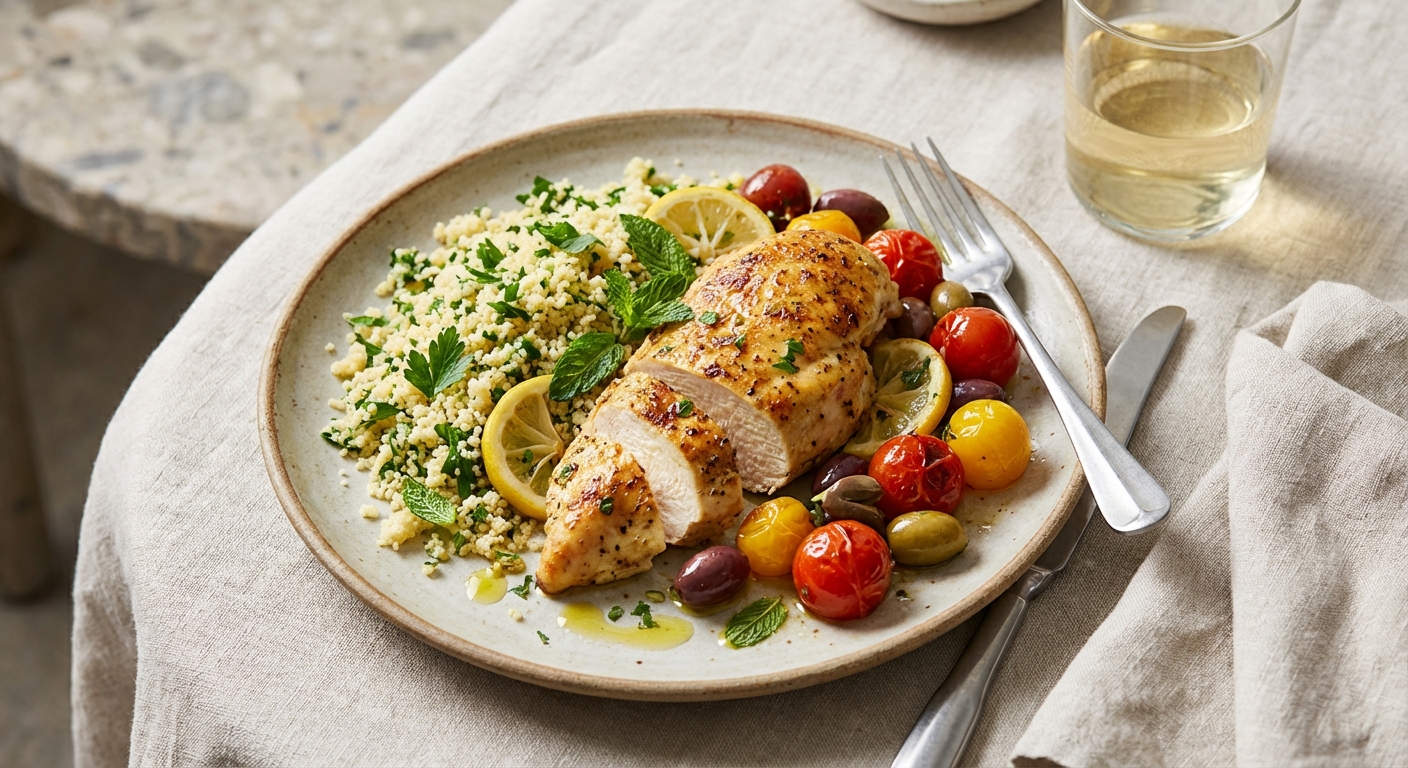
Bright Mediterranean lemon chicken with blistered tomatoes, olives, and herbed couscous—40-minute skillet dinner bursting with vibrant, comforting flavors.
Ready to cook?
Get the complete ingredient list, step-by-step instructions, and nutritional info
View Recipe →On busy weeknights, I crave something that feels bright, comforting, and just a little glamorous. Enter Mediterranean Lemon Chicken with Roasted Cherry Tomatoes, Olives & Herbed Couscous—a dish that tastes like sunlit coastline and home-cooked hospitality, all in under 40 minutes. I first tested this recipe during a long, laughter-filled evening with friends who adore citrusy, briny flavors as much as I do. The aroma of seared chicken meeting a pan of blistered tomatoes and garlicky olives instantly transports you to a warm kitchen where plates are passed, stories are shared, and nothing is rushed. This is the kind of meal that makes you feel you’ve traveled somewhere special, even if you pulled it together after a long day.
As with all my cooking, the magic happens in layers. A well-seasoned sear creates a Maillard crust that locks in juices, while the lemon-turned-pan-sauce provides brightness that cuts through the richness. The olives lend a briny punch, capers add a whisper of salt, and the couscous—fluffed just so—acts as a perfect canvas for the vibrant sauce. If you’re exploring the staples of the Mediterranean pantry, this dish checks every box: protein, vegetables, briny bite, and a soft, herby starch to bring everything together. For extra inspiration on the pantry items that fuel this recipe, explore some of the key ingredients in this post’s Delicious homemade collection.
In my kitchen, I’m constantly thinking about texture and balance. The chicken deserves a crisp exterior, the tomatoes should blister and burst into sauce-like sweetness, and the couscous should be light and fluffy—so I’ve included tips and notes throughout to help you recreate that perfect harmony. I’ve also included a few tweaks to accommodate different schedules or palate preferences, so this dish scales up or down with ease. If you love lemon-forward, olive-brushed Mediterranean flavors, you’re in for a real treat with this recipe.
Seasonality and pantry staples meet in this recipe, and each component brings something essential to the table. Here’s a quick tour of why these ingredients matter—and how they work together to create a balanced, satisfying plate. I’ve included quick notes on substitutions and a few internal links to help you learn more about each element.
Tip: I often keep a jar of chopped parsley in the fridge because a quick sprinkle right before serving makes everything feel bright and fresh. The parsley in this recipe also doubles as a quick garnish that mirrors the green notes in the dish. If you’re chasing more Mediterranean flavor profiles, I’ve found that this combination of lemon, olives, and tomatoes is a reliable anchor for many weeknight dinners.
There are a few tricks I’ve learned while perfecting this dish that take it from good to exceptional. These notes are designed to help you navigate the process smoothly, whether you’re cooking solo or feeding a hungry crowd.
Plating is half the joy here. I like to create a bed of fluffy couscous on each plate and crown it with a single chicken breast. The tomato-olive pan sauce is spooned generously over the chicken, letting the juices mingle with the starch. A final shower of parsley and a light drizzle of olive oil brighten the plate, and a lemon wedge tucked on the side adds a pop of acidity if you want to squeeze more brightness at the table.
Pairing wise, a crisp white wine with a touch of citrus—think Albariño or Sauvignon Blanc—complements the lemon and olive brine without competing with the dish. If you’re keeping things non-alcoholic, a sparkling water with a lemon twist feels celebratory and refreshing, echoing the citrus notes in the sauce.
If you’re looking to round out the meal with more greens, a simple cucumber-teta salad or quick sautéed greens with garlic would be a light, refreshing addition to the plate. You can tailor the serving to your guests: a little extra couscous for a heartier dinner, or a bit more tomato and olive for a briny bite in every bite. For inspiration on building a Mediterranean-style spread, you can explore more ideas in my recipe index and keep exploring flavors that resonate with this dish.
Want a quick reminder of where to find this recipe again? It sits sturdy in my collection under the Delicious homemade category, where I regularly post weeknight-friendly meals that still feel special. And if you’re curious about any single ingredient, the linked ingredient pages are a treasure trove of tips and variations. When you’re ready, I’d love to see your version—tag me in your posts and share your twists!
Ready to cook more? If you’re inspired to craft your own flavor-packed creations, start your culinary journey at our Create hub and begin building recipes of your own.
Leftovers—consisting of the chicken, sauce, and couscous—store well in a covered container in the refrigerator for up to 3 days. For best texture, store the couscous separate from the sauce and rehydrate it with a quick splash of hot water just before serving. Reheat gently on the stove or in the microwave at medium power to avoid drying out the chicken. If you want to keep things longer, you can freeze the chicken and sauce together for up to 2 months; thaw overnight in the fridge before reheating and serving over fresh couscous.
Yes, you can do some prep ahead of time to streamline assembly. Prep the mise en place (onion, garlic, parsley, olives, and cherry tomatoes) earlier in the day. Sear the chicken just before serving to preserve the crust. If you’re extremely pressed for time, you can cook the tomatoes and sauce components a little ahead and reheat gently, then finish by warming the chicken in the sauce for a quick finish. For a make-ahead couscous, you can steep it in hot water for the required 5–7 minutes and fluff with a fork right before serving.
The beauty of this dish is in its Mediterranean balance, so there are several easy substitutions. If you don’t have Kalamata olives, use green olives for a milder brine, or omit the olives altogether and lean into the lemon-olive combination with extra capers. If you’re avoiding dairy, simply skip the butter and use a touch more olive oil for richness. For a different protein, shrimp or turkey breast can work, but adjust cook times to prevent overcooking. If you’d like more heat, add a pinch of red pepper flakes with the garlic.
This recipe is naturally dairy- and gluten-free as written, assuming you’re using plain, pantry-friendly ingredients. To keep it vegan, omit the chicken and use a hearty white bean or chickpea base instead—sauté the onion, garlic, and tomatoes, then toss with the beans and the briny elements. For a gluten-free couscous substitute, use quinoa or rice, and cook according to package directions. The lemon, tomato, olive, and herb profile remains the guiding star across any adaptation.
Absolutely. The “steep” method mentioned in the recipe is designed to yield light, fluffy grains without stirring, which can make couscous gummy. If you do stir after resting, do so gently with a fork to separate grains. A touch of olive oil in the cooking water helps prevent clumping, and finishing with fresh lemon zest brightens the entire dish. If you’re using larger-grain couscous or a premium pearl couscous, adjust the water amount slightly and allow a few extra minutes for steaming to ensure tenderness.
If you’re inspired to cook more Mediterranean-inspired plates or to experiment with similar flavor profiles, I invite you to explore more recipes in my collection. And if you’re ready to craft your own culinary creations, I’d love to see what you design—start your own journey at the Create hub.
Discover similar recipes you'll love
