Introduction
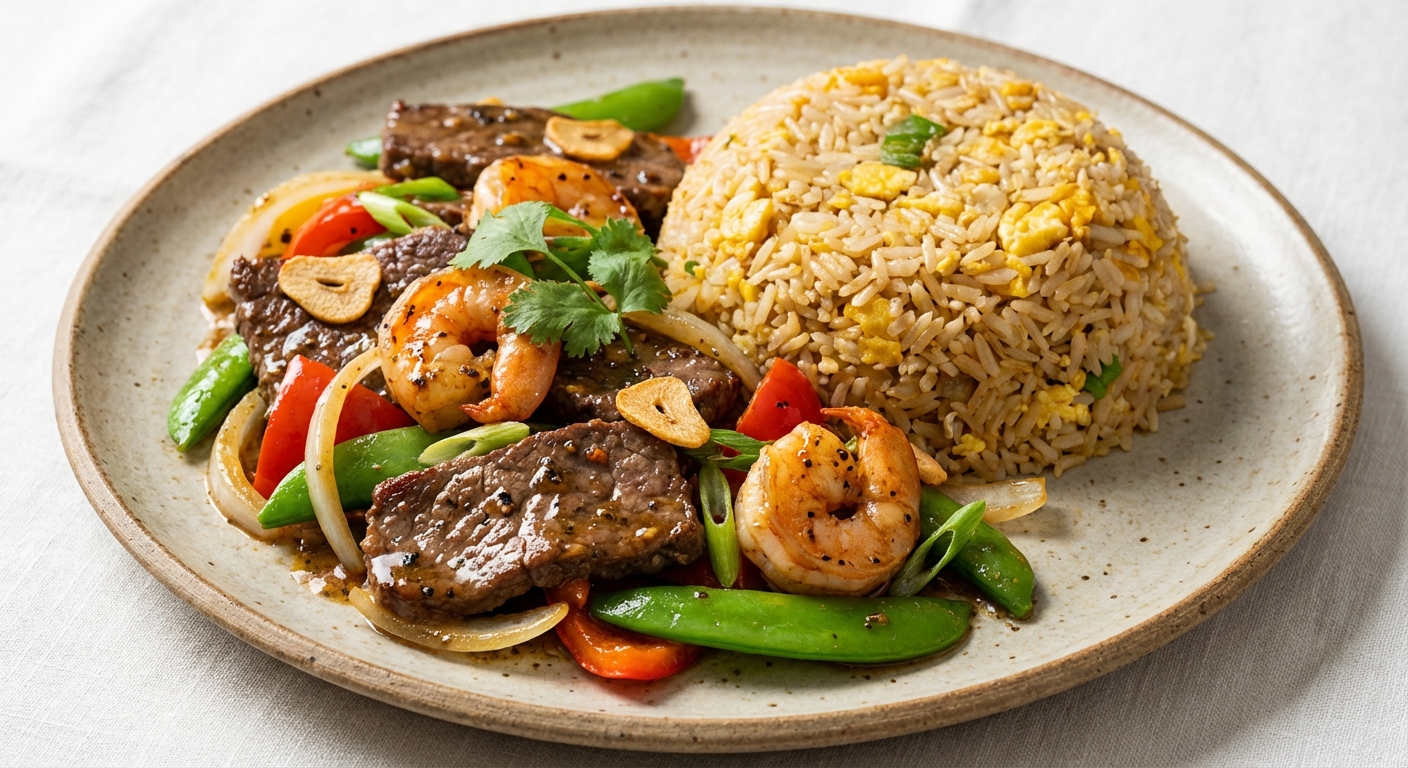
I’m always chasing flavors that feel both comforting and a touch adventurous, and this Double-Protein Garlic Pepper Stir‑Fry with Wok-Fried Rice hits that sweet spot perfectly. It started as a weeknight sprint in my tiny apartment kitchen, where I needed dinner on the table fast but still wanted depth: the kind of depth you get from a sizzling hot wok, a kiss of sesame aroma, and a glossy sauce that clings to every bite. Two proteins—chicken and beef—meet in this dish to give contrast in texture and flavor, a little drama on the plate, and a lot of satisfaction in the bowl. The method is simple, the flavors are bright, and every element has its role: the crisp-tender vegetables, the velvety meat, and the garlic-fortified rice that brings it all together in one glorious, pan-flavored harmony.
What I love most about this recipe is how it moves from fire to fork in a flash. The rice is cooked and cooled beforehand to prevent clumping in the wok, which keeps each grain separate and ready to soak up the savory glaze. The proteins are marinated separately to velvet their surfaces, then seared in batches to develop that coveted Maillard crust without overcooking. And the sauce—made without skulking around for a long simmer—reaches its thick, glossy finish in less than a minute once it hits the pan. The result is a restaurant-worthy plate you can reproduce in your own kitchen, with all the textures you crave: a crisp edge on the vegetables, a chewy bite from the beef, a tender bite from the chicken, and a whisper of garlic in every spoonful of rice.
If you’re curious about the ingredients that make this dish sing, I’ve included a few notes on why they matter and how they work together. And yes, this dish proudly earns its place in the category of Delicious homemade dishes, a label I think should be attached to meals that feel like a hug from the stove. If you’re cooking along, you’ll find links to each key component below, so you can explore more about what makes them shine. For a broader collection of weeknight-friendly ideas, browse the category page at /category/delicious-homemade. And when you’re ready to craft your own flavor stories, I’d love for you to explore creating your own recipes at /create.
Ingredients Benefits
Every component in this stir-fry brings something specific to the table, from texture to aroma to balance. Here’s a quick tour of the star players and why they matter.
-
boneless skinless chicken breast: Lean protein that cooks quickly and absorbs the soy-ginger-flavored glaze beautifully, helping the dish feel hearty without heaviness.
-
flank or skirt steak: Thin-sliced beef provides a contrasting chew and a beefy richness that plays off the chicken’s mildness.
-
long-grain white rice: The foundation of the dish; cooked and then cooled so it fries into separate grains that don’t clump together.
-
neutral oil: A high-heat-friendly fat that lets the proteins sear deeply without imparting flavor heaviness.
-
toasted sesame oil: A final drizzle of aroma that adds a nutty finish without overpowering the dish.
-
yellow onions: The sweetness and crunch provide a backbone that balances the tang of the sauce.
-
bell peppers: Colorful, crisp-tender slices that bring brightness and a slight snap.
-
garlic: The boldness that lifts the entire dish; bloom it quickly to avoid bitterness.
-
low-sodium soy sauce: A savory backbone that seasons both proteins and vegetables.
-
brown sugar: A touch of sweetness that rounds the acidity of the peppers and garlic.
-
cornstarch: Used in both the marinade and the sauce, it helps velvet the proteins and creates a glossy glaze when heated.
-
low-sodium chicken stock (or water): Liquid that activates the cornstarch in the sauce and adds depth without over-salting.
-
scallions: A bright, fresh finish that bridges the wok to the plate.
-
sesame seeds: Optional, but a light crunch and toasty fragrance when sprinkled on top.
- If you’re curious about substitutions or adjustments, you can explore the ingredients more deeply by visiting their dedicated pages linked above.
The beauty of this recipe is that the ingredients form a cohesive orchestra: the depth from beef and chicken, the lift from garlic and onions, the crisp-tender peppers, and the fragrant finish from sesame oil and seeds. And the garlic fried rice—a quick, separate step—transforms simple leftovers into a star side that makes the entire dish feel complete.
Expert Tips
Here are some battle-tested tips that will help you nail this dish on your first try (or your tenth).
- Mise en place is your best friend: Have all veggies sliced, garlic minced, sauces measured, and both proteins marinated before you even heat the pan. When you’re cooking at high heat, there’s no time to improvise.
- Velvet the proteins, not the drive: The chicken and beef are marinated separately with a small amount of cornstarch and soy sauce. This creates a delicate surface texture that sears beautifully and helps the sauce cling later.
- Sear in batches for perfect browning: Crowding the pan traps steam and stews the meat instead of searing. Giving the beef a 45–60 second untouched sear creates that deep crust; the chicken should be seared in another batch to maintain temperature and texture.
- Get the pan screaming hot: A true wok hei moment comes from intense heat. If your pan isn’t hot enough, you’ll lose the texture and color you’re after.
- Handle garlic with care: Garlic burns easily, so add it to the hot spot for a brief bloom (20–30 seconds) before turning the mixture to coat the rest of the ingredients.
- Sauce thickening is fast: The cornstarch-based sauce thickens in 30–60 seconds on high heat. If it’s not glossy, re-stir the sauce to reincorporate any settled cornstarch.
- Rice discipline saves texture: Use cooled, day-old rice (or refrigerate shortly after cooking). This keeps grains separate and gives better texture for the wok-fried rice.
- Finish with aroma: A final teaspoon of toasted sesame oil adds fragrance without making the dish heavy. A quick crack of black pepper at the end completes the flavor profile.
- Temperature management for vegetables: Add onions first, then peppers; you want the vegetables to stay vibrant and crisp-tender.
- Rest and re-combine: Let the meats rest briefly after searing, then reintroduce to the wok with the vegetables to finish in a single, glossy toss.
Serving Suggestions
This dish is built to be plated as a striking, homey centerpiece. Start with a bed of garlic-fried rice on each plate and gently mound the stir-fry on top. The glossy sauce should shimmer over the protein and vegetables, inviting a fork to scoop up a little of everything in each bite.
- Garnish ideas: Scatter extra sliced scallions and sesame seeds over the top for color and crunch. A light grind of black pepper right before serving catches the aroma of the sesame and garlic.
- Pairings: A crisp cucumber salad or a simple sesame cucumber slaw creates a refreshing counterpoint to the heat of the stir-fry. If you’re pairing a drink, a dry Riesling or a light lager can balance the savory-sweet notes beautifully.
- Make-ahead and meal prep: Although the stir-fry is best served fresh, you can prep components ahead of time. Marinate the proteins (or even marinate and refrigerate them separately) up to a day ahead. The rice can be cooked a day ahead and cooled; reheat quickly in a skillet with a little oil to refresh the texture.
- Leftovers: Store leftovers in an airtight container for up to 3 days. Reheat in a pan over medium heat or in a quick skillet toss to preserve texture. If the sauce has thickened too much, loosen with a splash of stock or water while reheating.
If you’re feeling inspired to branch out, you can try variations using this same framework. Swap in another protein (think shrimp or tofu for a vegetarian twist) or adjust the vegetables to echo what’s in your crisper. The key is to keep the work fast and the temperatures high so you achieve that restaurant-quality finish at home. And if you’re curious about more flavor-packed stir-fry ideas, I’d love for you to explore additional recipes in the same category: /category/delicious-homemade. When you’re ready to take your culinary journey further, start crafting your own delicious experiments at /create.
FAQ
- Can I substitute proteins? Yes. If you prefer all beef or all chicken, you can adjust the marination times slightly and sear in batches. If you want a lighter option, firm tofu or pulled pork can work, but you’ll need to adjust the marination to ensure good surface texture and flavor absorption. See how the marinade helps lock in moisture when you switch proteins.
- How long does this keep and how should I store leftovers? Leftovers keep well in an airtight container for up to 3 days in the refrigerator. Reheat gently in a skillet over medium heat to restore texture. If the sauce has thickened, whisk in a little stock or water to loosen and glossy it again.
- Can I make it ahead for a busy week? You can prepare the components ahead: cook and cool the rice, slice and marinate the proteins, and pre-chop the vegetables. Reassemble and cook the stir-fry when you’re ready to eat. The garlic-fried rice, in particular, benefits from being freshly fried just before serving, so consider preparing just the stir-fry ahead and re-heating when you’re ready to serve with freshly fried rice.
- What substitutions work best? If you don’t have cornstarch on hand, a thin slurry of arrowroot can work, though results may vary slightly in texture. If you’re avoiding gluten, ensure your soy sauce is gluten-free, and you can use tamari as a substitute. For a lower-sugar version, reduce the brown sugar a touch or omit it and rely on the natural sweetness of peppers and onions; balance with a touch more soy if needed.
Whether you’re a home cook looking for confidence at the wok or a kitchen veteran chasing a quick, glossy dinner, this Double-Protein Garlic Pepper Stir‑Fry with Wok-Fried Rice offers a satisfying balance of speed, texture, and bold flavor. It’s about technique as much as it is about ingredients, and it rewards you with a glossy, restaurant-worthy finish that still feels like it belongs in your own home. So gather your mise en place, crank the heat, and get ready to savor a plate that’s as comforting as it is exciting. And as always, I can’t wait to see what you create—tag me in your recreations and, if you’re up for it, start planning your own recipe experiments at /create.