By abbey f
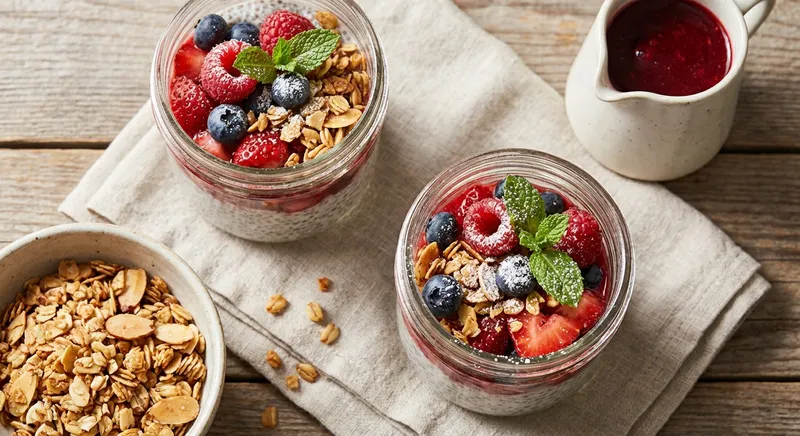
Silky, spoonable chia pudding layered with bright, macerated fresh berries and a warm toasted-almond crunch — a make-ahead, restaurant-quality breakfast or dessert. The pudding’s custardy texture contrasts with juicy berry syrup and crunchy almonds for balanced sweetness, texture, and vibrant color.
Taste the prepared chia pudding to assess sweetness and texture. Why: leftovers can vary — some puddings are thin, some very thick, and sweetness varies. If the pudding is overly thick, loosen 1–3 tablespoons per cup with a splash of milk (dairy or plant) to reach a custard-like spoonable consistency; if it’s too sweet, stir in a spoonful of plain yogurt or a squeeze of lemon to rebalance.
Roughly chop any large strawberries so all berries are bite-sized; leave blueberries and raspberries whole. Put the berries into a medium bowl. Why: uniform piece size creates pleasant mouthfeel and helps berries release juice evenly during maceration.
Add 1 tablespoon honey, 1 tablespoon lemon juice, and 1 teaspoon lemon zest to the berries; toss gently with a fork to combine. Let sit at room temperature for 10 minutes, tossing once halfway through. Why: the small amount of sugar (honey) and lemon draws juices from the berries (maceration), producing a glossy, lightly-syrupy sauce that intensifies flavor and color without cooking.
Meanwhile, warm a small skillet over medium heat and add 1 teaspoon unsalted butter (or 1 tsp neutral oil for vegan). Add the sliced almonds in a single layer and toast, stirring continuously, for 2–3 minutes until fragrant and just turning golden. As soon as they color, remove to a plate to stop cooking. Why: toasting nuts brings out their oils and aroma — it’s a small step that adds restaurant-level depth and contrast to the silky pudding.
If you like a little crunchier, toss the toasted almonds immediately with 1 tablespoon of maple syrup while still warm, then spread on parchment and let cool; this creates a sticky, candied crunch. Why: the warm syrup glazes the almonds, adding a sweet snap that contrasts with the soft chia.
Layer the parfaits: spoon 1/2 cup chia pudding into four short glasses or jars (about two layers each). Add 1/4–1/3 cup macerated berries, spoon another 1/2 cup pudding, then top with remaining berries and a tablespoon of toasted almonds. Why: layering keeps textures distinct — pudding for creaminess, berries for brightness, nuts for crunch — so each spoonful is balanced.
Finish each serving with a small pinch of flaky sea salt and a mint leaf. Drizzle a tiny bit of maple syrup (about 1/2 teaspoon) over the almonds if you prefer extra sweetness. Why: salt amplifies flavor and maple provides a glossy finish; the mint adds an aromatic lift and visual elegance.
Make-ahead storage: keep assembled parfaits refrigerated up to 24 hours (almonds may soften slightly). For the best texture if making earlier, store the pudding and macerated berries in separate airtight containers for up to 4 days; keep toasted almonds in a separate airtight jar at room temperature up to 5 days and assemble just before serving. Why: separating components preserves crunch and color — berries will release more juice over time and nuts will lose snap if refrigerated with moisture.
To serve chilled straight from the fridge, let parfaits sit at room temperature 5 minutes so the flavors open. If the pudding has firmed too much, stir gently and add 1 tablespoon milk per 1/2 cup pudding to loosen. Why: slightly warmer temperatures enhance aroma and mouthfeel; a very cold, rigid pudding dulls flavor.
Variations for texture: sprinkle 1–2 tablespoons granola or toasted coconut over the almonds at service for extra crunch, or fold 2 tablespoons Greek yogurt into each 1/2 cup pudding layer for a tangy, protein-rich lift. Why: small additions let you tailor sweetness, texture, and protein without reworking the base.
316
Calories
7g
Protein
44g
Carbs
14g
Fat
14g
Fiber
How did this recipe turn out? Let others know!
to rate this recipe
By abbey f
Silky, spoonable chia pudding layered with bright, macerated fresh berries and a warm toasted-almond crunch — a make-ahead, restaurant-quality breakfast or dessert. The pudding’s custardy texture contrasts with juicy berry syrup and crunchy almonds for balanced sweetness, texture, and vibrant color.
Taste the prepared chia pudding to assess sweetness and texture. Why: leftovers can vary — some puddings are thin, some very thick, and sweetness varies. If the pudding is overly thick, loosen 1–3 tablespoons per cup with a splash of milk (dairy or plant) to reach a custard-like spoonable consistency; if it’s too sweet, stir in a spoonful of plain yogurt or a squeeze of lemon to rebalance.
Roughly chop any large strawberries so all berries are bite-sized; leave blueberries and raspberries whole. Put the berries into a medium bowl. Why: uniform piece size creates pleasant mouthfeel and helps berries release juice evenly during maceration.
Add 1 tablespoon honey, 1 tablespoon lemon juice, and 1 teaspoon lemon zest to the berries; toss gently with a fork to combine. Let sit at room temperature for 10 minutes, tossing once halfway through. Why: the small amount of sugar (honey) and lemon draws juices from the berries (maceration), producing a glossy, lightly-syrupy sauce that intensifies flavor and color without cooking.
Meanwhile, warm a small skillet over medium heat and add 1 teaspoon unsalted butter (or 1 tsp neutral oil for vegan). Add the sliced almonds in a single layer and toast, stirring continuously, for 2–3 minutes until fragrant and just turning golden. As soon as they color, remove to a plate to stop cooking. Why: toasting nuts brings out their oils and aroma — it’s a small step that adds restaurant-level depth and contrast to the silky pudding.
If you like a little crunchier, toss the toasted almonds immediately with 1 tablespoon of maple syrup while still warm, then spread on parchment and let cool; this creates a sticky, candied crunch. Why: the warm syrup glazes the almonds, adding a sweet snap that contrasts with the soft chia.
Layer the parfaits: spoon 1/2 cup chia pudding into four short glasses or jars (about two layers each). Add 1/4–1/3 cup macerated berries, spoon another 1/2 cup pudding, then top with remaining berries and a tablespoon of toasted almonds. Why: layering keeps textures distinct — pudding for creaminess, berries for brightness, nuts for crunch — so each spoonful is balanced.
Finish each serving with a small pinch of flaky sea salt and a mint leaf. Drizzle a tiny bit of maple syrup (about 1/2 teaspoon) over the almonds if you prefer extra sweetness. Why: salt amplifies flavor and maple provides a glossy finish; the mint adds an aromatic lift and visual elegance.
Make-ahead storage: keep assembled parfaits refrigerated up to 24 hours (almonds may soften slightly). For the best texture if making earlier, store the pudding and macerated berries in separate airtight containers for up to 4 days; keep toasted almonds in a separate airtight jar at room temperature up to 5 days and assemble just before serving. Why: separating components preserves crunch and color — berries will release more juice over time and nuts will lose snap if refrigerated with moisture.
To serve chilled straight from the fridge, let parfaits sit at room temperature 5 minutes so the flavors open. If the pudding has firmed too much, stir gently and add 1 tablespoon milk per 1/2 cup pudding to loosen. Why: slightly warmer temperatures enhance aroma and mouthfeel; a very cold, rigid pudding dulls flavor.
Variations for texture: sprinkle 1–2 tablespoons granola or toasted coconut over the almonds at service for extra crunch, or fold 2 tablespoons Greek yogurt into each 1/2 cup pudding layer for a tangy, protein-rich lift. Why: small additions let you tailor sweetness, texture, and protein without reworking the base.
316
Calories
7g
Protein
44g
Carbs
14g
Fat
14g
Fiber
Your Rating:
