By Brittanie Bottoms
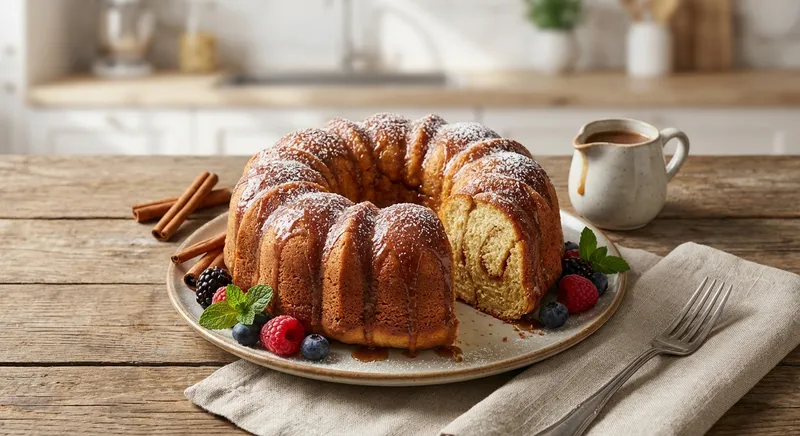
Golden, sticky pockets of cinnamon-sugar kissed bread that pull apart with ease — crispy at the edges, soft and pillowy inside, finished with a silky powdered-sugar glaze. This quick, no-yeast pull-apart bread turns ordinary sandwich bread into a bakery-style treat with caramelized brown sugar, warm cinnamon, and a glossy glaze — perfect for brunch, dessert or afternoon tea.
Preheat your oven to 350°F (175°C). Lightly butter a 9-inch bundt pan or a 9x5-inch loaf pan (the bundt gives attractive pull-apart sections; a loaf is fine too). Preheating ensures the butter-sugar will begin to caramelize as soon as the bread hits a hot oven, giving you crisp edges and quick set-up.
Cut the bread slices into 1 - 1 1/4-inch cubes. Uniform cubes ensure even baking and consistent pockets of caramelized crust. If your bread is very fresh and soft, let it sit uncovered 10 minutes to dry slightly — slightly drier bread soaks up butter and sugar without getting mushy.
In a medium saucepan or microwave-safe bowl, melt 6 tablespoons of the butter with the granulated sugar and 1 tablespoon of the ground cinnamon over low heat just until melted and combined (about 30–45 seconds in microwave, or 1–2 minutes on the stove). Stir to dissolve the sugar — this forms a thin, aromatic syrup that evenly coats the bread and helps the brown sugar caramelize while baking.
Place the bread cubes in a large mixing bowl. Pour the warm butter-cinnamon-sugar mixture over the cubes and gently toss with a spatula or your hands (coated in a clean glove or lightly buttered) until most pieces are evenly shiny — the goal is coating, not soggy saturation. The warm butter anchors the sugar to the bread and promotes Maillard browning on the crusts.
In a small bowl, combine the brown sugar, remaining 1 tablespoon ground cinnamon and a pinch of salt. Layer one-third of the coated bread cubes into the prepared pan, sprinkle with about one-third of the cinnamon-brown sugar mixture, then repeat twice more to build three layers (top with remaining sugar). Layering concentrates pockets of caramelized flavor and helps create contrast between crisp exterior bites and soft centers.
Dot the bread surface with the remaining 2 tablespoons of cold butter cut into small pieces — don’t melt. These cold butter bits will slowly melt in the oven and create little pockets of rich butter that baste the bread and create glossy, buttery pockets when the brown sugar melts.
Press the top gently to compact but not squish the cubes flat — you want pieces to stick together but remain pull-apart. Bake in the center rack for 25–30 minutes, rotating the pan once halfway through if your oven runs hot on one side. You’re looking for deep golden-brown peaks and caramelized edges; the interior should be set but still tender.
While the bread bakes, whisk the powdered sugar, milk and vanilla together until smooth. Start with 2 tablespoons milk and add more a teaspoon at a time to reach a thick but pourable glaze. A thicker glaze will cling to the pull-apart layers; a thinner glaze will soak down more.
Remove the bread from the oven when it’s golden and bubbling in places. Let it cool in the pan for 8–10 minutes — this short rest allows the caramel to set slightly so the bread keeps shape when you invert it. Invert onto a wire rack or serving plate. If any stray pockets of caramel remain in the pan, scrape them over the top.
Drizzle the glaze over the warm bread in ribbons, letting it pool in the crevices. The warm bread will soak up a little glaze, giving a gleam and an extra kiss of sweetness without making the interior soggy. Let the finished loaf rest 5 minutes before pulling apart and serving warm.
Serve warm, tearing off pieces with fingers so guests enjoy the contrast of crisp, caramelized edges and pillowy centers. Any leftovers keep well at room temperature covered for one day or wrapped and refrigerated up to 3 days — reheat 10–12 minutes at 325°F to refresh the crust.
371
Calories
5g
Protein
60g
Carbs
13g
Fat
2g
Fiber
How did this recipe turn out? Let others know!
to rate this recipe
By Brittanie Bottoms
Golden, sticky pockets of cinnamon-sugar kissed bread that pull apart with ease — crispy at the edges, soft and pillowy inside, finished with a silky powdered-sugar glaze. This quick, no-yeast pull-apart bread turns ordinary sandwich bread into a bakery-style treat with caramelized brown sugar, warm cinnamon, and a glossy glaze — perfect for brunch, dessert or afternoon tea.
Preheat your oven to 350°F (175°C). Lightly butter a 9-inch bundt pan or a 9x5-inch loaf pan (the bundt gives attractive pull-apart sections; a loaf is fine too). Preheating ensures the butter-sugar will begin to caramelize as soon as the bread hits a hot oven, giving you crisp edges and quick set-up.
Cut the bread slices into 1 - 1 1/4-inch cubes. Uniform cubes ensure even baking and consistent pockets of caramelized crust. If your bread is very fresh and soft, let it sit uncovered 10 minutes to dry slightly — slightly drier bread soaks up butter and sugar without getting mushy.
In a medium saucepan or microwave-safe bowl, melt 6 tablespoons of the butter with the granulated sugar and 1 tablespoon of the ground cinnamon over low heat just until melted and combined (about 30–45 seconds in microwave, or 1–2 minutes on the stove). Stir to dissolve the sugar — this forms a thin, aromatic syrup that evenly coats the bread and helps the brown sugar caramelize while baking.
Place the bread cubes in a large mixing bowl. Pour the warm butter-cinnamon-sugar mixture over the cubes and gently toss with a spatula or your hands (coated in a clean glove or lightly buttered) until most pieces are evenly shiny — the goal is coating, not soggy saturation. The warm butter anchors the sugar to the bread and promotes Maillard browning on the crusts.
In a small bowl, combine the brown sugar, remaining 1 tablespoon ground cinnamon and a pinch of salt. Layer one-third of the coated bread cubes into the prepared pan, sprinkle with about one-third of the cinnamon-brown sugar mixture, then repeat twice more to build three layers (top with remaining sugar). Layering concentrates pockets of caramelized flavor and helps create contrast between crisp exterior bites and soft centers.
Dot the bread surface with the remaining 2 tablespoons of cold butter cut into small pieces — don’t melt. These cold butter bits will slowly melt in the oven and create little pockets of rich butter that baste the bread and create glossy, buttery pockets when the brown sugar melts.
Press the top gently to compact but not squish the cubes flat — you want pieces to stick together but remain pull-apart. Bake in the center rack for 25–30 minutes, rotating the pan once halfway through if your oven runs hot on one side. You’re looking for deep golden-brown peaks and caramelized edges; the interior should be set but still tender.
While the bread bakes, whisk the powdered sugar, milk and vanilla together until smooth. Start with 2 tablespoons milk and add more a teaspoon at a time to reach a thick but pourable glaze. A thicker glaze will cling to the pull-apart layers; a thinner glaze will soak down more.
Remove the bread from the oven when it’s golden and bubbling in places. Let it cool in the pan for 8–10 minutes — this short rest allows the caramel to set slightly so the bread keeps shape when you invert it. Invert onto a wire rack or serving plate. If any stray pockets of caramel remain in the pan, scrape them over the top.
Drizzle the glaze over the warm bread in ribbons, letting it pool in the crevices. The warm bread will soak up a little glaze, giving a gleam and an extra kiss of sweetness without making the interior soggy. Let the finished loaf rest 5 minutes before pulling apart and serving warm.
Serve warm, tearing off pieces with fingers so guests enjoy the contrast of crisp, caramelized edges and pillowy centers. Any leftovers keep well at room temperature covered for one day or wrapped and refrigerated up to 3 days — reheat 10–12 minutes at 325°F to refresh the crust.
371
Calories
5g
Protein
60g
Carbs
13g
Fat
2g
Fiber
Your Rating:
