By perry grabois
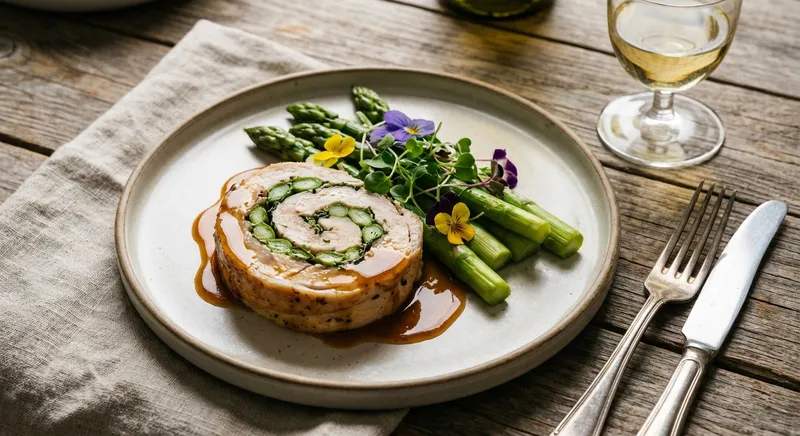
Tender chicken breasts are butterflied, wrapped around bright, snap‑crisp asparagus and a garlicky shallot butter, then seared to a golden crust and finished in the oven. A glossy shallot‑white wine reduction—enriched with butter and a hint of lemon—ties the dish together, offering savory, slightly sweet notes that elevate the simple ingredients to restaurant quality.
Prepare the chicken: pat the chicken breasts dry with paper towels. Place one breast between two pieces of plastic wrap or in a large resealable bag and gently butterfly it with a sharp knife to make an even thinner piece (about 1/4 inch thick), then pound gently with a meat mallet or rolling pin to an even 1/4 inch thickness. Repeat for all breasts. WHY: Butterflying and pounding give a uniform thickness so the roulade cooks evenly and is easy to roll without tearing.
Trim and blanch the asparagus: snap or trim off woody ends. Bring a medium pot of salted water to a boil, add the asparagus and blanch for 1 minute until bright green and just tender, then immediately plunge into an ice bath to stop cooking. Pat dry. WHY: Blanching preserves the color and gives asparagus a tender-crisp texture so it won’t overcook inside the roulade.
Make the filling: heat 1 tablespoon of butter and 1 tablespoon olive oil in a skillet over medium heat. Add the finely minced shallot and 1 clove minced garlic; cook, stirring, until softened and fragrant (about 2 minutes), but not browned. Stir in the chopped thyme and lemon zest (if using), season lightly with salt and pepper, and remove from heat. WHY: Gently cooking the shallot and garlic mellows their sharpness and concentrates their sweet aromatic flavors—this becomes the flavor base that complements the asparagus.
Assemble the roulades: Lay each pounded chicken breast flat, season both sides with salt and pepper. Spoon a thin smear (about 1/2 tablespoon) of the shallot-garlic butter across the center of each breast. Lay 4–6 blanched asparagus spears lengthwise on top (depending on thickness). Fold one long side of the chicken over the asparagus, then roll tightly into a cylinder. Secure with 2–3 toothpicks or tie with kitchen twine. WHY: A thin layer of the filling adds flavor without preventing the roulade from sealing; rolling tightly makes the roulade compact so it sears evenly and slices neatly.
Sear the roulades: Preheat oven to 375°F (190°C). Heat the remaining 1 tablespoon olive oil and 1 tablespoon butter in an ovenproof skillet over medium-high heat until shimmering. Add the roulades seam-side down and sear until deeply golden on all sides, about 2–3 minutes per side. Reduce heat briefly if the pan smokes; you want a brown crust, not burned meat. WHY: Searing creates Maillard browning that adds savory flavor and color, and locks the roulade’s shape before roasting.
Roast to finish: Transfer the skillet to the preheated oven and roast the roulades until the thickest part registers 155–160°F (68–71°C) with an instant-read thermometer, about 10–12 minutes depending on size. Remove from oven and tent loosely with foil; the carryover heat will bring them to a safe 165°F (74°C). WHY: Finishing in the oven ensures even cooking through the center without over-browning the exterior; pulling at 155–160°F prevents dryness after carryover.
Make the shallot‑wine reduction while the chicken rests: Use the same skillet (careful—hot). Remove excess fat, leaving about 1 tablespoon in the pan. Add the 2 thinly sliced shallots and sauté over medium heat until softened and starting to color, about 3–4 minutes—this releases their natural sweetness. Add the minced garlic and sauté 20–30 seconds until aromatic (do not burn). Pour in the white wine and scrape up browned bits (fond) from the pan with a wooden spoon—those bits are concentrated flavor. Add chicken stock and simmer briskly until reduced by about half and syrupy, about 6–8 minutes. Remove from heat and whisk in the remaining 2 tablespoons cold butter, one piece at a time, to finish the sauce and give it a glossy sheen. Stir in lemon juice and adjust salt and pepper to taste. WHY: Reducing wine concentrates its flavor while deglazing captures the browned fond; mounting with cold butter emulsifies the sauce, smoothing texture and balancing acidity.
Slice and serve: Remove toothpicks/twine from the roulades and slice each into 1–1 1/4 inch rounds. Arrange 3–4 slices per plate over a smear of the reduction or spoon the sauce around and over the slices. Garnish with a few fresh thyme leaves and a grind of black pepper. WHY: Slicing into medallions reveals the bright asparagus centre and provides elegant, restaurant-style plating.
Make‑ahead and reheating note: You can assemble roulades and refrigerate for up to 24 hours before searing and roasting. Reheat gently in a 300°F (150°C) oven under foil until warmed through to avoid drying. WHY: Gentle reheating preserves moisture and texture.
535
Calories
56g
Protein
11g
Carbs
24g
Fat
3g
Fiber
How did this recipe turn out? Let others know!
to rate this recipe
By perry grabois
Tender chicken breasts are butterflied, wrapped around bright, snap‑crisp asparagus and a garlicky shallot butter, then seared to a golden crust and finished in the oven. A glossy shallot‑white wine reduction—enriched with butter and a hint of lemon—ties the dish together, offering savory, slightly sweet notes that elevate the simple ingredients to restaurant quality.
Prepare the chicken: pat the chicken breasts dry with paper towels. Place one breast between two pieces of plastic wrap or in a large resealable bag and gently butterfly it with a sharp knife to make an even thinner piece (about 1/4 inch thick), then pound gently with a meat mallet or rolling pin to an even 1/4 inch thickness. Repeat for all breasts. WHY: Butterflying and pounding give a uniform thickness so the roulade cooks evenly and is easy to roll without tearing.
Trim and blanch the asparagus: snap or trim off woody ends. Bring a medium pot of salted water to a boil, add the asparagus and blanch for 1 minute until bright green and just tender, then immediately plunge into an ice bath to stop cooking. Pat dry. WHY: Blanching preserves the color and gives asparagus a tender-crisp texture so it won’t overcook inside the roulade.
Make the filling: heat 1 tablespoon of butter and 1 tablespoon olive oil in a skillet over medium heat. Add the finely minced shallot and 1 clove minced garlic; cook, stirring, until softened and fragrant (about 2 minutes), but not browned. Stir in the chopped thyme and lemon zest (if using), season lightly with salt and pepper, and remove from heat. WHY: Gently cooking the shallot and garlic mellows their sharpness and concentrates their sweet aromatic flavors—this becomes the flavor base that complements the asparagus.
Assemble the roulades: Lay each pounded chicken breast flat, season both sides with salt and pepper. Spoon a thin smear (about 1/2 tablespoon) of the shallot-garlic butter across the center of each breast. Lay 4–6 blanched asparagus spears lengthwise on top (depending on thickness). Fold one long side of the chicken over the asparagus, then roll tightly into a cylinder. Secure with 2–3 toothpicks or tie with kitchen twine. WHY: A thin layer of the filling adds flavor without preventing the roulade from sealing; rolling tightly makes the roulade compact so it sears evenly and slices neatly.
Sear the roulades: Preheat oven to 375°F (190°C). Heat the remaining 1 tablespoon olive oil and 1 tablespoon butter in an ovenproof skillet over medium-high heat until shimmering. Add the roulades seam-side down and sear until deeply golden on all sides, about 2–3 minutes per side. Reduce heat briefly if the pan smokes; you want a brown crust, not burned meat. WHY: Searing creates Maillard browning that adds savory flavor and color, and locks the roulade’s shape before roasting.
Roast to finish: Transfer the skillet to the preheated oven and roast the roulades until the thickest part registers 155–160°F (68–71°C) with an instant-read thermometer, about 10–12 minutes depending on size. Remove from oven and tent loosely with foil; the carryover heat will bring them to a safe 165°F (74°C). WHY: Finishing in the oven ensures even cooking through the center without over-browning the exterior; pulling at 155–160°F prevents dryness after carryover.
Make the shallot‑wine reduction while the chicken rests: Use the same skillet (careful—hot). Remove excess fat, leaving about 1 tablespoon in the pan. Add the 2 thinly sliced shallots and sauté over medium heat until softened and starting to color, about 3–4 minutes—this releases their natural sweetness. Add the minced garlic and sauté 20–30 seconds until aromatic (do not burn). Pour in the white wine and scrape up browned bits (fond) from the pan with a wooden spoon—those bits are concentrated flavor. Add chicken stock and simmer briskly until reduced by about half and syrupy, about 6–8 minutes. Remove from heat and whisk in the remaining 2 tablespoons cold butter, one piece at a time, to finish the sauce and give it a glossy sheen. Stir in lemon juice and adjust salt and pepper to taste. WHY: Reducing wine concentrates its flavor while deglazing captures the browned fond; mounting with cold butter emulsifies the sauce, smoothing texture and balancing acidity.
Slice and serve: Remove toothpicks/twine from the roulades and slice each into 1–1 1/4 inch rounds. Arrange 3–4 slices per plate over a smear of the reduction or spoon the sauce around and over the slices. Garnish with a few fresh thyme leaves and a grind of black pepper. WHY: Slicing into medallions reveals the bright asparagus centre and provides elegant, restaurant-style plating.
Make‑ahead and reheating note: You can assemble roulades and refrigerate for up to 24 hours before searing and roasting. Reheat gently in a 300°F (150°C) oven under foil until warmed through to avoid drying. WHY: Gentle reheating preserves moisture and texture.
535
Calories
56g
Protein
11g
Carbs
24g
Fat
3g
Fiber
Your Rating:
