By Harry McCosker
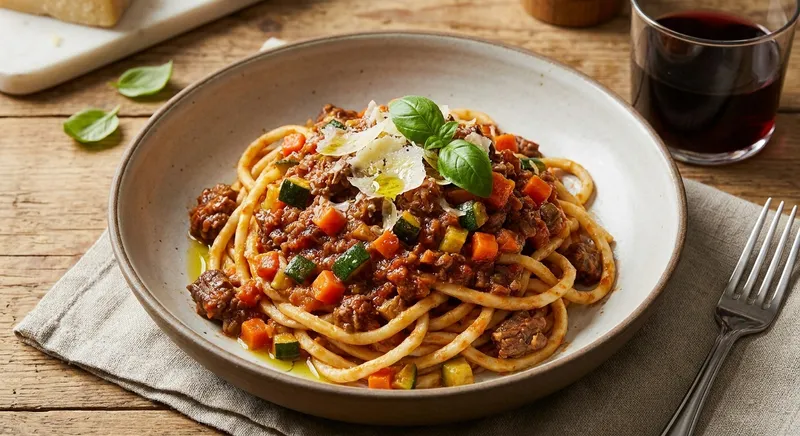
A rich, restaurant-quality spaghetti Bolognese that balances hearty 10% lean beef, sweet carrot and tender zucchini with a bright, slow-simmered tomato sauce. The sauce is concentrated with tomato paste and canned tomatoes, gently caramelized aromatics and a splash of olive oil for silkiness — yielding deep meaty flavor, satisfying texture, and a comforting finish that sings with simple pantry ingredients.
Prep the vegetables: finely dice the onion, mince the garlic, grate the carrot and dice the zucchini. Finely cutting or grating creates small pieces that will cook into the sauce and meld with the meat — this gives body and sweetness without large vegetable chunks that compete with the pasta.
Bring a large pot of water to a rolling boil and add a generous pinch of salt (about 1 tbsp). Keep the water boiling and ready for the spaghetti. Salting the pasta water seasons the pasta itself so the final dish is more flavorful; add the pasta when the sauce needs its final simmer.
Heat a large heavy-bottomed sauté pan over medium-high heat and add the olive oil. Swirl to coat. Warm oil transfers heat evenly and carries flavor — a heavy pan helps you get good caramelization on the meat and onions without hot spots.
Add the diced onion to the hot oil and cook for 4–5 minutes until translucent and beginning to caramelize. Stir occasionally. Caramelizing the onion draws out sweetness and builds savory depth (the Maillard reaction) that the sauce needs.
Add the minced garlic and cook for 30–45 seconds until fragrant. Garlic cooks quickly; browning it will make it bitter so keep it brief to release aroma without burning.
Add the ground beef, breaking it up with a spoon into small crumbles. Increase heat to medium-high and let it sear without stirring for 1–2 minutes so the first side can brown, then stir and continue until mostly browned (about 4–6 minutes total). Browning develops concentrated savory flavor and caramelized bits that deepen the sauce.
Season the meat with 1 tsp salt, 1/4 tsp garlic powder and 1/4 tsp onion powder, and 1/4 tsp black pepper. The small addition of powdered aromatics layers flavor and ensures seasoning penetrates the meat.
Stir in the grated carrot and diced zucchini and cook 2–3 minutes until they begin to soften. Vegetable solids add natural sweetness and extra body to the ragu; they will continue to break down during the simmer.
Push the meat/veg mixture to one side of the pan. Add the tomato paste to the empty space and cook it for 60–90 seconds, stirring, until it darkens slightly. Toasting tomato paste (browning it in the fat) concentrates its sugars and reduces raw tomato bitterness — it gives the sauce a deep, umami-rich base.
Mix the toasted paste into the meat, then add the canned tomatoes and 1/2 cup (120 ml) water. Use a wooden spoon to break down any whole tomatoes. Add the remaining 1/2 tsp salt, the optional 1 tsp sugar, and more black pepper to taste. Bringing the sauce up to a gentle simmer and adding a little water gives you control over thickness.
Lower the heat to medium-low and simmer, uncovered, for 20 minutes, stirring occasionally and adjusting thickness with a splash of water if it gets too thick. A gentle simmer lets flavors meld and reduces the sauce to a glossy, concentrated finish — avoid a rolling boil which can break down textures and evaporate liquid too fast.
When sauce has 10 minutes left, add the spaghetti to the boiling water and cook according to package directions until 'al dente' (usually 8–10 minutes for standard dried spaghetti). Drain and reserve about 1/2 cup (120 ml) of the starchy pasta water. Cooking the pasta al dente gives it bite and texture; reserved pasta water is a magic emulsifier to bind pasta and sauce.
Turn off the heat under the sauce. Add the drained spaghetti directly into the pan with the Bolognese and toss vigorously with 1/4 cup (60 ml) reserved pasta water to marry sauce and pasta. Tossing while the sauce and pasta are hot encourages the starchy water to create a silky coating around each strand.
Taste and adjust seasoning — add more salt, pepper, or a pinch of sugar if the tomatoes are too acidic. Let the pasta rest in the sauce for 1–2 minutes to absorb flavor, then divide between four plates and serve immediately.
766
Calories
48g
Protein
89g
Carbs
24g
Fat
6g
Fiber
How did this recipe turn out? Let others know!
to rate this recipe
By Harry McCosker
A rich, restaurant-quality spaghetti Bolognese that balances hearty 10% lean beef, sweet carrot and tender zucchini with a bright, slow-simmered tomato sauce. The sauce is concentrated with tomato paste and canned tomatoes, gently caramelized aromatics and a splash of olive oil for silkiness — yielding deep meaty flavor, satisfying texture, and a comforting finish that sings with simple pantry ingredients.
Prep the vegetables: finely dice the onion, mince the garlic, grate the carrot and dice the zucchini. Finely cutting or grating creates small pieces that will cook into the sauce and meld with the meat — this gives body and sweetness without large vegetable chunks that compete with the pasta.
Bring a large pot of water to a rolling boil and add a generous pinch of salt (about 1 tbsp). Keep the water boiling and ready for the spaghetti. Salting the pasta water seasons the pasta itself so the final dish is more flavorful; add the pasta when the sauce needs its final simmer.
Heat a large heavy-bottomed sauté pan over medium-high heat and add the olive oil. Swirl to coat. Warm oil transfers heat evenly and carries flavor — a heavy pan helps you get good caramelization on the meat and onions without hot spots.
Add the diced onion to the hot oil and cook for 4–5 minutes until translucent and beginning to caramelize. Stir occasionally. Caramelizing the onion draws out sweetness and builds savory depth (the Maillard reaction) that the sauce needs.
Add the minced garlic and cook for 30–45 seconds until fragrant. Garlic cooks quickly; browning it will make it bitter so keep it brief to release aroma without burning.
Add the ground beef, breaking it up with a spoon into small crumbles. Increase heat to medium-high and let it sear without stirring for 1–2 minutes so the first side can brown, then stir and continue until mostly browned (about 4–6 minutes total). Browning develops concentrated savory flavor and caramelized bits that deepen the sauce.
Season the meat with 1 tsp salt, 1/4 tsp garlic powder and 1/4 tsp onion powder, and 1/4 tsp black pepper. The small addition of powdered aromatics layers flavor and ensures seasoning penetrates the meat.
Stir in the grated carrot and diced zucchini and cook 2–3 minutes until they begin to soften. Vegetable solids add natural sweetness and extra body to the ragu; they will continue to break down during the simmer.
Push the meat/veg mixture to one side of the pan. Add the tomato paste to the empty space and cook it for 60–90 seconds, stirring, until it darkens slightly. Toasting tomato paste (browning it in the fat) concentrates its sugars and reduces raw tomato bitterness — it gives the sauce a deep, umami-rich base.
Mix the toasted paste into the meat, then add the canned tomatoes and 1/2 cup (120 ml) water. Use a wooden spoon to break down any whole tomatoes. Add the remaining 1/2 tsp salt, the optional 1 tsp sugar, and more black pepper to taste. Bringing the sauce up to a gentle simmer and adding a little water gives you control over thickness.
Lower the heat to medium-low and simmer, uncovered, for 20 minutes, stirring occasionally and adjusting thickness with a splash of water if it gets too thick. A gentle simmer lets flavors meld and reduces the sauce to a glossy, concentrated finish — avoid a rolling boil which can break down textures and evaporate liquid too fast.
When sauce has 10 minutes left, add the spaghetti to the boiling water and cook according to package directions until 'al dente' (usually 8–10 minutes for standard dried spaghetti). Drain and reserve about 1/2 cup (120 ml) of the starchy pasta water. Cooking the pasta al dente gives it bite and texture; reserved pasta water is a magic emulsifier to bind pasta and sauce.
Turn off the heat under the sauce. Add the drained spaghetti directly into the pan with the Bolognese and toss vigorously with 1/4 cup (60 ml) reserved pasta water to marry sauce and pasta. Tossing while the sauce and pasta are hot encourages the starchy water to create a silky coating around each strand.
Taste and adjust seasoning — add more salt, pepper, or a pinch of sugar if the tomatoes are too acidic. Let the pasta rest in the sauce for 1–2 minutes to absorb flavor, then divide between four plates and serve immediately.
766
Calories
48g
Protein
89g
Carbs
24g
Fat
6g
Fiber
Your Rating:
