By Barry Hamilton
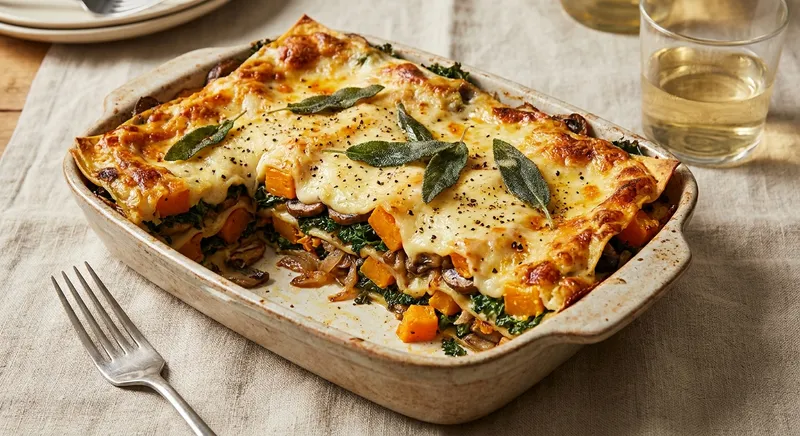
A cozy, elegant lasagna that layers silky sage-scented béchamel with sweet roasted butternut squash, bright spinach and melting fontina. The result is creamy, slightly nutty and beautifully balanced—golden on top with tender pasta and pockets of savory herb flavor that make it feel like a restaurant-special for autumn dinner.
Prepare equipment and preheat oven: Position an oven rack in the middle and preheat the oven to 180°C / 350°F. Have a 20 x 20 cm (8 x 8 in) or similarly sized baking dish ready. Preheating ensures even baking and a predictable time for the cheese to brown.
If your butternut squash is not yet roasted: toss 150 g thin slices with a teaspoon of olive oil and a pinch of salt and roast on a sheet at 200°C / 400°F for 12–15 minutes until edges caramelize. Roasting concentrates sweetness and prevents the lasagna from becoming watery.
Wilt the spinach: heat 1 tbsp olive oil in a skillet over medium heat. Add the 60 g baby spinach and a pinch of salt; sauté just until wilted, about 1–2 minutes. Remove from heat and squeeze in a fine-mesh sieve or between paper towels to remove excess water. Removing water prevents a soggy lasagna and gives a brighter spinach texture.
Make the sage béchamel: gently warm 200 ml whole milk in a small saucepan until just below simmering (warm milk integrates more smoothly into a roux and prevents lumps). In a medium saucepan melt 20 g butter over medium heat. Add 15 g flour and whisk constantly for 60–90 seconds to cook the raw flour taste—this forms the roux which thickens the sauce. Slowly pour the warm milk into the roux in a steady stream, whisking constantly to avoid lumps. Bring to a gentle simmer and cook 3–5 minutes until the sauce coats the back of a spoon; this develops creaminess and cooks off starchy taste. Stir in the chopped sage (reserve a pinch for finishing), a pinch of grated nutmeg, and season to taste with salt and pepper. Fold in half (about 30 g) of the shredded fontina off heat to melt it into the béchamel for extra silkiness—adding cheese off heat prevents the sauce from splitting.
Assemble the lasagna: spread a thin layer (~3–4 tbsp) of the sage béchamel on the bottom of the baking dish to keep the first layer of pasta from sticking. Place 3 lasagna sheets to form the first pasta layer. Spoon about one‑third of the béchamel over the pasta and spread evenly; the bechamel acts as both binder and seasoning. Arrange half of the roasted butternut slices evenly across this layer, then scatter half of the wilted spinach. Sprinkle about a third of the remaining shredded fontina (≈10–12 g). Repeat: pasta, one‑third béchamel, remaining squash, remaining spinach, one‑third fontina. Finish with the last 3 pasta sheets, the remaining béchamel spread evenly, and the rest of the fontina on top. Dot a few small pieces of the remaining butter over the top for a glossy browned finish.
Cover and bake: cover the dish tightly with foil (shiny side down) and bake at 180°C / 350°F for 20 minutes to allow gentle steaming and heating through. Then remove foil and bake for 10–15 minutes more until the top is bubbly and lightly golden. Removing the foil for the last part lets the cheese brown and develop toasted flavor.
Rest before serving: allow the lasagna to rest for 10–15 minutes before cutting. Resting lets the béchamel set slightly so slices hold together cleanly and the flavors knit.
Finish and serve: sprinkle the reserved chopped sage and an extra crack of black pepper over the hot lasagna. Cut into 4 portions and serve warm—each piece should have creamy béchamel, soft roasted squash layers and melted fontina pockets.
266
Calories
10g
Protein
25g
Carbs
14g
Fat
2g
Fiber
How did this recipe turn out? Let others know!
to rate this recipe
By Barry Hamilton
A cozy, elegant lasagna that layers silky sage-scented béchamel with sweet roasted butternut squash, bright spinach and melting fontina. The result is creamy, slightly nutty and beautifully balanced—golden on top with tender pasta and pockets of savory herb flavor that make it feel like a restaurant-special for autumn dinner.
Prepare equipment and preheat oven: Position an oven rack in the middle and preheat the oven to 180°C / 350°F. Have a 20 x 20 cm (8 x 8 in) or similarly sized baking dish ready. Preheating ensures even baking and a predictable time for the cheese to brown.
If your butternut squash is not yet roasted: toss 150 g thin slices with a teaspoon of olive oil and a pinch of salt and roast on a sheet at 200°C / 400°F for 12–15 minutes until edges caramelize. Roasting concentrates sweetness and prevents the lasagna from becoming watery.
Wilt the spinach: heat 1 tbsp olive oil in a skillet over medium heat. Add the 60 g baby spinach and a pinch of salt; sauté just until wilted, about 1–2 minutes. Remove from heat and squeeze in a fine-mesh sieve or between paper towels to remove excess water. Removing water prevents a soggy lasagna and gives a brighter spinach texture.
Make the sage béchamel: gently warm 200 ml whole milk in a small saucepan until just below simmering (warm milk integrates more smoothly into a roux and prevents lumps). In a medium saucepan melt 20 g butter over medium heat. Add 15 g flour and whisk constantly for 60–90 seconds to cook the raw flour taste—this forms the roux which thickens the sauce. Slowly pour the warm milk into the roux in a steady stream, whisking constantly to avoid lumps. Bring to a gentle simmer and cook 3–5 minutes until the sauce coats the back of a spoon; this develops creaminess and cooks off starchy taste. Stir in the chopped sage (reserve a pinch for finishing), a pinch of grated nutmeg, and season to taste with salt and pepper. Fold in half (about 30 g) of the shredded fontina off heat to melt it into the béchamel for extra silkiness—adding cheese off heat prevents the sauce from splitting.
Assemble the lasagna: spread a thin layer (~3–4 tbsp) of the sage béchamel on the bottom of the baking dish to keep the first layer of pasta from sticking. Place 3 lasagna sheets to form the first pasta layer. Spoon about one‑third of the béchamel over the pasta and spread evenly; the bechamel acts as both binder and seasoning. Arrange half of the roasted butternut slices evenly across this layer, then scatter half of the wilted spinach. Sprinkle about a third of the remaining shredded fontina (≈10–12 g). Repeat: pasta, one‑third béchamel, remaining squash, remaining spinach, one‑third fontina. Finish with the last 3 pasta sheets, the remaining béchamel spread evenly, and the rest of the fontina on top. Dot a few small pieces of the remaining butter over the top for a glossy browned finish.
Cover and bake: cover the dish tightly with foil (shiny side down) and bake at 180°C / 350°F for 20 minutes to allow gentle steaming and heating through. Then remove foil and bake for 10–15 minutes more until the top is bubbly and lightly golden. Removing the foil for the last part lets the cheese brown and develop toasted flavor.
Rest before serving: allow the lasagna to rest for 10–15 minutes before cutting. Resting lets the béchamel set slightly so slices hold together cleanly and the flavors knit.
Finish and serve: sprinkle the reserved chopped sage and an extra crack of black pepper over the hot lasagna. Cut into 4 portions and serve warm—each piece should have creamy béchamel, soft roasted squash layers and melted fontina pockets.
266
Calories
10g
Protein
25g
Carbs
14g
Fat
2g
Fiber
Your Rating:
