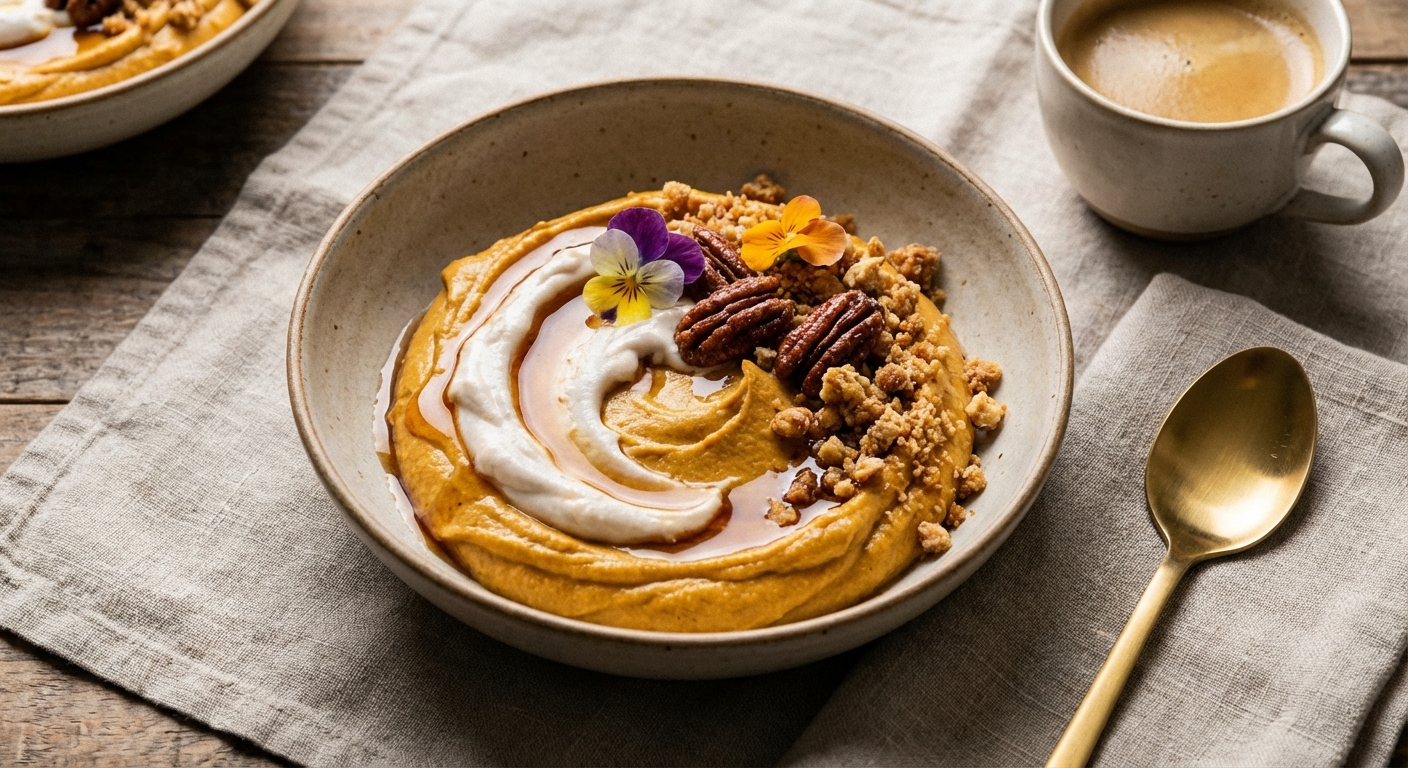
Silky vegan roasted pumpkin mousse with maple coconut cream, candied pecans, and ginger-almond crumble—comforting, elegant, and dairy-free for fall. Great for sharing
Ready to cook?
Get the complete ingredient list, step-by-step instructions, and nutritional info
View Recipe →Autumn has always felt like a warm invitation to slow down, gather, and savor the little rituals that make the season feel special. For me, that ritual often involves something creamy, comforting, and a touch glamorous that doesn’t lean on dairy or eggs. This Silky Vegan Roasted Pumpkin Mousse with Maple-Coconut Cream, Candied Pecans & Ginger-Almond Crumble is exactly that: a dessert that reads as indulgent but is built on simple, pantry-friendly ingredients we lean on all season long.
The magic begins with a humble pumpkin. I like to roast it to concentrate its natural sugars and coax out a deep, caramelized edge. Roasting does more than deepen the flavor; it also helps shed some moisture, giving the mousse a richer pumpkin-forward profile. The result is a silken purée that pairs beautifully with a luxurious maple-coconut cream and a cloud of aquafaba foam—yes, vegan magic powered by chickpea brine. Layer in a ginger-kissed crumble and candied pecans, and you’ve created a multi-textured dessert that stays elegant from first bite to the last crumb. And because we’re food people, we’re always chasing that perfect contrast of texture: the creamy mousse, the crackly crumble, and the glossy, bronzed pecans that offer toasty sweetness in every mouthful.
If you’re new to vegan mousses, this recipe might feel intimidating. But the process is surprisingly forgiving, and the payoff is absolutely worth it. You’ll roast the pumpkin, blend it with maple and coconut milk, whip aquafaba into stiff, glossy peaks, and gently fold it in to create a mousse that holds its shape without dairy. Then you’ll build texture with a ginger-almond oat crumble and candied pecans, finish with toasted pumpkin seeds, a kiss of vanilla, and a bright lemon zest to lift the flavors. The result is a dessert that feels elevated enough for a dinner party, yet friendly enough for a weeknight treat when you crave something truly comforting.
To me, the best part is how this dessert embodies balance. The pumpkin’s gentle earthiness is offset by warm spices—cinnamon, ginger, and cardamom—while maple syrup threads sweetness through without tipping into cloying. The coconut milk lends silkiness and depth, and the aquafaba brings an airy lift that makes the mousse feel almost ethereal. The crumble adds a toasty, nutty crunch, and the candied pecans contribute a caramelized bite that clings to the edges of spoonfuls. It’s a composition that invites sharing, conversation, and seconds—though I won’t judge you if you keep a few servings all to yourself.
One of the joys of a recipe like this is the opportunity to explore variations. If you’re allergic to nuts, you can experiment with oat, hemp, or sun butter in the crumble; if you want to cut the sugar, you can adjust the maple syrup and brown sugar in small increments. The aquafaba technique is surprisingly adaptable, and once you’ve mastered the temper-and-fold approach, you can apply it to other creamy desserts. For me, this mousse represents a bridge between the cozy tradition of pumpkin desserts and the modern, plant-forward approach that makes sense for diverse dietary needs. It’s delicious, it’s gorgeous, and it’s a little bit magical in how it combines technique with comforting, familiar flavors.
Before we dive into the technique, here’s a closer look at why the components in this recipe work so well together. Each element is chosen not just for flavor, but for texture, stability, and the way it complements the others.
As you can see, every component has a purpose: the purée carries pumpkin’s soul, the aquafaba supplies airiness, the maple invites warmth, and the crumble and nuts deliver texture and contrast. When plated correctly, the layers create a symphony of sensations that makes this dessert feel special enough for a celebration, yet approachable enough for a weekend treat.
From someone who has tested this recipe more times than I care to admit, here are the little nuances that push the result from good to truly outstanding:
If you’re curious about the science behind aquafaba, this is a wonderful recipe to study the technique in action. The foam stabilizes with sugar and cream of tartar, the structure holds through gentle folding, and the result is a mousse that feels indulgent without relying on dairy. It’s a small culinary triumph, and I love sharing those moments with readers who are exploring plant-based desserts with the same curiosity I bring to the kitchen.
Presentation matters as much as flavor here. I love portioning the mousse into six dessert glasses or bowls, then building the layers in front of guests so they can see the contrast of textures. A quick drizzle of the reserved maple syrup ties the top layer to the crumble, and a scatter of toasted pumpkin seeds provides a glossy, emerald-green pop against the orange mousse. The candied pecans add a caramel-bronze sparkle that’s irresistible to the eye and the palate.
Pairing ideas to elevate the experience:
As you serve, consider encouraging guests to mix a bite of mousse with a little crumble and a nut on top. The way the silken interior meets the crisp topping is where the dessert reveals its clever architecture—the mousse offering a creamy cushion, the crumble delivering a toasty snap, and the pecans giving a luxurious bite with each mouthful. It’s a texture-driven dessert that feels like a well-conducted symphony in a glass or bowl.
And if you come away with just one takeaway from this recipe, let it be this: great plant-based desserts can be deeply comforting, wonderfully soul-satisfying, and elegantly refined without needing to rely on dairy. The combination of pumpkin’s mellow sweetness, the brightness of lemon zest, and the crunch of the crumble invites you back for another spoonful, again and again.
For more inspiration and to explore more of my delicious homemade favorites, you can browse the deliciously comforting recipes in the Delicious homemade category. And if you’re feeling inspired to build your own culinary experiments, why not start sketching your next recipe at the create page?
When stored tightly covered in the fridge, the mousse will stay good for up to 3 days. The texture might soften a touch over time, but it remains delicious and creamy. For best results, keep the crumble and toppings separate until serving.
Yes. You can roast the pumpkin and purée it a day ahead, and you can bake the crumble and candy pecans ahead of time and store them in an airtight container. Whip the aquafaba and assemble on the day you plan to serve for the freshest texture and the most dramatic foam.
For a dairy-free version, this recipe already shines with coconut milk. If you need nut-free options, you can replace almond flour with oat flour in the crumble and use roasted seeds or pumpkin seeds in place of pecans. You can also adjust spices to taste, adding more cinnamon for warmth or a pinch of allspice for a holiday twist.
Freezing is not recommended for this particular mousse, as the aquafaba structure and coconut-milk emulsion can separate or lose their lift after thawing. It’s best enjoyed fresh or within 3 days of assembly.
If you try this at home, I’d love to hear how you customize it. What spices or toppings would you add? How did your guests react to the airy aquafaba mousse? Share your variations and notes, and we’ll keep the conversation going about how to make plant-based desserts feel as special as they taste.
Ready to dive into more culinary adventures? Your next kitchen experiment awaits at the create page. Happy cooking, friends!
Discover similar recipes you'll love
