
Whip up a 30-minute Savory Chicken and Vegetable Stir-Fry: tender chicken, crisp peppers, and ripe tomatoes in a quick, flavorful weeknight skillet.
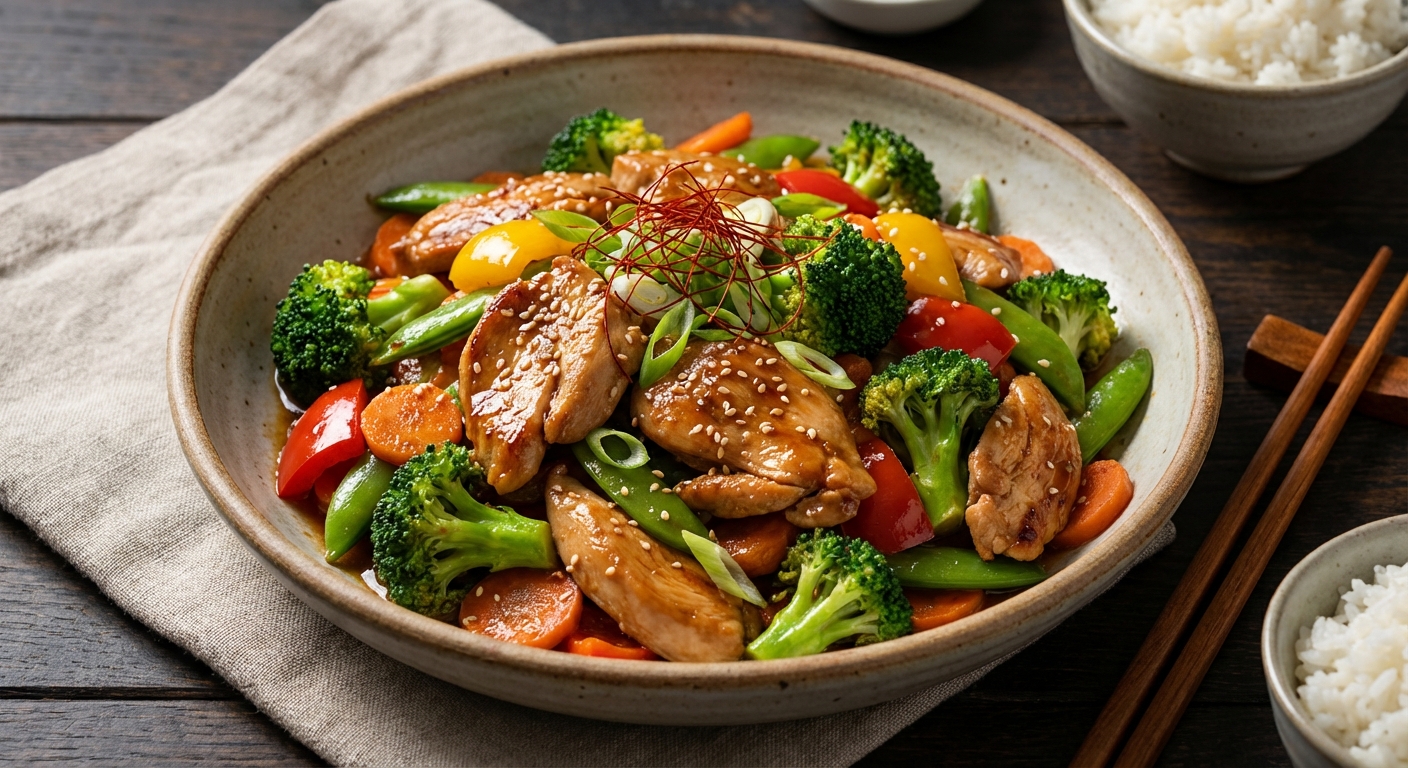
Whip up a 30-minute Savory Chicken and Vegetable Stir-Fry: tender chicken, crisp peppers, and ripe tomatoes in a quick, flavorful weeknight skillet.
Ready to cook?
Get the complete ingredient list, step-by-step instructions, and nutritional info
View Recipe →When the weekdays pile up and the clock seems to sprint toward dinnertime, I reach for a meal that feels comforting, colorful, and fast enough to cook before the kids start asking for snacks. This Savory Chicken and Vegetable Stir-Fry has become my go-to for those busy nights. It’s a bright, balanced main course that comes together in about half an hour, with a sizzling skillet doing most of the heavy lifting. The beauty of it is in the contrast: tender chicken, crisp onions and peppers, and tomatoes that soften into a fragrant, slightly tangy sauce—all brightened by a splash of soy and a kiss of garlic. It’s simple, satisfying, and endlessly adaptable, which makes it a staple in my kitchen repertoire. If you’re chasing a weeknight dinner that doesn’t compromise on flavor, texture, or color, you’ve found it. This dish is a perfect fit for the Main Course category, and it also sits nicely in Stir-Fry, Quick Meal, and Dinner collections.
And yes, the timing is real. From the moment you set the skillet on the heat, you’re looking at about 30 minutes of hands-on cooking, followed by a moment to savor the aroma that fills your kitchen. The result is a nourishing, savory skillet that markets well for a family meal or a cozy date-night-in option. It’s a dish you can feel good about serving and feel even better eating—protein, vegetables, and flavor all in one pan.
Let’s take a closer look at the building blocks of this dish and why they work so well together. Each ingredient brings a little something to the plate beyond taste, from protein to nutrients to texture. You’ll notice that the recipe stays simple while still delivering depth of flavor—no heavy sauces, just a smart balance of ingredients you probably already keep in your kitchen. For convenience and consistency, I’ve linked to the key ingredients so you can explore their mother-nourishment and uses.
Healthy? Yes—protein, vegetables, and olive oil form a satisfying trio. Flavorful? Absolutely—garlic sizzling in the oil, a soy-sauce kiss, and a tomato-touched glaze that makes every bite feel cohesive. This is a dish you’ll reach for again and again when you want something fast that still feels like a dinnertime treat.
Over the years, I’ve learned a few practical tricks to make this dish shine every time. These expert tips are designed to be simple adjustments that don’t require fancy ingredients or extra steps, but they can raise the flavor and texture to the next level.
If you’re curious about how this recipe becomes part of a broader pantry routine, think of it as a canvas for your own flavor experiments. You can keep the core structure and switch up ingredients seasonally or based on what’s in your fridge. For those who love a glossy finish, a quick toss with a teaspoon more of soy sauce at the end can intensify the glaze without complicating the preparation.
With a hearty surface of protein and vegetables, this stir-fry shines on its own, but it’s also a fantastic canvas for sides and toppings. Here are some ideas to elevate your plate while keeping the dream of a quick, weeknight dinner intact.
Want to explore more dinner ideas in the same vein? This approach fits neatly into the Dinner category, and it acts as a reliable anchor for quick meals that still feel intentional. If you’re excited by the idea of building your own culinary repertoire, I encourage you to try crafting your own recipes—our recipe creator is a friendly space to begin experimenting.
If you enjoyed the rhythm and flavor of this dish, I’d love to hear about your own spin. The beauty of a stir-fry is how forgiving it is—once you’ve mastered the base, you can riff with different vegetables, sauces, and textures. And if you’re looking for more inspiration, remember that this post sits in the same family of flavors as a variety of Stir-Fry dishes, as well as other Main Course options for weeknights. When you’re ready to take the next step, head to our recipe creator and start building your own kitchen stories.
Happy cooking, and may your skillet always sizzle with something new and delicious.
Discover similar recipes you'll love