Introduction
I’ll level with you: I didn’t grow up in a house that regularly roasted a boneless turkey breast. My family leaned into roasts with bones, gravy trains of pan drippings, and the kind of Sunday dinners that required a daylong plan. But a few years ago, I discovered that a well-seasoned turkey breast can be every bit as joyous as a whole turkey—especially when you want something lean, weeknight-friendly, and still deeply flavorful. This Roasted Cajun Turkey Breast with Pan Sauce became my answer to casual dinner gatherings, date nights at home, and those moments when I want a Sunday vibe with a fraction of the work. The recipe sits at a friendly 1 hour 35 minutes, which means you can have a show-stopping centerpiece and still squeeze in a podcast or a glass of wine before dessert.
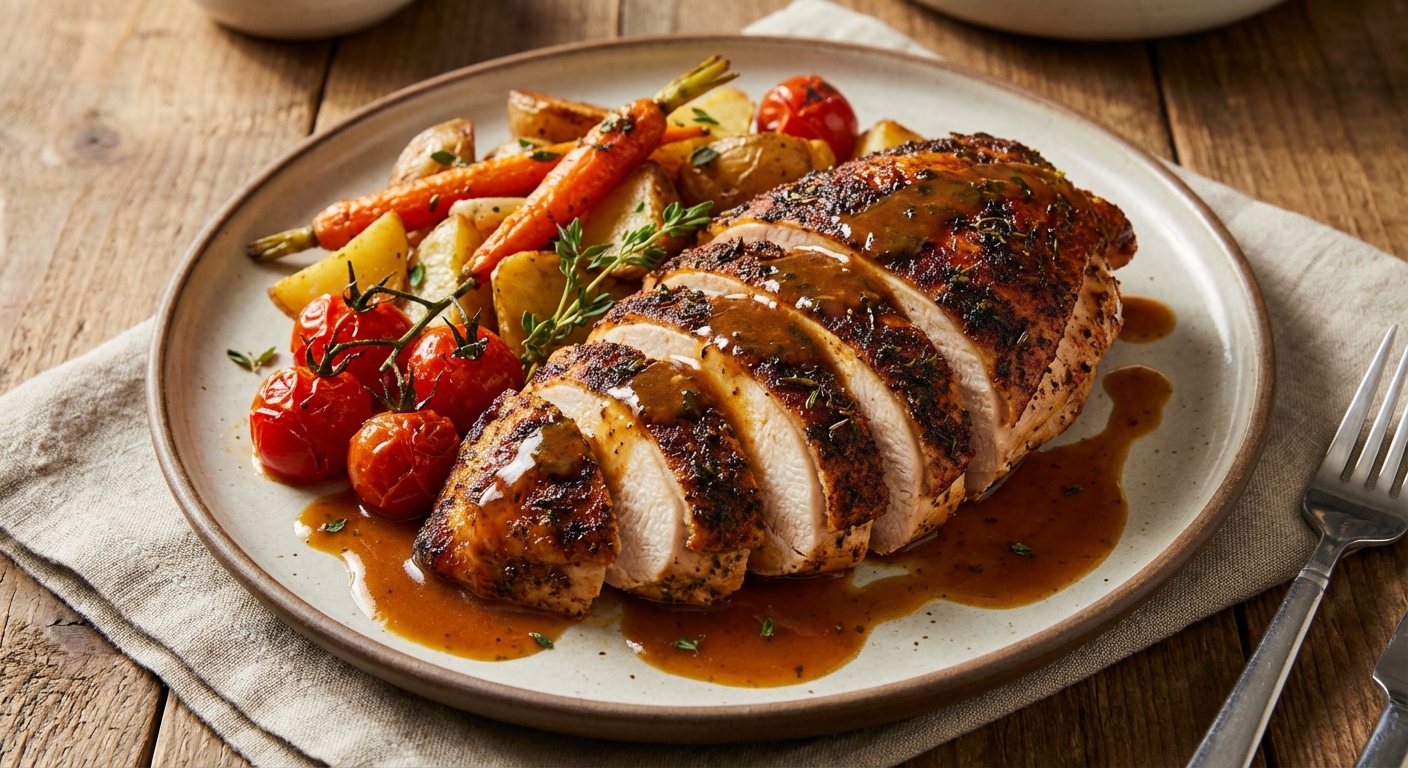
What makes this dish sing is the balance of heat, herbaceous warmth, and bright brightness that a few simple components can provide. The Cajun rub is a careful blend rather than a wall of spice, so every slice carries a whisper of smokiness, a hit of pepper, and a pinch of oregano and thyme that lifts the meat without masking its clean turkey flavor. Then there’s the pan sauce—a quick, glossy finish built in the same skillet you used to sear the turkey. You’ll dip into the fond (the browned bits) like a treasure chest of concentrated flavor, deglaze with dry white wine or stock, soften a shallot, and finish with lemon and butter for a satin sheen that clings to each slice. It’s not just a sauce; it’s the bridge between the crust you developed in the pan and the juicy interior you crave.
As I plate this, I think about all the little decisions that matter: patting the turkey dry so the rub adheres, letting it rest so the juices settle rather than run, and allowing the butter to melt over the top while the rub hydrates into a crust. These steps aren’t flashy, but they’re the quiet choreographies of good home cooking—the kind of details that transform a simple weeknight into something worthy of a camera, a plate, and a moment of pause with whoever you’re eating with. If you’re browsing for a crowd-pleasing dish that fits into a busy schedule, this roast turkey breast checks all the boxes and then some.
If you’re curious to explore the ingredients that make this dish tick, you’ll find the spices and pantry staples playing nicely with a handful of fresh aromatics. And if you’re new to the idea of a pan sauce finished in that same skillet, you’ll be surprised by how quickly a few minutes of stirring and simmering yield something that tastes like it’s been simmering all afternoon.
For those who love to dive deeper into pantry-friendly flavors, this recipe sits comfortably in the realm of our
delicious homemade meals. It’s the kind of dish that invites you to experiment with swaps and pairings, all while staying anchored by a reliable technique: a properly rested roast, a well-balanced rub, and a glossy, lemon-bright finish.
Ingredients Benefits
This section is less about the exact measurements (you’ll find them in the recipe) and more about why each component matters. The beauty of a well-constructed rub and a simple pan sauce is that every ingredient has a purpose, and together they create a cohesive flavor profile that feels both elevated and approachable.
- boneless skinless turkey breast: The lean canvas of the dish, offering clean turkey flavor with a tender, even cook when properly prepared. If you’re curious about substitutions, this cut holds up well to a classic pan-roast, and it’s forgiving enough to adapt to a few minutes of variance in oven time. For pantry-friendly options, see the ingredient page for turkey breast.
- olive oil: A high-heat, neutral fat that helps the rub adhere and aids in browning. It’s a cornerstone of the sear, and you’ll see it mentioned throughout the recipe as the vehicle for Maillard-rich crust development.
olive oil plays nicely with butter later for gloss and richness.
- unsalted butter: Adds fat, flavor, and a lush mouthfeel both in the sear and in the pan sauce. The butter finishing touch at the end of the sauce provides sheen and helps carry the lemon’s brightness.
butter is your friend here.
- smoked paprika: A gentle smoke that foregrounds the Cajun vibe without overwhelming the turkey’s flavor. Its color also contributes to a rich crust.
smoked paprika is the signature note of the rub.
- garlic powder and onion powder: These two evenly distribute savory depth across the surface of the meat, ensuring you don’t miss a beat of flavor in every bite. They’re pantry workhorses that keep the rub uniform and accessible.
-
garlic powder
-
onion powder
- cayenne pepper: A respectful kick that’s noticeable but not overwhelming. It introduces a heat that plays with the paprika and herbs rather than shouting over them.
cayenne pepper brings balance by tying heat to the rest of the spice blend.
- kosher salt and freshly ground black pepper: The building blocks of flavor. Salt enhances the turkey’s natural sweetness and helps the spices cling, while black pepper contributes a gentle bite that livens the crust.
-
kosher salt
-
black pepper
- dried thyme and dried oregano: Dried herbs are the aromatic glue of the rub, offering warmth and a hint of earthiness that remains present even after the high-heat roasting.
thyme,
oregano
- shallot, finely minced: A sweet, mellow allium note that caramelizes beautifully in the pan and forms the aromatic base of the pan sauce.
shallot adds depth without the sharpness of a raw onion.
- dry white wine (or extra chicken stock): Deglazing with wine lightens the sauce while concentrating the fond. If you prefer not to use wine, stock still delivers the savory, meaty backbone you want.
dry white wine or stock
- low-sodium chicken stock: The body for the pan sauce that melds with the shallot and the fond, giving your sauce a rich, comforting finish.
chicken stock
- fresh lemon juice: A bright kiss that lifts the dish, preventing the richness from feeling heavy and bringing a clean, citrusy note to the finish.
lemon juice
- fresh parsley, chopped, for garnish: Green freshness that makes the dish feel vibrant and ready to serve. It’s a small flourish that makes a big difference.
parsley
By understanding why each piece matters, you can see how this dish becomes more than the sum of its parts. If you’re ingredient-curious, you can explore each item and its role in a few clicks through the linked pages.
Expert Tips
These aren’t gimmicks; they’re the small choices that keep the turkey juicy, the crust crisp, and the sauce glossy. I’ve learned them through trial and error, and I keep them close to the cutting board for every roast I make.
- Bring the turkey to room temperature for even cooking: The recipe notes that patting dry and letting the meat rest at room temperature for about 20 minutes before roasting helps with even cooking and better adherence of the rub. This step is small but mighty.
- Dry rub hydration matters: After you massage half of the Cajun rub into the turkey and let it rest for 10 minutes, you’ll notice the spices form a paste-like crust. This hydration helps with browning and ensures a flavorful crust across the surface.
- Searing is non-negotiable: Use a hot skillet with a bit of oil and butter to sear the turkey for 2–3 minutes per side until deeply golden. The Maillard crust you’ll achieve is what makes the meat taste indulgent without needing extra fat.
- Use a reliable oven temp: Roast at 375°F (190°C) to encourage a balanced color and juiciness. A lower, slower roast might dry the lean breast, and a hotter roast could burn off the delicate spice crust. This temperature is a sweet spot for a lean cut with flavorful carryover.
- Don’t skip the resting period: Rest the turkey loosely tented with foil for 10–15 minutes after roasting. Resting redistributes juices and finishes carryover cooking to the safe 165°F target. Carving too soon invites a pool of juices to escape.
- Pan sauce: If you used a different pan than the one you roasted in, start with 1 teaspoon butter in medium heat, soften the shallots, then scrape up the fond. Deglaze with dry white wine, simmer to reduce by half, add stock, and reduce again. Finish with lemon and a pat of butter for gloss.
- Slicing technique matters: Slice across the grain into 1/4–1/2-inch pieces to shorten the muscle fibers and keep each bite tender. A little extra sauce over the slices helps keep the meat moist and tasty.
- Leftovers that shine: This roast is forgiving—slice, store, and reheat gently. It’s excellent in sandwiches or folded into gumbo-style dishes. The pan sauce also doubles as a quick base for future meals.
- Substitutions that work: If you don’t have dry white wine, stock is a fine substitute. If you’re avoiding dairy, you can adjust the butter amount in the finishing sauce, though the dairy adds silkiness that’s hard to resist.
- Make-ahead flavor development: You can rub the turkey the day before and refrigerate, letting the rub intensify overnight. Bring it to room temp before roasting for more even cooking.
Serving Suggestions
This dish is a celebration of simpler flavors, which means it pairs beautifully with a few classic sides. I like to keep the plate generous and colorful so the dish feels festive, even on a weeknight.
- Roasted vegetables: A mix of carrots, Brussels sprouts, and red onions tossed with a touch of olive oil, salt, and pepper alongside the turkey makes a complete one-pan meal. The vegetables pick up some of the pan-sauce sweetness, becoming glossy and flavorful.
- Creamy mashed potatoes: The mild, buttery starch is the ideal counterpoint to the Cajun heat. A spoonful of pan sauce swirled into the mashed potatoes makes everything taste like it’s just emerged from the oven.
- Rice or quinoa: If you want a lighter side, fluffy rice or quinoa soaks up the pan sauce and keeps the plate balanced without competing with the bold rub.
- Green salad with citrus vinaigrette: A crisp, bright side can cut through the richness and add a refreshing contrast to the roasted flavors.
- Leftovers remix: Slice the rested turkey and drizzle with extra pan sauce for quick sandwiches or fold into soup or gumbo-style dishes the next day.
For a well-rounded dinner, plate with a little of the pan sauce over the turkey slices and finish with chopped parsley. The color contrast elevates the dish and adds a final bite of brightness. If you’re publishing a dinner spread for friends or family, you can link to the main category page to encourage others to explore more home-cooked favorites:
delicious homemade.
FAQ
- Can I make this ahead? Yes. Rub the turkey and refrigerate up to 24 hours before roasting. Let it come to room temperature for about 20 minutes before cooking. You can also prepare the pan sauce a bit ahead and rewarm gently when serving.
- How long does the turkey breast take to cook? The roast time is about 45–65 minutes at 375°F, depending on thickness. You’re aiming for an internal temperature of 160°F in the thickest part, with carryover to 165°F after resting.
- What substitutions work? If you don’t have dry white wine, you can use extra chicken stock to deglaze and reduce. If you’re avoiding dairy, you can skip the finishing butter, though it does add gloss and richness.
- Can I use bone-in turkey breast? You can, but bone-in meats require different roast times and more attention to ensure the center reaches the safe temperature without drying the exterior. The same rub and searing approach applies; monitor with a thermometer.
Want to explore more savory roasts and pan-sauced dishes? The ingredients list above is your gateway to a pantry-friendly, confident approach to weeknight dinners with big flavor. Dive into other recipes in the delicious homemade collection to see how this method translates across different proteins and seasonings. And when you’re ready to write your own culinary story, start with your own recipe ideas at create.