
A cozy, crowd-pleasing Pepperoni Margherita Pizza—bright tomato-scented sauce, bubbly cheese, crispy crust, finish with fresh basil, perfect for weeknights.
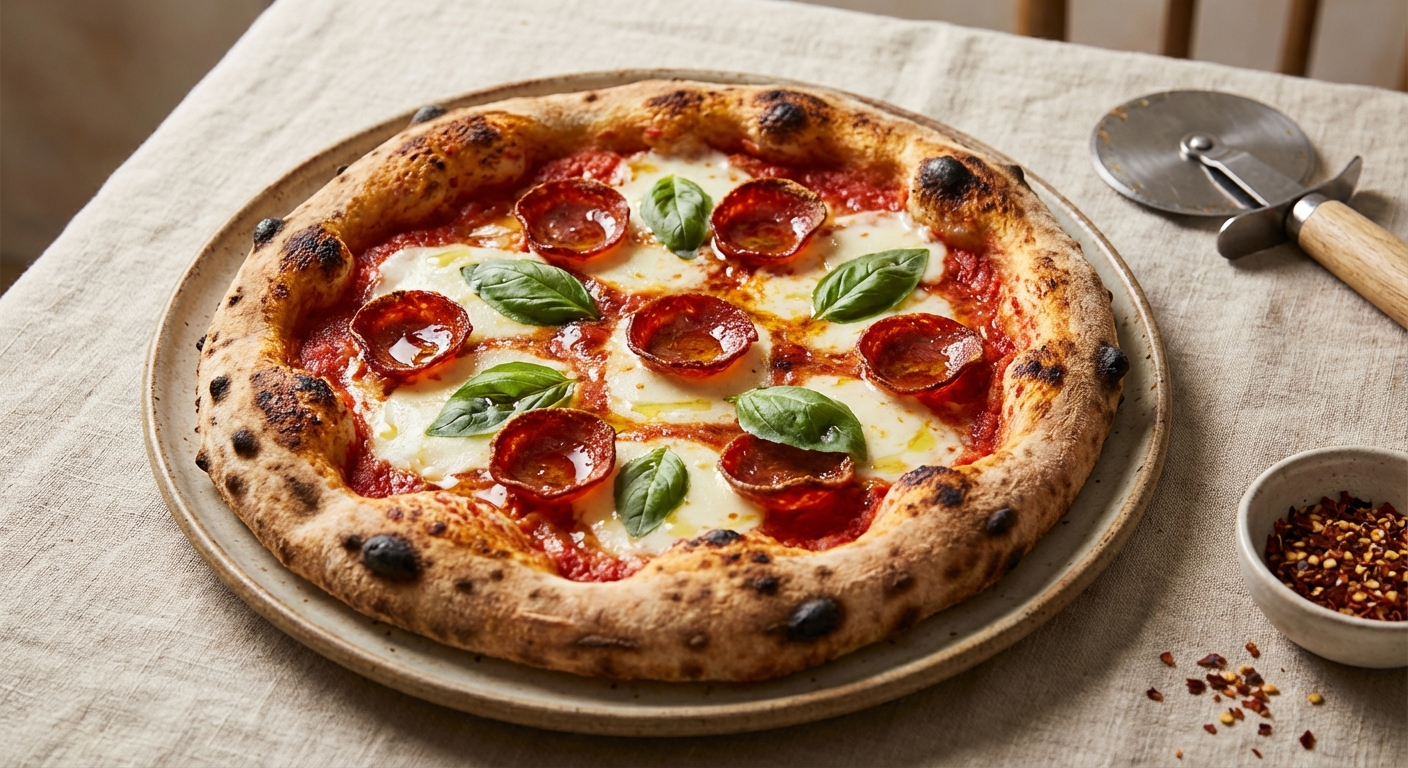
A cozy, crowd-pleasing Pepperoni Margherita Pizza—bright tomato-scented sauce, bubbly cheese, crispy crust, finish with fresh basil, perfect for weeknights.
Ready to cook?
Get the complete ingredient list, step-by-step instructions, and nutritional info
View Recipe →When I think about comfort food that’s got a little swagger, Pepperoni Margherita Pizza is right at the top of my list. It’s that rare hybrid that lets you revel in the bright, sun-kissed brightness of a classic Margherita while sneaking in the smoky, indulgent kiss of pepperoni. I remember the first time I whipped this up on a chaotic weeknight: the apartment smelled like a little Italian trattoria, and my teenage son, who swore he didn’t like tomatoes, declared that the sauce tasted “like sunshine.” The truth is simpler than that—great pizza comes down to balance: a crisp crust, a sauce that tastes of sun-dried summer tomatoes (even if they’re fresh), and the right amount of cheese and pepperoni so every bite is a chorus of textures and flavors. This recipe clocks in around 40 minutes from pantry to plate, a compact timeline that suits both a busy weeknight and a leisurely weekend when you want to indulge a little. And because it’s a pizza, you can customize it to your heart’s content—swap in a different cheese, or top with a handful of basil just before serving for an extra aromatic lift. This Pepperoni Margherita Pizza sits at the crossroads of Main Course, Italian, and Pizza, delivering crowd-pleasing flavors with a personal touch that's perfect for sharing with family and friends.
In the kitchen, the process feels almost ceremonial: you bring a skillet of olive oil to a gentle shimmer, let garlic release its perfume, and simmer chopped tomatoes into a thick, glossy sauce that tastes of summer afternoons in a jar. The dough gets rolled to your preferred thickness, a canvas ready to receive sauce, cheese, and pepperoni. The oven roars to 220°C (428°F), and within minutes the edges turn golden and crisp, the cheese becomes beautifully bubbly, and the kitchen holds onto that irresistible scent of olive oil, garlic, and basil. It’s a dish that looks as good as it tastes—an inviting circle of warmth you can share with whomever crosses your doorstep. If you’re aiming to elevate your weeknight dinner or ready to host a casual pizza night, this recipe is a delicious, approachable starting point.
As you read through the ingredients and steps, remember that every kitchen has its own personality. The tomatoes you choose, the ripeness of your basil, the moisture level of your dough, and how hot your oven runs all influence the final result. Don’t stress about perfection—embrace the tiny variances as part of the dish’s character. And if you’re cooking with kids or friends, this pizza is a fantastic opportunity to teach basic cooking skills while enjoying the process together. The sauce can be prepared a little in advance, the dough can be rolled to a preferred thickness, and the toppings can be arranged in a playful, colorful pattern that reflects your mood for the day. The beauty of this recipe is that it’s forgiving without sacrificing soul—every bite is a reminder that simple components, brought together with care, can sing.
Here’s a closer look at what makes each component of this Pepperoni Margherita Pizza work so well, flavor-wise and nutritionally. I’ll highlight the benefits and offer quick notes on what to look for when you shop. You’ll find natural links to each ingredient’s dedicated page as you read along.
As you can see, this recipe is about harmony: the fresh acidity of tomatoes, the perfume of garlic and basil, the richness of cheese and olive oil, and the smoky kick of pepperoni. The result is a pizza that feels both familiar and a touch fancy, the kind of dish you’d serve on a casual date night or a family gathering.
To get the best possible Pepperoni Margherita Pizza, keep these practical tips in mind. They’re small adjustments that make a big difference, especially if you’re juggling weeknight urgency with a desire for restaurant-quality results.
Serving this Pepperoni Margherita Pizza is all about presentation and balance. You want a pie that looks as good as it tastes and invites people to dive in. Here are a few ideas to elevate your serving game:
If you’re feeling inspired to bake your own creations after tasting this pizza, I’d love to hear about your experiments. It’s amazing how small tweaks—a different cheese, a touch more garlic, a thinner crust—can transform a simple pie into something uniquely yours. And the best part is that you can embark on this culinary journey right here on our site. For more pizza ideas and other Italian-inspired favorites, keep exploring the recipe pages, and when you’re ready, try crafting your own recipes at Create.
Leftover pizza keeps well in the fridge for about 2–3 days. Reheat in a hot pan on the stove to crisp the crust and melt the cheese, or use a brief blast in a hot oven (around 375°F / 190°C) for a few minutes. If you want to keep the crust extra crisp, reheat just the slice without toppings for a minute, then add the slice back in for a final minute to re-melt the cheese.
Absolutely. The tomato-garlic sauce can be prepared a few hours ahead or even a day in advance and kept in the fridge. Bring it to room temperature before using, so it doesn’t cool the dough too much when you spread it on. If you’re freezing it, freeze in a shallow container for quick thawing and even reheating.
Great question. If you want to vary the cheese, a blend of mozzarella with a bit of provolone or fontina adds extra depth and melting character. For a thinner, crisper crust, roll the dough even thinner and bake longer; for a chewier bite, leave it a touch thicker. If you’re avoiding dairy, try a dairy-free mozzarella and finish with fresh herbs for brightness after baking. You can also experiment with a whole-wheat or gluten-free dough, but note that bake times and texture will shift slightly.
Yes. If you have a pizza stone, preheat it in the oven to 220°C (428°F) and bake the pizza directly on the stone for a crispier bottom. If you’re using a stone, you may need to adjust the baking time slightly, so watch closely for a golden crust and bubbling cheese.
Cooking is a personal journey, and pizza is the perfect canvas for creativity. If you’ve loved this Pepperoni Margherita Pizza, you might enjoy exploring more Italian-inspired mains in our collection. And if you’re curious about crafting your own recipes, I encourage you to take the leap and visit Create to start your own culinary experiments.
Discover similar recipes you'll love