
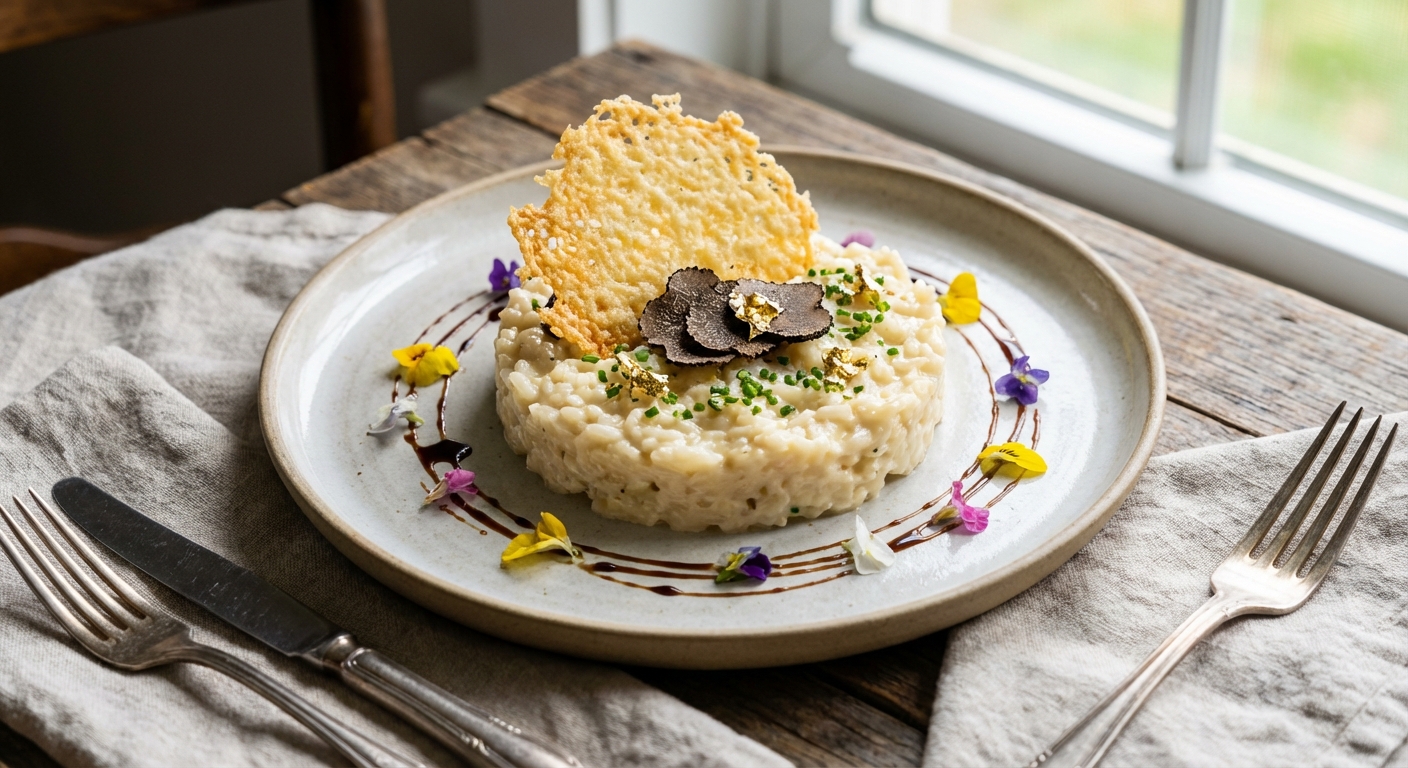
Learn how to make a creamy, comforting Parmesan risotto in about 40 minutes with step-by-step tips, optional wine, and variations for your pantry.
Learn how to make a creamy, comforting Parmesan risotto in about 40 minutes with step-by-step tips, optional wine, and variations for your pantry.
Ready to cook?
Get the complete ingredient list, step-by-step instructions, and nutritional info
View Recipe →There’s something almost magical about a bowl of Parmesan risotto that makes a weekday dinner feel like a cozy Sunday night tucked in a sun-warmed kitchen. I’ve stood at the stove, steam curling up around my glasses, stirring with a wooden spoon as the grains of Arborio rice drink in every swirl of broth, coaxing out a silk-smooth creaminess that only happens when patience and love stand by the pan. This particular recipe clocks in at about 40 minutes, a time window that feels generous enough to savor the process and quick enough to keep a busy schedule from getting in the way of a comforting, homey meal. It’s vegetarian-friendly if you choose a vegetable broth, but the dish is also a natural companion to a simple side salad or sautéed greens for a fuller feast.
As a home cook who loves Italian cuisine, I’ve spent years chasing that perfect balance of rich cheese, mellow aromatics, and a bite that remains a touch al dente. The technique is elegant in its simplicity: toast the rice to wake up its starches, slowly add warm stock while stirring, and finish off the pan with a kiss of butter and parmesan to seal the creaminess. It’s a dish that welcomes experimentation—substituting a splash of white wine for a little brightness, or tossing in a handful of sautéed mushrooms or peas for color and texture. If you’re exploring how to build a weeknight menu, consider this Parmesan risotto a reliable anchor that can bend and grow to match your pantry and your cravings. And yes, you can find this dish tucked into the Italian classics with room to roam in the vegetarian and main-dish sections of my kitchen, where it sits proudly alongside other comforting, plant-friendly meals. For those who collect ideas by category, you’ll find this in the /category/italian and /category/vegetarian collections as well as the /category/main-dish catalog, each offering a different lens on where parmesan risotto fits into a meal plan.
Before we dive into the nitty-gritty, let me share a small confession: the moment I ladle the broth into the pan and watch the rice drink it in, I’m transported to a trattoria corner in a sunlit Italian afternoon. The fragrance of onion and garlic sautéing in olive oil—hint of pepper and the faint glow of butter—tells me I’m about to present something comforting and polished. This recipe isn’t about speed at the expense of soul; it’s about the deliberate, soothing rhythm of stirring, tasting, and adjusting until the texture sings. If you’ve never made risotto before, this is a friendly entry point: simple ingredients, clear steps, and a finish that feels luxurious enough to share with friends or savor alone with a glass of something crisp.
Each component in this Parmesan risotto contributes a distinct nuance to the final dish. Understanding why each ingredient is there can help you cook with confidence and tweak the flavors to your liking. Here’s a quick guide to the “why” behind the list:
When you assemble these components, the dish becomes more than the sum of its parts. The technique matters just as much as the ingredients—stay attentive to heat, embrace the rhythm of the simmering broth, and taste along the way. If you’re browsing through the broader recipe library, you’ll notice this dish sits comfortably in multiple places: it’s a core Italian staple in /category/italian, a solid vegetarian option in /category/vegetarian, and a hearty main dish in /category/main-dish. Each category spotlights a slightly different angle of the same comforting dish.
Year after year in the kitchen, these small adjustments have made the difference between “pretty good” risotto and “restaurant-worthy” creamy perfection. Consider these expert tips as your personal cheat sheet for success:
Parmesan risotto shines as a simple, satisfying main, but there are plenty of ways to pair it with sides and accents to elevate the plate. Here are some of my favorite serving ideas:
When it’s time to plate, spoon the risotto into shallow bowls to keep the surface creamy, then finish with a light shower of shaved Parmesan and a crack of pepper. A small drizzle of extra virgin olive oil around the edge can add a fragrant gloss that makes the dish feel extra special. If you want to double the “comfort” factor, serve with crusty bread on the side to mop up the last, velvety spoonfuls.
If you’re curious to explore more cozy Italian-style dishes or want to see how this recipe fits into broader meal planning, you can browse related dishes in the /category/main-dish and /category/vegetarian sections. And if you’re feeling inspired to write your own version or craft a family tradition around risotto, I’d love to see your takes. Start your cooking adventure and share your results—there are endless ways to adapt this method to your kitchen and your taste.
Ready to keep exploring your culinary voice? After you finish this recipe, consider branching out to other ideas and building your personal collection. You can get started by visiting the /create page to craft your own recipes and share them with a growing community of home cooks just like you.
Discover similar recipes you'll love