Introduction
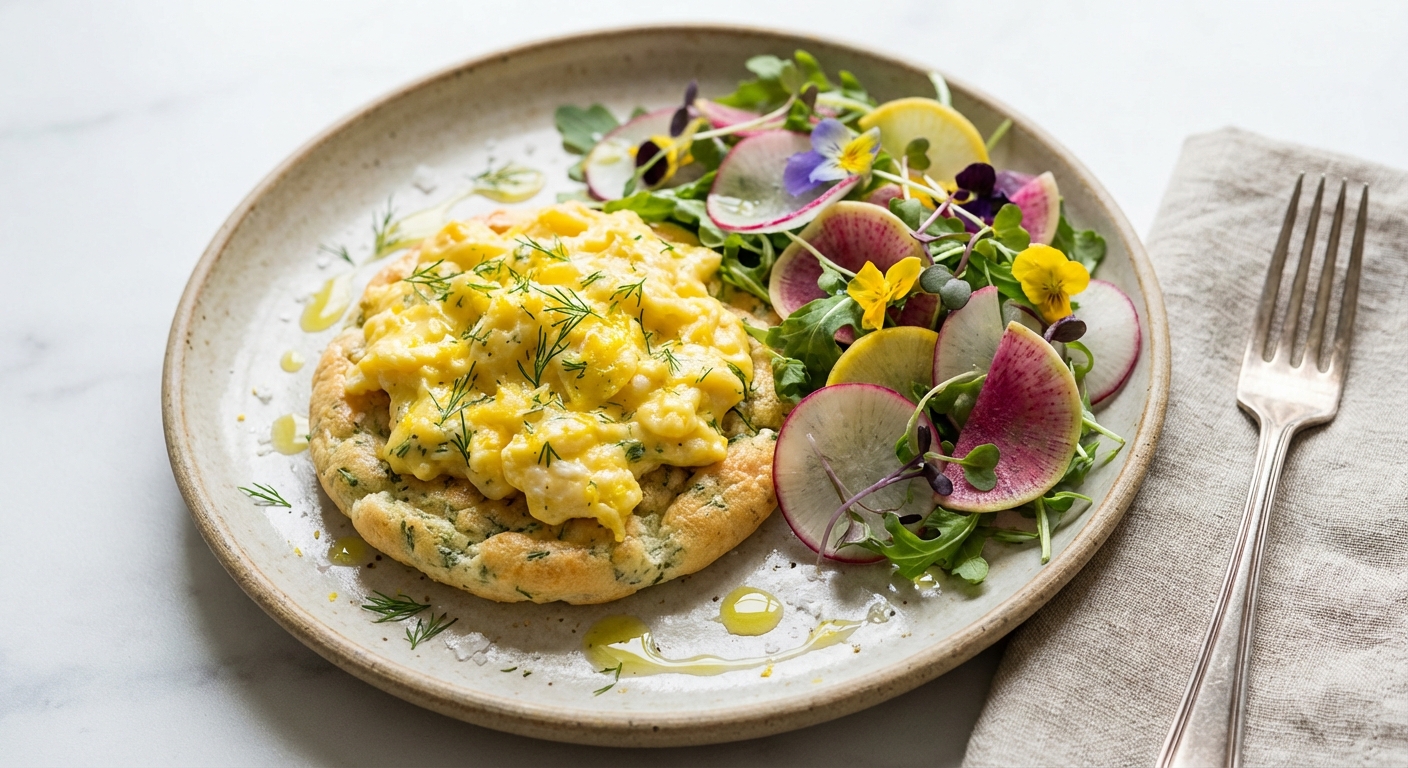
On mornings when the clock seems to sprint faster than a sunlit pastry, I reach for dishes that feel indulgent without demanding a full brunch crew in the kitchen. This Lemon-Dill Soft Scrambled Eggs on Quick Herbed Cloud Bread with Spring Radish–Arugula Salad is exactly that kind of dish: it tastes like a celebration, yet it’s designed to come together in about 30 minutes. There’s something almost alchemical about cloud bread—the airy, pale rounds that rise like edible little pillows when whipped whites meet a touch of cream cheese. They set at a gentle pace in the oven, staying tender and moist rather than turning dry or crumbly. Paired with a silky, lemon-kissed scramble and a peppery, pepper-crunch salad, every bite balances brightness, richness, and crunch in a way that wakes up the appetite without overwhelming it.
If you’re digging into this recipe after a magazine feature or a friend’s brunch spread, you’ll notice the care behind every step. The cloud bread uses only a handful of ingredients, yet its structure does the heavy lifting for the plate, providing a delicate foundation for the soft scramble. The lemon zest and dill infuse the eggs with a citrus-herbal lift that feels both fresh and comforting. The radish–arugula salad is the counterpoint: crisp radish slices and peppery greens dressed lightly in olive oil and lemon juice, bringing acidity that brightens the entire dish. It’s a celebration that doesn’t require a culinary circus—just good timing, a gentle touch, and a little kitchen science.
For those who love to explore the savory corners of brunch, this recipe sits nicely in the Breakfast and Brunch categories, and it remains friendly to both gluten-free and low-carb lifestyles. The cloud bread is a clever gluten-free vehicle that still yields a soft, satisfying texture, while the scramble offers creamy comfort with lemon, dill, and butter doing the heavy lifting behind the scenes. The salad, crisp and bright, keeps the dish from tipping into heaviness and acts as a palate cleanser between bites.
As you read through the steps, you’ll see how each technique matters, from whipping the whites to the careful folding that preserves airiness, to the gentle, patient scramble that yields velvet curds rather than dry bits. This is comfort cooking that rewards you with a polished plate and a sense of culinary accomplishment—without spending hours hovering over the stove. It’s the kind of recipe I love to share with readers who crave a little restaurant-style flair in their own home kitchen, any day of the week.
Ingredients Benefits
Every ingredient here has a role beyond simply adding flavor. Understanding why they’re in the mix helps you cook with confidence and adapt the dish to what you have on hand.
- Large eggs — 4 total. Two are reserved for the cloud bread (whipped whites and yolks separated), and two become the star of the soft scramble. Eggs bring structure, moisture, and richness to the dish; the whites provide lift, while the yolks contribute creaminess when folded with the cream cheese.
- Cream cheese — 2 tbsp. It’s the tangy, creamy backbone for the cloud bread’s interior, helping the structure hold together without sacrificing tenderness. Warming it with the yolks ensures a smooth, lump-free fold into the whipped whites.
- Fresh dill — 2 tsp (reserve extra for garnish). Dill’s bright herbal perfume is the perfect foil for lemon, cutting through richness and tying the components together.
- Lemon zest — 1/2 tsp. The zest delivers aromatic citrus oils without introducing extra liquid, waking up both the cloud bread and the scramble with a clean, sunny note.
- Unsalted butter — 2 tbsp. The butter is the flavor foundation for the scramble, ensuring a velvet, slowly coaxed texture that resists drying out at low heat.
- Arugula — 60 g. Peppery greens add a lively bite and a fresh counterpoint to the creamy eggs and cloud bread, keeping the dish dynamic from bite to bite.
- Radishes — 6 small, thinly sliced. Radishes provide crisp, peppery pops that contrast the softness of the clouds and the creaminess of the eggs—and they look beautiful on the plate.
- Extra-virgin olive oil — 2 tsp. A light drizzle for the salad. It unites the greens and radishes, carrying the lemon juice’s brightness into every leaf and radish edge.
- Fresh lemon juice — 1 tsp. A touch of acidity that brightens the salad and enhances the eggs’ flavor without overpowering them.
- Sea salt — 2 pinches; a subtle nudge to heighten sweetness and balance the dairy richness.
- Black pepper — 2 pinches; a gentle spice kiss that deepens flavors across the plate.
- Cream of tartar — 1/8 tsp; optional but recommended for stabilizing the whipped whites so the cloud bread holds its shape during baking.
If you’re curious about substitutions, think of this as a blueprint. A dairy-free version could swap in dairy-free cream cheese and a plant-based butter, while the cloud bread would still rely on whipped whites for lift. The lemon-zest and dill can be swapped for tarragon or chives if you prefer a slightly different herbal profile. The radish–arugula salad shines with just a splash of lemon juice and olive oil, but you could also fold in shaved fennel or watercress for a different texture and bite. The key is to maintain balance between the creamy, airy cloud bread and the crisp, vibrant salad that keeps the plate from feeling heavy.
Expert Tips
Below are practical pointers that will help you master this dish on the first try. I’ve tested these tweaks across a few weekends, and they consistently deliver the tender, airy results I crave for a brunch plate.
- Separate with care: Ensure the whites are free of yolk and any fat. Even a trace of yolk or butter can weigh down the foam. Use a clean, dry bowl and clean, dry beaters. For best volume, whip whites to soft peaks, not stiff peaks—this keeps the interior tender.
- Stabilize the whites (optional but helpful): A pinch of cream of tartar helps the foam hold its shape during baking, so the cloud breads stay light and puffy.
- Fold like a pro: Lightly fold one-third of the whipped whites into the yolk–cream-cheese mixture to lighten it, then fold in the rest in two additions. Stop when streaks disappear but before you lose the air you worked so hard to build—this is where the magic happens.
- Low and steady for the scramble: Cook the scramble on low–medium-low heat with the butter until foaming gently. The goal is a custard-like texture with small, plush curds. Keep the eggs moving slowly with a spatula and remove them from heat while they’re still glossy and a touch underdone—the carryover heat will finish the job.
- Gentle shaping, gentle setting: Bake the cloud breads at 300°F (150°C) and avoid browning. They should feel springy to the touch and not wet in the center. Let them cool briefly on the sheet to finish setting while staying tender.
- Timing is your friend: While the clouds bake, assemble the salad. This keeps the components hot and fresh and preserves the salad’s crispness against the creamy cloud bread and warm eggs.
- Plating matters: Slide the cloud breads onto the plate, spoon half the eggs on each, then scatter the remaining dill, crack a little pepper, and, if you like, dust with smoked paprika for color. The salad should be bright and crisp on the side to counterbalance the richness.
- Make-ahead notes: Cloud breads are best the day they’re baked, but you can bake and freeze them if you’re meal-prepping. Reheat gently in a low oven to restore tenderness. The salad is best eaten fresh; the greens and radishes lose some of their bite when stored).
Serving Suggestions
The beauty of this dish lies in its flexibility and presentation. Plate the cloud breads on warmed plates to emphasize their soft texture, then top with a generous half of the lemon-dill scramble on each. A final scatter of dill leaves over the eggs not only looks pretty but reinforces that bright herbaceous aroma that carries through each bite.
- Flavor accents: If you enjoy a touch of smoke, a pinch of smoked paprika on top adds warmth and color without overpowering the delicate flavors.
- Pairing ideas: Pair with a light, sparkling beverage or a cup of herbal tea to keep the meal feeling bright from start to finish. The radish–arugula salad pairs beautifully with a citrus-forward vinaigrette; you can dress it just before serving to preserve its crunch.
- Make it your own: Swap the dill for chives or tarragon, or add a handful of microgreens for an extra layer of color and texture. If you’re feeding a crowd, you can scale the clouds to two or four servings by shaping more mounds on the baking sheet and multiplying the scramble accordingly.
- Storage and leftovers: The cloud bread is best fresh, but you can store leftovers for a day in the refrigerator in an airtight container. Reheat gently to avoid drying out. The salad is best enjoyed immediately, but you can prep the greens and radishes beforehand and assemble just before serving for maximum crunch.
Feeling inspired to experiment? I’d love to see your own riffs on this approach. Head to create and start crafting your own recipes—there’s a whole kitchen full of possibilities waiting for you.
FAQ
- Q: How long does this dish keep?
A: The cloud bread is best enjoyed the day it’s baked for optimal softness. Refrigerated leftovers can be gently reheated, but the texture will be best when fresh. The salad should be prepared just before serving for maximum crunch and brightness.
- Q: Can I make this ahead?
A: You can bake the cloud breads ahead and reheat them gently, but the best texture comes from baking them right before serving. The salad components can be prepped, but assemble just before plating to keep crunch.
- Q: Can I substitute ingredients?
A: Absolutely. You can swap dairy for dairy-free options (e.g., dairy-free cream cheese and butter substitute), and you can experiment with different herbs such as chives or Tarragon. For the citrus, a quick squeeze of lime can work, but lemon maintains the bright profile this dish relies on.
- Q: Do I have to use cream of tartar?
A: Not strictly. Cream of tartar stabilizes the whites and helps the cloud breads hold their shape, but if you don’t have it, you can still whip firm whites; just be mindful that the clouds may be a touch less structured.
Whether you’re planning a weekend brunch or a weekday breakfast with a little extra glow, this recipe is a reliable triumph that delivers on flavor and texture without unnecessary drama. It’s a reminder that the best breakfast can feel indulgent, crave-worthy, and totally doable in a 30-minute window.