
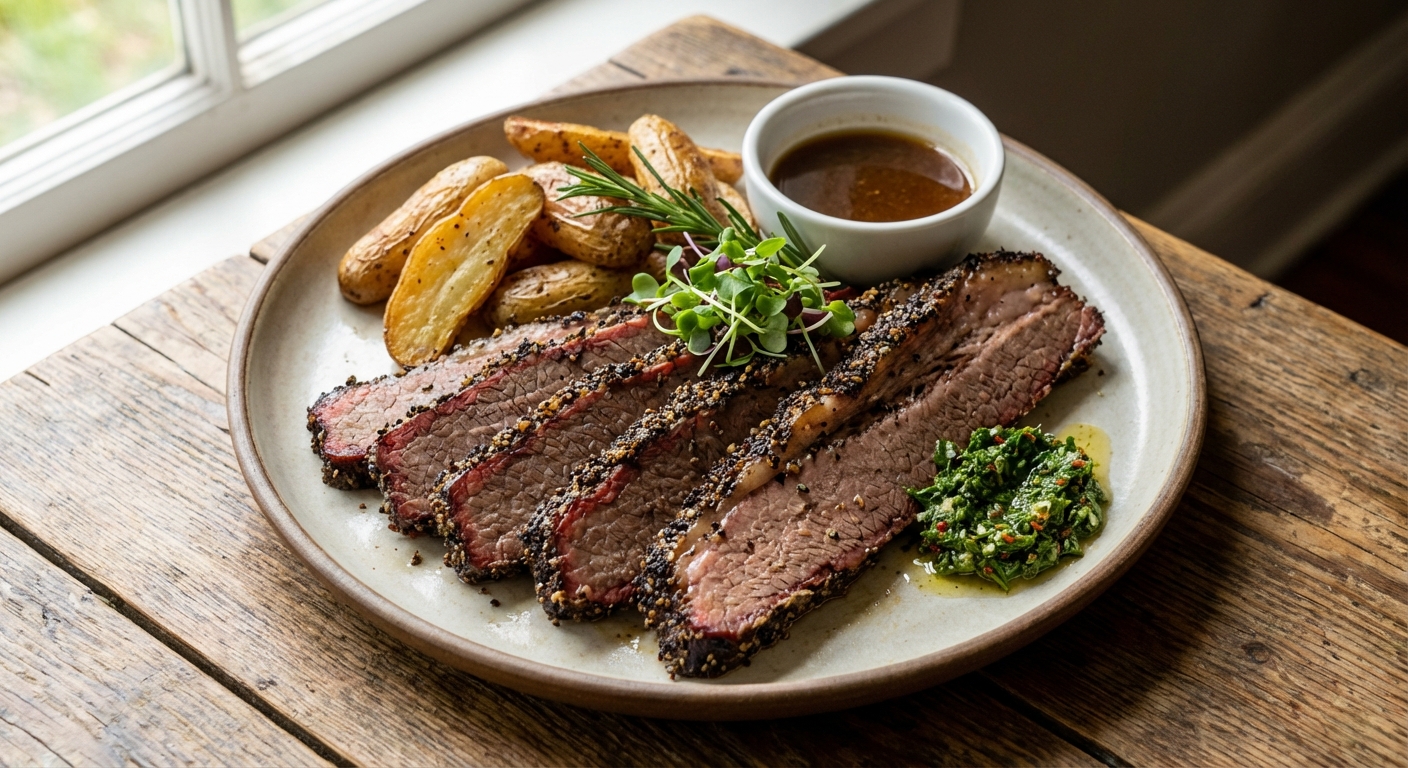
Quick, bold, and versatile: Garlic Pepper Brisket Rub blends garlic, pepper, paprika, and brown sugar for deeply flavorful brisket. Prep in 10 minutes, chill, grill
Quick, bold, and versatile: Garlic Pepper Brisket Rub blends garlic, pepper, paprika, and brown sugar for deeply flavorful brisket. Prep in 10 minutes, chill, grill
Ready to cook?
Get the complete ingredient list, step-by-step instructions, and nutritional info
View Recipe →I still remember the first time I cooked a brisket outdoors and realized that the secret wasn’t just a fancy sauce or a heroic smoking time. It was the rub. The little, coarsely ground magic you dust onto every surface of a big piece of meat to coax flavor from the inside out. Seasoning and Barbecue aren’t just categories on a blog; they’re the heartbeat of long afternoons, string lights, and the thrill of the first bite after a patiently waited cook. This Garlic Pepper Brisket Rub is my go-to quick-start—moments to mix, hours to rest, and a bark that makes your next barbecue feel like a celebration. In about ten minutes of active prep, you can coat that mighty brisket with a confident, balanced blend of garlic, pepper, paprika, and a touch of sweetness. The result is a crust that’s peppery and aromatic, with a hint of caramelization that makes the meat sing once it hits the smoker or the oven.
When I tested this rub, I was planning a casual Sunday cook for a handful of friends. I lined up a row of mason jars for the rubs I’d been testing, but this one kept drawing people back for seconds. It’s not overly bold or spicy; it’s designed to let the brisket shine while giving it a little edge. The recipe card itself is simple—time listed as 10 minutes, with two hours (or overnight) of chilling so the flavors have time to infuse. It’s the kind of recipe that makes you feel like a pro without demanding hours in the kitchen. If you’re curious about the ingredients that make this rub work, I’ll break them down in the next section so you know exactly why each component earns its spot in the jar.
When these ingredients come together, you get a rub that’s both practical and flavorful. The 2 tablespoons each of garlic powder and black pepper set a robust baseline, while the paprika and onion powder offer warmth and color. The salt ensures everything tastes like a proper brisket, and the cayenne adds a whisper of heat that doesn’t overpower. The brown sugar is the secret counterpoint—enough to caramelize into a subtle crust without turning the rub into dessert. And if you’re curious about the science behind mixing spices, I’ve found that letting the rub rest against meat for a while—whether it’s a couple of hours or overnight—helps all those flavors mingle and cling to the surface of the beef. It’s a tiny pause before the big event, but it makes a noticeable difference on the plate.
Brisket with this rub shines best when you let the crust do its talking. After a long, patient cook, slice the meat against the grain to reveal fork-tender textures and a crust that crackles with flavor. Here are a few ways to present it and make your meal feel like a proper barbecue day:
If you’re charting a broader recipe plan, this rub fits naturally into the Barbecue category, and you can explore more seasoning ideas in the Seasoning archive. And if you love building flavor recipes from scratch, consider starting your own flavor library at our creator hub.
One of my favorite things about this rub is how it adapts to different cooking environments. If you’re cooking indoors, you might find the crust a touch lighter than outdoors, but the aroma of garlic and pepper will still perfume your kitchen in the best possible way. Outdoors, the rub’s spices bloom beautifully in the smoke, creating a rich, savory crust that pairs perfectly with roasted vegetables and a cold beer on a sunny day. It’s a simple reminder that good flavor doesn’t require complexity—it requires balance, patience, and a little courage to let the rub do its job.
When kept in an airtight container away from light, this rub stays fresh for several weeks. For maximum flavor retention, label your jar with the date you mixed it and use within 4–6 weeks for optimal brightness. If you’ve made a larger batch, you can extend its life by keeping it in the fridge or freezer, avoiding any moisture.
Yes. In fact, the flavors benefit from a little rest. You can mix the rub up to a month in advance and store it in a cool, dry place. If you’re packing it for a backyard cook, an airtight container with a tight-sealing lid is your best friend.
Absolutely. If you don’t have fresh ground pepper, you can use pre-ground pepper, though you’ll lose a touch of aroma. If you need a milder rub, reduce the cayenne or omit it entirely. For a different profile, swap in a touch of smoked paprika to emphasize smokiness. The brown sugar can be adjusted downward if you want less caramelization sweetness. The key is to maintain the balance between savory, sweet, and heat so the final crust remains cohesive.
Yes. While designed for brisket, the same rub works nicely on beef roasts, pork tenderloin, ribs, and even chicken with great results. If you’re cooking a leaner cut, you might want to add a touch more salt or a splash of moisture during cooking to keep the meat juicy.
Ready to start experimenting beyond this rub? Remember: every great dish begins with curiosity, taste, and a willingness to adjust. If you want to keep exploring flavor ideas and craft your own rubs and sauces, I’d love to see what you come up with. Jump into the creative space and try designing your next recipe at our creator hub.
Discover similar recipes you'll love