
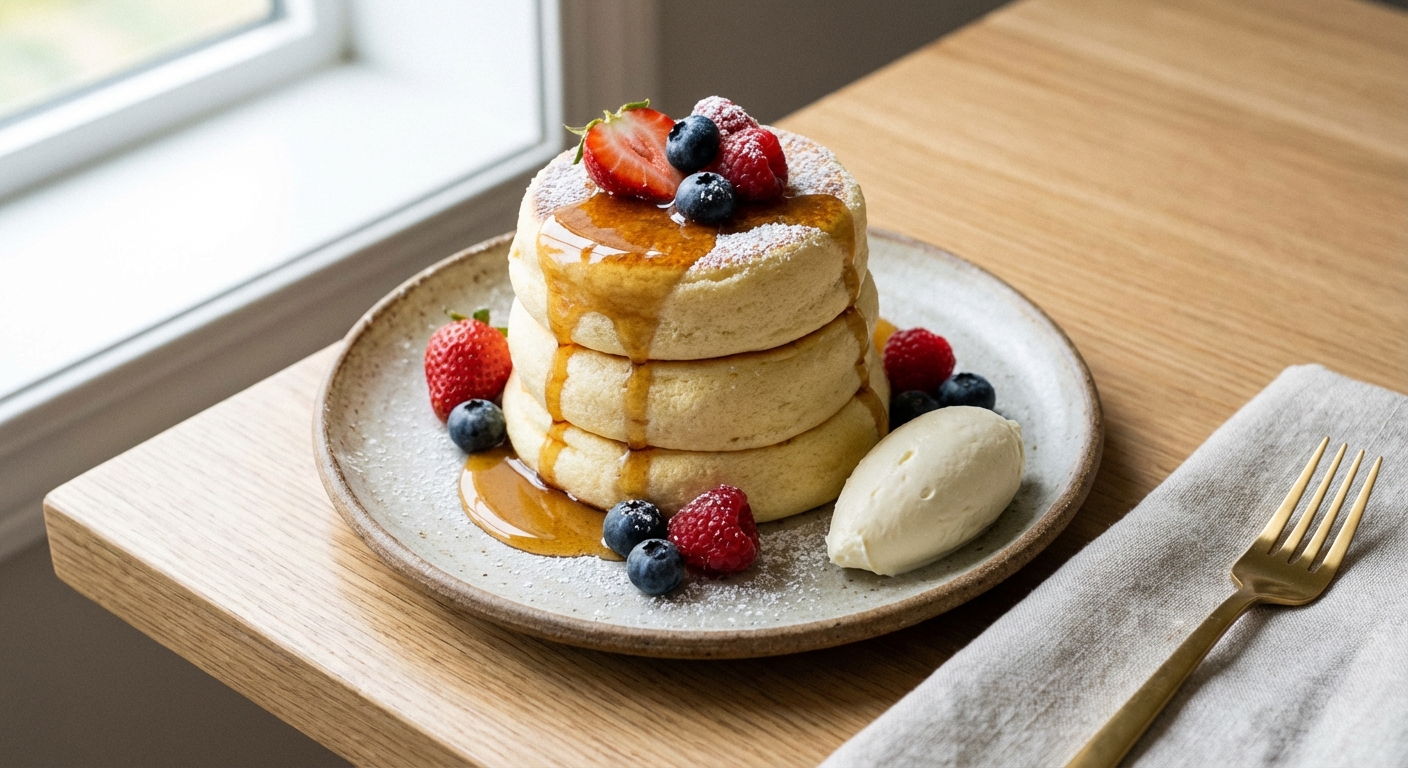
Fluffy pancakes rise with baking powder, kissed with vanilla for a cozy weekend brunch. A simple 20-minute recipe that’s comforting and totally doable. Go!
Fluffy pancakes rise with baking powder, kissed with vanilla for a cozy weekend brunch. A simple 20-minute recipe that’s comforting and totally doable. Go!
Ready to cook?
Get the complete ingredient list, step-by-step instructions, and nutritional info
View Recipe →There are mornings when I wake up and the house smells like a hug: warm vanilla, toasty butter, and a hint of sweet sugar floating through the air. My family always knew Sunday mornings would start with something comforting, something that felt like a small celebration before the day began. Over the years, the recipe that became our ritual is remarkably simple: Fluffy Pancakes. It’s not just about the stack of golden cakes; it’s about the moment—the sizzle of the batter meeting a hot pan, the tiny bubbles that may as well be cheerful confetti, and the first bite that tells you everything’s going to be okay. This is the kind of dish that earns a place in your weekly rotation not because it’s fancy, but because it’s reliably cheerful and easily adaptable to whatever toppings you crave. If you’re new to pancake making, you’ll love how forgiving this recipe is. You whisk dry ingredients in one bowl, whisk wet ingredients in another, and then combine them just until they come together—lumps left behind are a sign of a tender crumb, not failure. The trick is in the balance: just enough mixing to bring the batter together, but not so much that the gluten tightens and the pancakes turn out dense. In mere 20 minutes you’ll have a breakfast that tastes like a mini celebration, a stack tall enough to coax a smile, and a kitchen that smells like a cozy morning all day long. And if you’re teaching little ones to cook, these pancakes are patient teachers: they rise and puff with baking powder, and they forgive your imperfect scoops and splashes. I’ve linked this recipe to a few of my favorite online places so you can explore related categories as you cook. If you’re planning a brunch soirée or a lazy weekend breakfast, you’ll want to bookmark this in your lineup: it lives in the Breakfast, Pancakes, and Brunch corners of the cooking world. Curious to see more pancake ideas? This recipe lives under the Breakfast and Pancakes categories, with brunch inspiration in the Brunch section. In the meantime, gather your ingredients and let’s walk through what makes these pancakes so beloved.
Understanding why each ingredient goes into the batter helps you appreciate the science of fluffy pancakes—and it gives you confidence to adapt if you’re missing something on a busy morning. Below, I’ve highlighted the key ingredients from our recipe and why they matter. You’ll notice I’ve linked to each ingredient’s dedicated page so you can learn more about substitutions, storage tips, and flavor pairings.
Here’s the beauty of it: these ingredients work in harmony to deliver a pancake that’s wonderfully tender, lightly sweetened, and gloriously forgiving. If you’ve ever been tempted to tweak with substitutions, know that you can adapt this batter—the core idea is to keep the proportions simple and the mixing gentle. A splash of extra milk can loosen a thick batter, and a touch more vanilla can deepen the aroma—just remember to keep the batter lumpy and the pan hot but not smoking. For the true purists, this recipe sticks to the classic combo listed above, which is enough to deliver a familiar, comforting pancake every time. And if you’re curious about more variations, I’ve got ideas in my kitchen notebook that I’ll be sharing soon, so stay tuned.
Fluffy pancakes aren’t an accident; they’re a result of deliberate, small decisions. Here are my best tricks to help you get pillow-soft stacks every time.
These pancakes shine with simple, generous toppings that don’t overpower their mild, comforting flavor. A drizzle of maple syrup is a timeless choice, letting the pancake’s aroma take center stage. You can also stack them with fresh berries or sliced fruit for a bright contrast that adds a little natural sweetness and color to the plate. A dollop of whipped cream is pure indulgence, especially when you’re serving guests who appreciate a touch of theater in their breakfast. If you’re feeding kids, a few chocolate chips tucked into the batter before cooking can be a playful treat—just fold them in after the wet and dry ingredients are combined to keep the batter from seizing up.
What makes this recipe particularly versatile is its place in the rhythm of a weekend morning. It’s sturdy enough to serve as a foundation for savory toppings if you’re in the mood for a twist—think a poached egg, a smear of avocado, or a light sprinkle of ham to create a deconstructed breakfast plate. When you pair these fluffy pancakes with a hot cup of coffee or a glass of fresh orange juice, you’ve got a brunch-style moment that feels special without being fussy. If you’re planning a small brunch, these pancakes are a great anchor dish—they feed a crowd, translate well to make-ahead scenarios, and keep the house smelling inviting as friends and family settle in.
To help you explore more, I’ve linked this post to a couple of relevant sections in the kitchen world. You can explore the Breakfast category for other morning favorites, or jump into the Pancakes archive for riffs and variations. If you’re in the mood to experiment with your own creations, I’d love for you to become part of our little culinary community and try designing your own recipes at /create.
Yes—though best results come from cooking the batter soon after mixing. If you need to prep ahead, you can whisk the dry ingredients and wet ingredients separately, then combine just before cooking. For the freshest texture, refrigerate the mixed batter for up to 30 minutes, but don’t exceed that, or the batter may thicken and deflate the lift.
Cooked pancakes store well in the refrigerator for up to 2 days. Wrap tightly or store in an airtight container to prevent them from drying out. Reheat gently in a skillet or toaster, adding a tiny splash of milk to restore moisture if needed.
Most milks (dairy or non-dairy) work here. If you’re swapping milk, keep the batter texture similar to the original to maintain the fluff. For eggs, one substitute option is a flax or chia seed mixture (about 1 tablespoon of ground seeds mixed with 3 tablespoons water per egg). Note that this may subtly change flavor and rise, so start with a small batch to test.
Discover similar recipes you'll love