
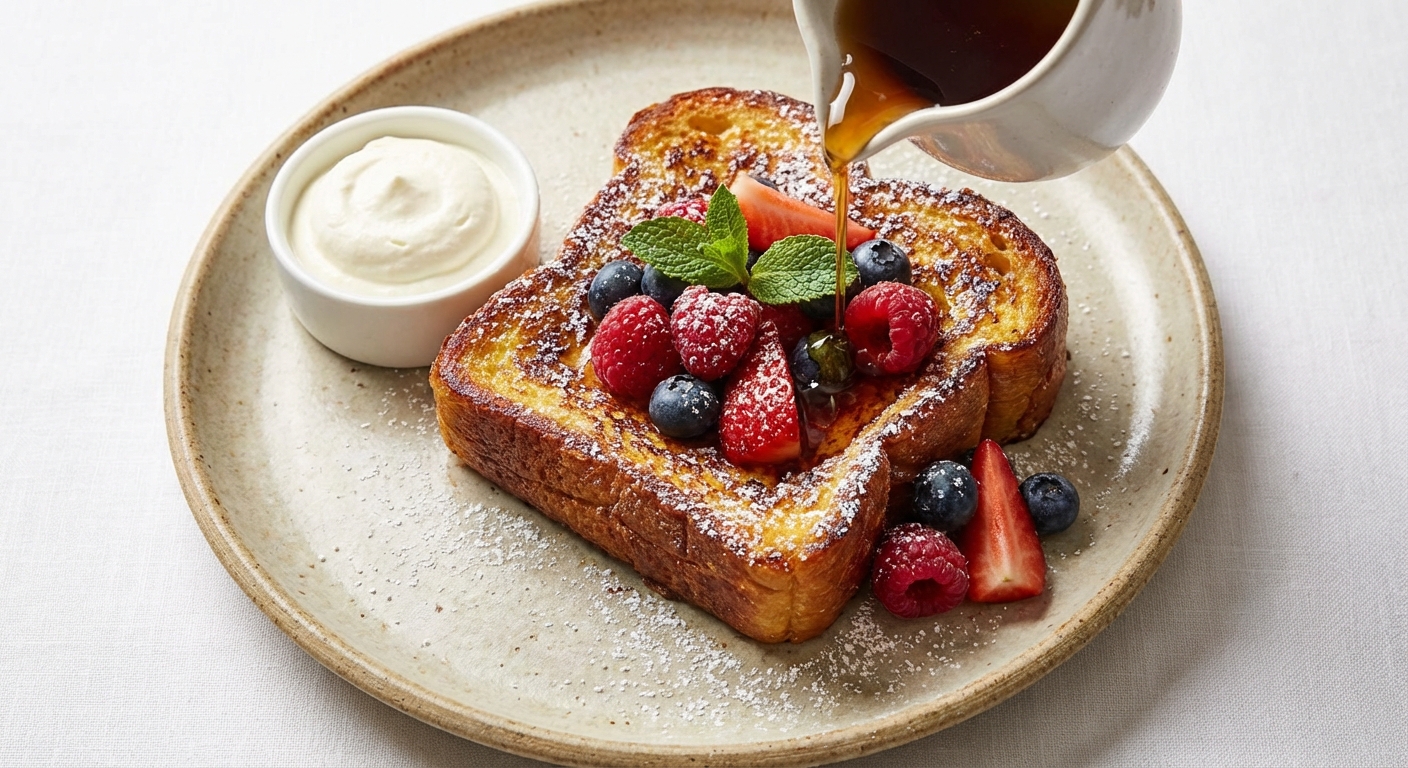
Classic French Toast—a comforting, 25-minute breakfast treat with eggs, milk, vanilla, cinnamon, and maple syrup; perfect for cozy mornings and brunchs.
Ready to cook?
View the Full Recipe
Get the complete ingredient list, step-by-step instructions, and nutritional info
View Recipe →Introduction
On weekend mornings, my kitchen smells like a memory I can taste—warm butter, a whisper of vanilla, and the sweet promise of maple syrup gliding across a crisp edge. Classic French toast isn’t just a dish; it’s a ritual I learned from my grandmother, who swore that the best breakfasts come from simple ingredients treated with care. This particular recipe, a straightforward 25-minute adaptation of a timeless favorite, is designed for busy mornings that still want to feel special. It’s a crowd-pleaser as comfortable as a pair of well-worn slippers, yet refined enough to serve as a brunch centerpiece when friends swing by with anticipation and empty stomachs. And because great food begins with excellent ingredients, I’ve chosen a few pantry staples you probably already have, along with a few little tweaks that heighten flavor without complicating the process. If you’ve ever watched a skillet sizzle and felt your day brighten, you’re in the right place. This is breakfast magic, a brunch essential, and a proud member of the comfort-food club.
From the moment you whisk eggs with milk, vanilla, cinnamon, and salt, you’ll start to sense the custardy dream that will become your toast. The preparation is simple: soak the bread briefly until it’s saturated but not falling apart, then let butter meet a hot griddle and welcome the soaked slices to a golden stage. The result is a crusty exterior with a soft, custard-y center—every bite a little reminder that good mornings are made, not found. I’ll walk you through how to master this recipe, share the science behind the flavor, and offer tips so you can tailor it to your own kitchen rhythm. And if you’re ever in doubt, remember that the joy of French toast lies as much in the technique as in the ingredients themselves.
If you’re curious about the ingredients I’m using, you can learn more about each bread, eggs, milk, vanilla extract, ground cinnamon, salt, butter, and maple syrup—each playing a distinct role in texture, aroma, and sweetness. If you’re browsing for more ideas, explore the breakfast, brunch, and comfort-food sections for related recipes and inspiration. When you’re ready to play around with your own twists, there’s no better leap of faith than clicking here to start creating your own recipes.
Ingredients Benefits
Each element in this Classic French Toast has a purpose beyond simply filling a plate. Understanding the role of each ingredient helps you appreciate why this dish tastes so comforting and brings a sense of warmth to the table.
- Bread (4 slices) provides the canvas for the dish. Slightly stale or day-old bread soaks up the custard without falling apart, creating that ideal balance between a sturdy exterior and a tender interior. The better the bread, the more depth of flavor you’ll get. Learn more about bread and its nuances, and consider trying brioche or challah for an even richer texture in future batches.
- Eggs (2 large) are the binding agent that transforms simple bread into a luscious base. They lend structure and a gentle custardiness that keeps the center of each slice creamy as it cooks. For those who prefer, you can substitute with a flaxseed mixture for a vegan version, though the texture will shift a bit.
- Milk (1/2 cup) brings creaminess to the egg mixture and helps create that silky custard. Dairy choices (whole milk, 2%) or fortified plant milks can be used, but whole dairy will yield a richer mouthfeel that’s particularly delightful in this classic format. See how milk behaves in custards and pan-fries across other comforting recipes.
- Vanilla extract (1 teaspoon) perfumes the custard with a warm, floral sweetness. It’s subtle, but it elevates the overall aroma and rounds out the eggy flavor. A pinch of almond extract can be added for a different dimension, but vanilla keeps this version grounded and familiar. Explore the role of vanilla extract in everyday desserts and breakfasts.
- Ground cinnamon (1/4 teaspoon) adds a gentle spice that pairs beautifully with maple syrup. Cinnamon invites nostalgia—think cozy kitchens and fall mornings—without overpowering the other flavors. For a bolder spice note, you can increase it slightly or add a pinch of nutmeg.
- Salt (1/8 teaspoon) heightens the flavors and balances the sweetness. A little salt in sweet dishes often does wonders, sharpening the edges of the toast rather than making it taste salty. If you’re using salted butter, you may want to omit the added salt or reduce it by half.
- Butter (2 tablespoons) is the secret to the irresistible, crisp-edged finish. It sizzles on the hot griddle, imparting a nutty aroma and a glossy, caramelized crust that holds the toast together as it turns. If you want a lighter version, you can use a neutral oil, but butter remains the taste favorite for most of us.
- Maple syrup (1/4 cup) is the final kiss of sweetness that delivers a smooth, fruity sweetness and a glossy sheen when poured over the finished stack. Maple syrup has depth beyond plain sugar, and its unique maple notes complement the cinnamon and vanilla in the egg batter. Also consider a scatter of fresh berries or a dollop of yogurt for contrast.
In addition to the standard version, feel free to experiment with different bread loaves, such as brioche for a richer crumb or a sourdough for a more intriguing flavor. The core technique remains the same, and you’ll find that almost any sturdy bread can sing when soaked properly and cooked with a gentle, patient hand.
Expert Tips
Here are a handful of proven strategies to elevate your Classic French Toast from good to unforgettable. I’ve learned these through trial and error, chatting with home cooks, and testing countless mornings where the goal was simply to feed a hungry crowd fast without sacrificing flavor.
- Plan the soak time. You want the bread to soak through but not to become waterlogged. A quick dip on each side is typically plenty, especially for fresh bread. If you’re using day-old bread, you can give it a touch more time, but watch for signs of sogginess.
- Preheat the pan properly. A medium heat ensures the toast cooks through before the crust burns. If your pan is too hot, the crust browns too quickly while the center remains undercooked. If it’s too cool, you’ll miss the crisp edge. A gentle, steady heat is the sweet spot.
- Butter vs oil—quality matters. Butter gives that quintessential flavor and color, but you can start with a small knob of butter and finish with a touch of oil to prevent scorching. If you’re cooking for folks with dairy restrictions, you can use a neutral oil like canola or avocado, though you’ll lose some of that signature toasty aroma.
- Cook in batches for even results. If your pan is crowded, the slices may steam rather than fry, and the crust won’t form as nicely. Keep space between slices so the heat can circulate and encourage crisp edges.
- Test for doneness with texture, not time. The recommended 3-4 minutes per side is a guide. Look for a deep golden brown with a crisp edge. If you like a extra-crisp exterior, give each side another 30–60 seconds.
- Make-ahead and storage. Cooked French toast can be stored in the fridge for up to 2 days if kept in an airtight container. Reheat gently in a skillet or toaster oven to restore crispness. If you love the idea of morning prep, consider setting up a “French toast station” the night before with sliced bread and the egg mixture ready to dip in the morning.
- Vanilla and spices are flexible. If you’re out of vanilla extract, a splash of almond extract can be a nice stand-in, or a pinch of ground cardamom can give the dish an unexpected, citrusy depth. Cinnamon can be dialed up or down to suit your palate.
- Gluten-free or dairy-free tweaks. For a gluten-free version, choose a sturdy gluten-free bread that doesn’t crumble easily after soaking. For dairy-free, swap milk with a fortified plant milk (almond, soy, oat) and use a plant-based butter substitute or a neutral oil. The texture will shift slightly, but the flavors remain comforting.
As you read these tips, you might notice how the simple act of adjusting a heat level or soaking time can transform the result. The joy of this recipe lies not just in the taste but in the rhythm—the way the heat meets the egg-vanilla-cinnamon bath and turns pale bread into a golden, smiling plate. And if you’re feeling particularly adventurous, you can turn this into a full Sunday breakfast or a festive brunch centerpiece by adding whipped cream, berries, or a scattering of citrus zest for brightness.
Serving Suggestions
Serving Classic French Toast is about adding a little flourish while letting the star be the toast itself. The plate should feel inviting, not fussy, so start with a warm stack, and then invite your toppings to customize the experience. Here’s how I like to present it:
- Classic syrup and butter. A pat of butter slowly melting over a steaming slice, followed by a generous drizzle of maple syrup, is the simplest and most adored pairing.
- Fruit and cream. Fresh berries, sliced bananas, or a dollop of whipped cream adds a pop of color and a bright contrast to the sweet custard. It’s a great way to brighten a weekend brunch.
- Crunch and spice. A pinch of toasted nuts (walnuts or pecans) provides texture, while a light dusting of powdered sugar or a drizzle of citrus honey adds a dimension of aroma and sweetness that lingers on the palate.
- Latte-compatible brunch. Pair with a mug of strong coffee or a creamy latte. The cinnamon notes echo beautifully in a cup of coffee, tying the meal together.
- Make it a board. For brunch gatherings, lay out a small setup: a warm plate of French toast, a carafe of hot coffee, bowls of berries and yogurt, and a pitcher of maple syrup for guests to customize their slices. This invites conversation and creates a cozy, shared experience.
If you’re seeking more inspiration for similar comfort-food fare, explore other recipes in the breakfast and brunch categories. The spirit of this dish—the simple joy of a well-executed staple—translates across many morning favorites. And if you’re excited by the idea of cooking your own recipes at home, consider starting your culinary project with a visit to our create page to map out your own kitchen experiments.
FAQ
Below are a few common questions that help new cooks approach Classic French Toast with confidence. If you have another query, feel free to reach out or leave a comment with your experience.
- How long does Classic French Toast last in the fridge? Cooked French toast will keep for up to 2 days in the refrigerator when stored in an airtight container. Reheat gently on a skillet to preserve a crisp exterior. If you have leftovers, you can also repurpose them into a breakfast bread pudding the next day.
- Can I make this ahead? You can pre-assemble the soaking mixture and slice bread ahead of time, refrigerating the dipped bread for a brief period before cooking. Alternatively, set up your dipping station the night before and cook in the morning. Just be mindful not to oversoak the bread when you’re in a hurry.
- What substitutions work well? For a dairy-free version, use fortified plant milk and a dairy-free butter substitute. For gluten-free, choose sturdy gluten-free bread that will hold up to soaking. If you’re sugar-conscious, reduce the maple syrup by half or substitute with a light drizzle of honey. Vanilla can be swapped with almond extract for a different aroma. The core technique remains the same, so feel free to experiment.
- Is there a way to make it extra fluffy? You can add a touch more milk to the custard and let the bread soak just a bit longer (without becoming mushy). A light sprinkle of baking powder in the egg mixture will not only help with fluffiness but also contribute a delicate lift when cooked.
With these tips in hand, you’re ready to embrace the ritual of French toast as more than a meal—it's a moment of comfort, a way to gather, and a chance to share your kitchen magic with someone you love. And if you ever want to try more recipes that celebrate home cooking with a modern touch, remember that you can start crafting your own culinary catalog at our create page.