Introduction
There’s something about a weekend brunch that invites a little theatre, a touch of nostalgia, and a promise of comfort that’s hard to beat. My kitchen ritual for Chocolate-Stuffed Brioche French Toast with Vanilla-Caramel Sauce begins long before the pan hits the burner. It starts with the bread—the kind that’s sturdy enough to hold a secret yet softly indulgent once it’s soaked and seared. Brioche, with its buttery crumb, is the ideal vessel for a molten center, and when you pair that with a vanilla caramel drizzle, you’ve got a dish that feels both decadent and approachable.
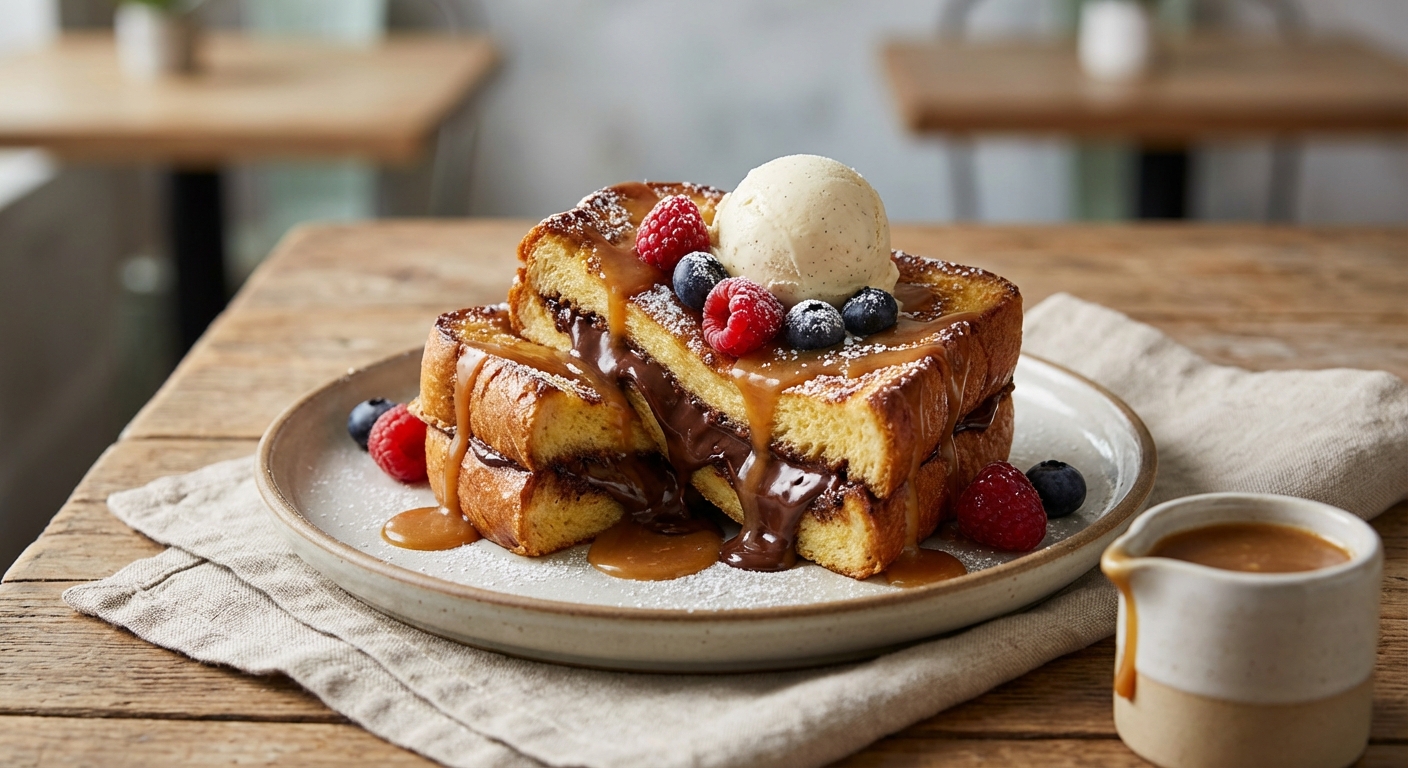
This recipe rides the delicious line between dessert and brunch, a category I adore because it invites a slower morning, a deeper sigh after the first bite, and a conversation that circles back to childhood breakfasts and grown-up pleasures at once. The technique is forgiving but precise: a chilled, chocolate-stuffed sandwich that’s lightly dipped in a custard and then seared to a golden crust, finishing with a glossy vanilla caramel that threads through the slice like a silky ribbon. It’s a dish that looks restaurant-polished on the plate and tastes like a warm hug in a mug of coffee. If you’ve ever wanted to serve café-worthy French toast at home, this is your recipe.
The magic is in the balance. The custard uses a careful ratio of eggs to dairy so the bread absorbs moisture without collapsing, while the butter—added in stages—builds a crisp, caramelized crust that crackles against the soft interior. The chocolate sits tucked inside each sandwich, a molten center that stays contained during dipping and searing, so every bite delivers a sweet, dark surprise. And then there’s the vanilla caramel drizzle—an affair in its own right—glossy, just-salted, and bright enough to lift the chocolate and to coax the brioche into a luxurious, almost dessert-like finish. You don’t need a fancy bakery to pull this off; a well-equipped home kitchen and 40 minutes are all you require to create something truly special.
As you read through the recipe, you’ll notice a few anchors you can explore further. The bread itself is a hero ingredient, so I’ve linked to its page to give you a sense of what makes it ideal for this application. You’ll also see references to the core players—dark chocolate, eggs, milk, cream, vanilla, and a warm kiss of cinnamon—that work together to deliver both structure and depth. If you’re curious about the categories this dish belongs to, you can explore the Dessert, Brunch, and French-inspired sections for other crowd-pleasers and seasonal twists. And if you’re itching to experiment with your own kitchen creations, the path to your next inspired dish is just a click away: /create.
In short, this Chocolate-Stuffed Brioche French Toast isn’t just a recipe; it’s a morning ritual you’ll want to repeat. It has the showmanship of a brunch favorite with the soul of a comforting dessert, and it’s reliably delicious whether you’re cooking for a small family or a larger crowd. Ready to walk through the steps with me? Let’s dive into the ingredients that bring this dish to life.
Ingredients Benefits
Food isn’t just about flavor; it’s about the stories, textures, and science that come together in a single, satisfying bite. Here’s why the chosen ingredients are perfectly suited for this recipe—and how they contribute to that coveted balance of crisp exterior and molten center.
- Brioche or sturdy sandwich bread: The anchor of this dish. Brioche’s buttery, tender crumb holds up to the custard without becoming mushy, while its slight sweetness enhances the chocolate filling. If you don’t have brioche, a sturdy loaf like challah works beautifully as a substitute.
- Dark chocolate (70% cacao), chopped: The star of the surprise center. A high-cocoa bar provides richness without overwhelming sweetness, and its molten core as the sandwich rests becomes an almost dainty, edible centerpiece with each bite.
- Eggs: The backbone of the custard. They set the structure so the bread absorbs just enough liquid to be luscious yet holds its shape when fried. Eggs also aid in forming that custard crust as the toast hits the pan.
- Whole milk and heavy cream: This is the richness dial. Milk keeps the custard light enough for dipping, while cream adds silkiness and a luxurious mouthfeel that makes the dish feel indulgent without tipping into heaviness.
- Granulated sugar and a pinch of fine sea salt: Sugar sweetens the custard and furthers browning, while salt brightens the flavors and makes the chocolate and caramel feel more vibrant.
- Butter: Your best friend for both searing and finishing. The butter sears the bread to a crisp, caramelized crust, and a touch of butter in the pan later helps create a glossy, hotel-worthy finish without sticking to the skillet.
- Pure vanilla extract: A whisper of aroma that enhances the custard’s depth and enhances the chocolate’s bitterness just enough to feel balanced and grown-up.
- Ground cinnamon and optional orange zest: Warmth and brightness. Cinnamon adds a cozy note that plays beautifully with chocolate, while a hint of orange zest can lift the dish with a bright, citrusy finish if you’re in the mood for something a little more aromatic.
- Powdered sugar (optional, for dusting): A light, delicate finish that makes the plate look as refined as the flavor would suggest, without altering the texture of the toast.
If you’re curious about the broader family of these ingredients, you can explore the linked ingredient pages to learn more about sourcing, substitutions, or flavor pairings. There’s a lot to love here—from the bread’s texture to the chocolate’s kiss of bitter-sweetness—so don’t hesitate to experiment with your own favorite brands or pantry staples.
Expert Tips
Even with a seemingly straightforward technique, a few smart tweaks can take this from “delicious” to “unforgettable.” Here are the tips I rely on to keep the texture balanced, the center molten, and the caramel drizzle impeccably glossy.
- Chill the chocolate-stuffed sandwiches. After assembling, refrigerate the prepared sandwiches for about 10 minutes. The chill firms the bread and once chilled, the chocolate stays contained so it won’t gush into the pan the moment you dip. This step also makes it easier to handle when you’re transferring to the hot skillet.
- Don’t over-dip. Dip each sandwich for 8–10 seconds per side. You want the bread to soak enough custard to stay moist and cohesive, but not so much that the sandwich falls apart. A shallow, even dip helps you achieve a custard crust on the outside while maintaining a soft interior.
- Use medium heat and patient searing. Start with a tablespoon of butter in the pan, then cook the sandwich 3–4 minutes per side. If the crust browns too fast, lower the heat. The Maillard reaction is your friend here; a moderate temperature yields deep color and complex flavor without burning the sugar in the custard.
- If the center isn’t warm yet, finish in the oven. If you notice the crust browning ahead of warmth in the center and melted chocolate, slide the skillet (ovenproof) into a 175°C/350°F oven for 3–5 minutes. This gentle heat finishes the center without risking a burnt exterior.
- Vanilla caramel, a quick magic trick. While the last sandwiches cook, whip up a quick caramel with sugar and water until amber, then whisk in butter and warm cream gradually. A pinch of salt and a splash of vanilla complete the glaze. If you’d rather skip caramel, maple syrup warmed gently is a fine substitute or a dusting of powdered sugar keeps things light and elegant.
- Presentation matters. Trim burnt edges, cut diagonally, and arrange two halves per plate so the molten center is visible as you lift the crust. A drizzle of vanilla caramel and a touch of powdered sugar creates a restaurant-worthy look that’s as appealing as the aroma filling the room.
Serving Suggestions
Serving this French toast is half the joy. The moment you plate it, the aroma of vanilla, butter, and chocolate starts to envelop the table, inviting everyone to gather around the plate. Here are some ideas to present it at its best and keep the celebration feeling special, even for a quiet breakfast or a casual brunch crowd.
- Plate with confidence. A diagonal cut reveals the molten center, and placing two halves per plate keeps the presentation balanced. Drizzle the warm vanilla caramel generously, letting it pool a little around the toast so each bite gets a touch of that glossy sweetness.
- Finish with brightness. A light dusting of powdered sugar is classic, but you can also stir in a pinch of orange zest over the top for a lift that works surprisingly well with chocolate and vanilla.
- Pairings to consider. Fresh fruit like sliced strawberries or raspberries add a sharp contrast to the rich toast. A cup of strong coffee, a frothy latte, or a lightly sparkling beverage can balance the dish perfectly. If you’re serving this as a special brunch, you can set out a small carafe of maple syrup for guests who want a subtler sweetness.
- Make it a menu moment. This dish pairs well with other brunch favorites listed in the Dessert and Brunch categories, so you can compose a cohesive menu. For another chocolatey treat, navigate through the /category/dessert and /category/brunch sections to find complementary dishes that won’t overpower the main star.
- Make-ahead note. You can assemble the sandwiches and refrigerate up to 24 hours before cooking. Dip and sear right before serving to preserve the contrast between the crisp crust and the melted center, and to ensure the vanilla caramel remains glossy and bright.
FAQ
Here are a few questions that come up often, along with practical tips to help you tailor the recipe to your kitchen and schedule.
- How long does this keep? The best results are achieved when you serve it right away. If you have leftovers, refrigerate cooled slices in an airtight container for up to 1 day. Reheat gently in a 325°F (165°C) oven for 8–10 minutes to restore some of the crust, or use a toaster oven for a crisper edge.
- Can I make this ahead? Yes. Assemble the chocolate-stuffed sandwiches and refrigerate up to 24 hours before dipping. When you’re ready to cook, dip and sear as instructed. If you want to double the batch, you can prep the caramel in advance and rewarm gently before serving.
- What substitutions work well? If you don’t have brioche, challah or another sturdy bread works nicely. For dairy-free or lighter options, substitute with thick-sliced almond bread and use a milk substitute (such as almond or oat milk) with light coconut cream, understanding that the texture and richness will shift. Dark chocolate can be replaced with milk chocolate if you prefer a sweeter center, but you’ll lose some of the bitterness that balances the sweetness. For the custard, you can reduce or omit the heavy cream for a lighter version, but expect a looser soak and a slightly less luxurious mouthfeel.
- Can I skip the caramel? Absolutely. A simple dusting of powdered sugar or a drizzle of warm maple syrup will still yield a delightful dish. If you want a bright finish, a quick squeeze of orange zest over the top is a lovely option.
Curious to explore more ways to use these ingredients in other meals? Check out related recipes in the Dessert and Brunch sections, and see how other French-inspired dishes transform everyday ingredients into something special. When you’re ready to start your own culinary adventure, remember you can always try crafting your own recipe ideas at /create.