
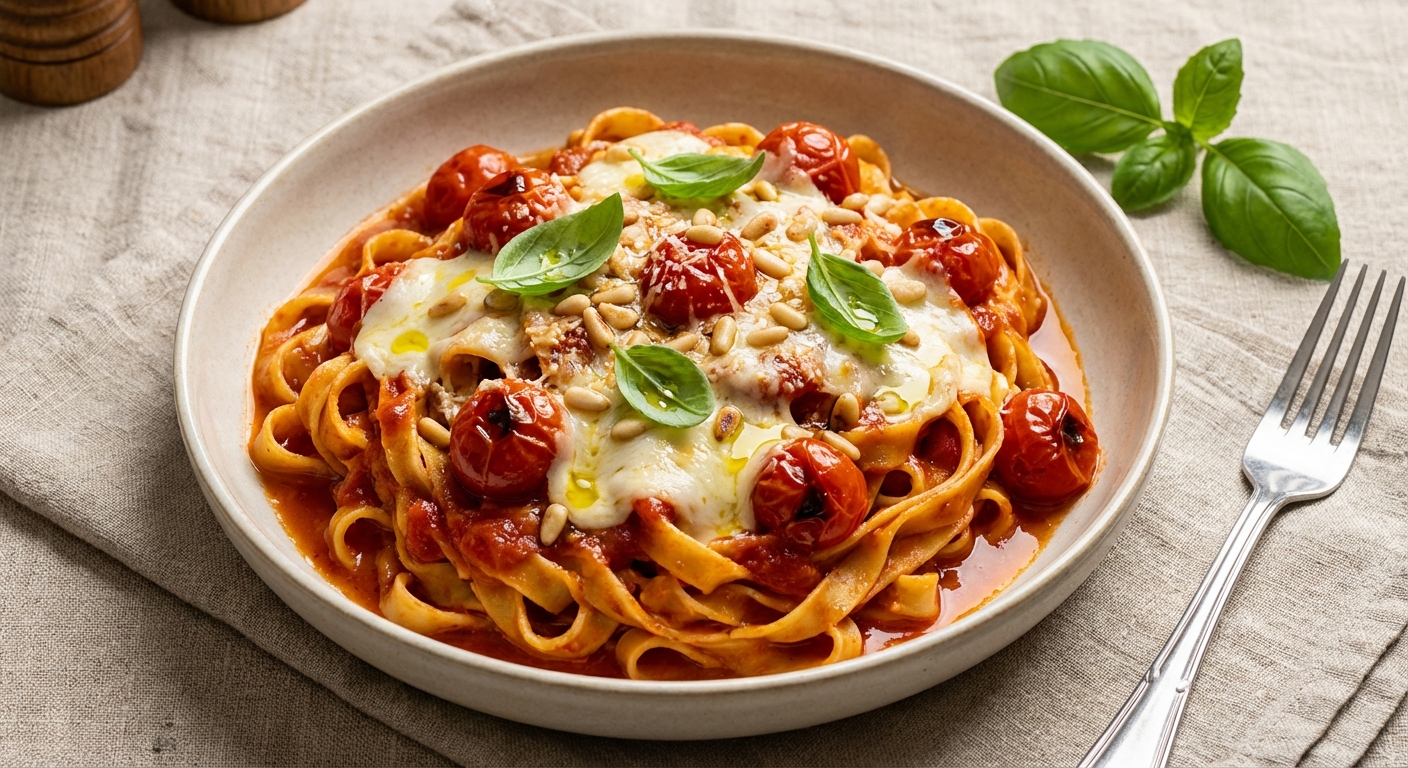
Cheesy Tomato Pasta: a 30-minute vegetarian main course where tender pasta, bright tomatoes, and melted cheese fuse into comforting weeknight magic.
Cheesy Tomato Pasta: a 30-minute vegetarian main course where tender pasta, bright tomatoes, and melted cheese fuse into comforting weeknight magic.
Ready to cook?
Get the complete ingredient list, step-by-step instructions, and nutritional info
View Recipe →On busy weeknights, I reach for a dish that feels like a warm hug and still leaves room for a quick victory. Cheesy Tomato Pasta is that dish for me: 30 minutes from pantry to plate, a simple balance of pantry staples turned into something comforting, bright, and deeply satisfying. I first learned to make a version like this from a friend who swore by keeping a couple of essential items on hand—pasta, ripe tomatoes, a grating of cheese—and letting the rest fall into place. Since then, this recipe has become my go-to “clean the fridge, feed the crowd, and still have energy left for dessert” weekday hero. It’s vegetarian, yes, but its flavors are bold enough to stand up to anything you pair it with—just as a main course should be.
As I chop the tomatoes and set a pot of water to boil, I’m transported to the way a kitchen can become a small stage for memory and invention. The scent of olive oil warming in the pan, a hint of garlic if you’re using it, the garlic’s warmth blooming into the tomatoes as they soften—these are the quiet moments that make cooking feel like storytelling. And there’s something wonderfully democratic about this dish: it welcomes a crowd, a partner, a roommate, or a solo evening as easily as it adapts to a pantry haul. The ingredients themselves tell a short, bright story—pasta for sustenance and bite, tomatoes for sweetness and zing, cheese for that silky, sun-warmed finish. The result is a dish that tastes like you spent more time in the kitchen than you actually did—and that’s exactly the kind of magic I chase when I post new recipes for you.
If you’re curious about the broader world of what you’re cooking, Cheesy Tomato Pasta sits comfortably in the Main Course category, and as a cozy, meat-free offering, it’s right at home in the Vegetarian collection as well. The beauty here is that every bite reminds you that simple ingredients, treated well, can create a complete, satisfying meal without needing a long list of components. It’s a reminder that weeknight cooking doesn’t have to be rushed or bland; with a handful of honest ingredients and a little technique, you can craft something memorable—and you can adapt it to your own kitchen rhythm whenever you need.
Here’s a quick tour of what goes into Cheesy Tomato Pasta and why each component matters. I’ve linked to the ingredient pages so you can learn more about each star product and see how it fits into other recipes you love.
Together, these elements form a harmonious trio: the starch of pasta, the acidity and brightness of tomato, and the comforting, melty goodness of cheese. If you’re cooking with dietary preferences in mind, you can easily adapt by selecting a gluten-free pasta and a dairy-free cheese alternative, though be mindful that some substitutes melt differently and may change the texture slightly. The beauty of this dish lies in its flexibility and its ability to carry you from kitchen-to-table in about the time it takes to pour a glass of wine and set the table.
These small, practical tips will help you get the most out of Cheesy Tomato Pasta and avoid common hiccups.
Experimenting is part of the joy here, and the dish adapts to your kitchen rhythm and pantry. Want to see how these flavors play with other pantry staples? Check out other recipes in the Main Course catalog or explore the Vegetarian collection for more plant-forward meals that come together quickly.
This Cheesy Tomato Pasta shines on its own, but a few thoughtful accompaniments can elevate a weeknight dinner into a more memorable meal. Start with a crisp green salad dressed in a bright vinaigrette to cut the richness of the cheese and to add a refreshing contrast. A side of crusty bread or garlic bread is a classic companion; the bread is perfect for swooping up any leftover sauce and cheese that clings to the pan and the bowl.
If you’re feeding a crowd, consider doubling the recipe and using a large skillet or a pasta pot. The cooking times stay the same, and you’ll find the flavors deepen when the dish sits for a few minutes as you plate. For a lighter version, you can reduce the cheese to 70-80 g and rely more on the tomatoes to carry the dish’s brightness. If you’re aiming for a bit of brightness and color, a handful of chopped fresh basil or parsley added right before serving adds a herbaceous note that lifts the whole plate.
For a little extra richness, finish the dish with a drizzle of extra virgin olive oil or a final grating of cheese right over the top as you serve. The oils and cheese together create a shimmering, luscious finish that makes this simple meal feel indulgent without being heavy. This is the kind of dish that tastes better as it sits, giving the flavors a chance to meld; I often plate it, let it rest for two minutes, and then add another light sprinkle of cheese before the last taste test.
If you’re inspired to branch out, you can use this recipe as a template for other vegetables in tomato-based sauce—think zucchini ribbons, spinach, or mushrooms. The essential technique is the same: sauté aromatics, soften tomatoes, toss with hot pasta, and finish with a generous melt of cheese. Your imagination is the only limit here, and I’ve found that a little confidence in substitutions often yields surprisingly delicious results. And if you’re eager to start creating your own recipes and experiments, I’d love to see what you cook next—your journey begins at our create page.
Yes. Leftovers will keep well in an airtight container in the refrigerator for up to 3 days. When reheating, add a splash of water or milk to loosen the sauce, and reheat gently on the stove or in the microwave, stirring to restore creaminess. If you’ve added any fresh herbs, reheat quickly to preserve their fragrance. The texture of the cheese may change slightly after refrigeration, but the flavors will still sing.
Absolutely. You can prep the tomato sauce up to a day in advance and refrigerate it, then cook the pasta fresh and combine just before serving. Alternatively, cook the pasta ahead of time, cool it, and toss it with the sauce to reheat gently when you’re ready to eat. If you’re entertaining, you can also sauté the tomato base early in the day and finish with cheese just before serving for the best melt and texture.
Gluten-free pasta works beautifully with the same steps. If you’re dairy-free or prefer less cheese, you can use a dairy-free cheese alternative or a splash of olive oil and a squeeze of lemon for brightness. If you want a different cheese profile, try a blend of mozzarella and parmesan for a balance of melt and bite. For canned tomatoes, crushed tomatoes or whole peeled tomatoes work nicely; crush them by hand or with a spoon as they simmer.
Yes. This dish is forgiving and forgiving means flexible. Add sautéed mushrooms, spinach, or zucchini for extra texture. A handful of baby arugula at the end can add a peppery lift. If you like heat, a pinch of chili flakes is a fantastic addition that won’t overwhelm the tomato-and-cheese balance. The key is to maintain balance so the sauce remains lush and the pasta remains the star.
If you’re feeling inspired after reading this, I hope you’ll try making your own twists. It’s the perfect kind of recipe to experiment with, and I’d love to hear how you adapt it in your kitchen. Visit our create page to start your own culinary journey and share your variations with the community.
Remember: the joy of cooking often lies in taking a dependable, comforting template and letting your own taste guide you. Happy cooking, and may your next plate of Cheesy Tomato Pasta feel like a celebration of simple, nourishing ingredients.
For more from this blog, explore related dishes in the Main Course section or browse more vegetarian-friendly options in the Vegetarian collection.
Discover similar recipes you'll love