
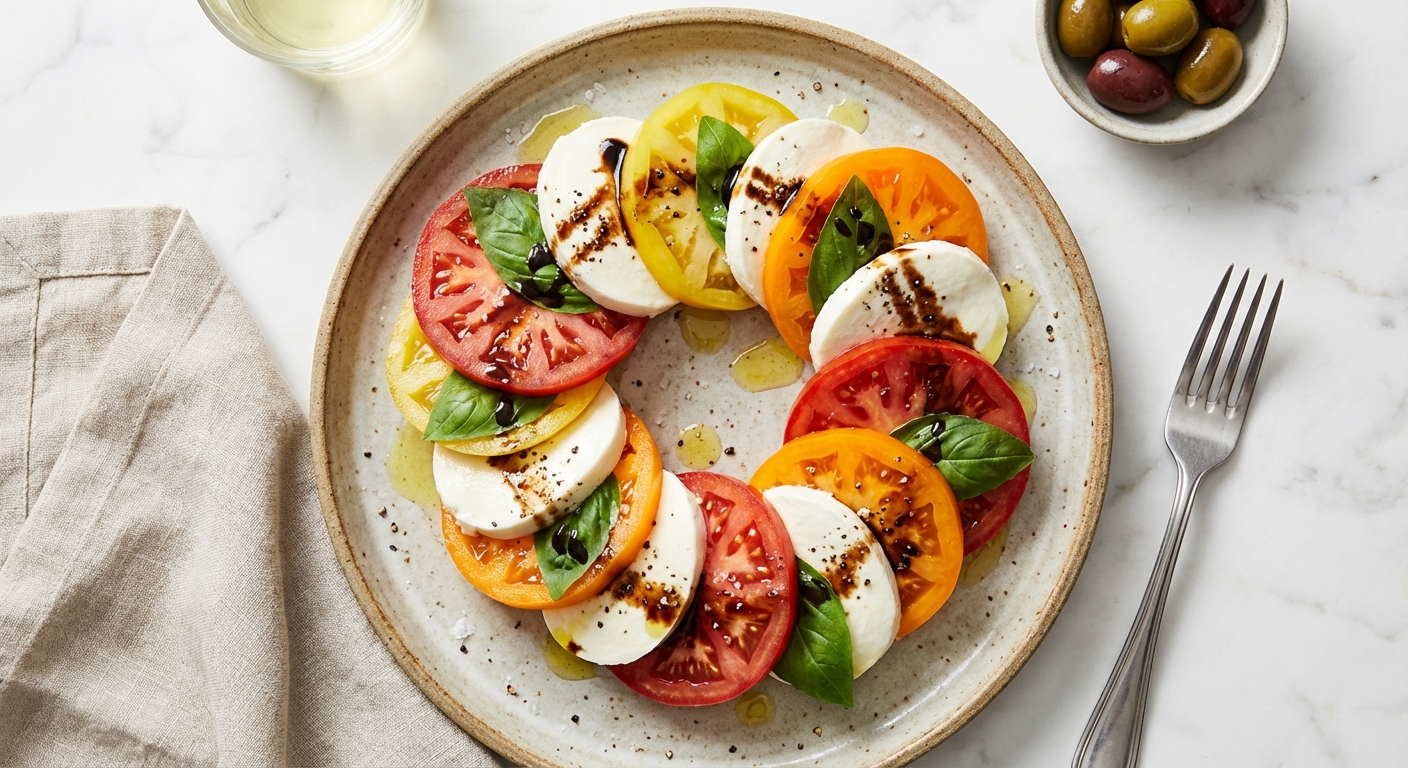
Bright, quick Caprese salad with ripe tomato, creamy mozzarella, and fragrant basil. A drizzle of balsamic and olive oil makes it shine. A vibrant summer starter.
Ready to cook?
View the Full Recipe
Get the complete ingredient list, step-by-step instructions, and nutritional info
View Recipe →Introduction
I’m not exaggerating when I say Caprese Salad saved my July. The first time I tasted this bright, simple dish, the kitchen smelled like a sunlit garden and the afternoon felt like a slow-breath moment at the edge of summer. My friend handed me a plate of glossy red tomato rounds, silken mozzarella that looked like little clouds, and fragrant basil leaves tucked between the layers. A sigh escaped me as the knife slid through the cap, releasing a whisper of sweet juice. It wasn’t just a salad—it was a memory transformed into color, texture, and balance. And the best part? This Caprese comes together in about 10 minutes, which means you can conjure that same memory on a busy weeknight or set it on the table as a vibrant starter for guests in no time at all. Appetizers, salads, and a definite shelf life in vegetarian menus have all been wooed by its simplicity.
In our home, Caprese isn’t just a recipe; it’s a ritual. The tomatoes from the market carry the sun’s warmth in their skins, the mozzarella adds a lush silkiness, and the basil infuses a scent that feels almost Mediterranean even on a rainy day. When I plate this salad, I’m not chasing perfection—I’m embracing quick, honest flavor. There’s something gratifying about arranging layers of tomatoes and cheese in a circular, rhythmical pattern, then finishing with a scatter of basil leaves like confetti. A simple drizzle of balsamic vinegar and olive oil ties everything together, with a pinch of salt and black pepper to wake up the sweetness. It’s a dish that tastes like sunshine, no fancy tricks required.
If you’re new to making Caprese, consider this your friendly invitation: treat it as a moment of balance rather than a complex project. The ingredients do the heavy lifting, and your job is to let their natural flavors shine. I’m sharing not just the recipe, but a little of the mindset that makes this dish sing—using what’s in season, trusting a few high-quality staples, and plating with intention. And yes, you’ll find the recipe falls neatly into the appetizer, salad, and vegetarian categories on the site, which makes it easy to slot into weekly meal plans or a casual dinner party lineup. If you’re curious to explore more, you can always discover related ingredients and ideas here: tomato, mozzarella cheese, fresh basil, balsamic vinegar, and olive oil.
Ingredients Benefits
Caprese is a study in how good ingredients, kept simple, can create something memorable. Each component brings its own voice to the plate, and together they perform a harmony that’s greater than the sum of its parts. Here’s a closer look at what makes this combination so consistently delicious—and why it’s worth choosing top-quality versions of each ingredient.
- Tomato: Juicy and bright, tomato provides natural sweetness, acidity, and a refreshing snap that wakes up the palate. When you pick a tomato that’s deeply red and yielding to a gentle press, you’ll notice more depth of flavor and fewer watery centers. Use ripe, in-season fruit for the best balance with the cheese and basil.
- Mozzarella cheese: The mozzarella’s soft, milky creaminess contrasts beautifully with the tomato’s acidity. Fresh mozzarella (the kind sold in a brine ball) melts gently on your tongue, adding a luxurious mouthfeel without weighing down the dish. If you can, slice it just before serving so it preserves its squishy, delicate texture.
- Fresh basil leaves: Basil delivers an immediate aroma of summer and a peppery, sweet note that brightens the entire plate. The fragrance alone can elevate a simple assembly, making it feel almost magical even before the first bite. Tear or tuck whole leaves between layers to release their essential oils as you bite.
- Balsamic vinegar: A touch of balsamic adds a gentle sweetness and tang that ties the tomato’s acidity to the cheese’s creaminess. If you have a fig or glaze balsamic, a light drizzle can introduce a subtle complexity, but a classic aged balsamic works beautifully, especially when you’re keeping the salad stark and elegant.
- Olive oil: A good extra-virgin olive oil carries fruity, peppery notes that push the salad toward a richer finish. Drizzle just before serving to preserve its fresh, grassy aroma and vivid color. A little olive oil on the plate also helps the flavors cling to the cheese and tomato.
- Salt and pepper: A pinch of salt and a few turns of black pepper awaken the flavors while keeping the dish light. The salt helps tomatoes release their sweetness, while pepper adds a subtle bite that makes the basil and balsamic pop.
In practice, the benefits aren’t just about flavor. This dish is naturally vegetarian and dairy-friendly, making it a versatile option for many menus. It’s quick, adaptable, and delightfully forgiving—perfect for days when you want something bright without a long prep list. If you want to learn more about the core ingredients, you can find deeper dives through these links: tomato, mozzarella cheese, fresh basil, balsamic vinegar, olive oil, salt, and black pepper.
Expert Tips
If you’re aiming for a flawless Caprese, a handful of simple adjustments can take your presentation and flavor to the next level without complicating the process. Think of these as the secret moves that professionals use to keep a classic dish feeling fresh and contemporary.
- Choose the right tomatoes: In peak season, you want tomatoes that are deeply colored, slightly warm to the touch, and aromatic. If you’re shopping early in the day, pick fruit that smells faintly sweet and earthy. For the best texture, avoid tomatoes that feel mealy or overly firm.
- Season simply, not aggressively: A light pinch of salt and a touch of pepper is enough to coax out the flavors. If you’re watching sodium, you can skip extra salt and let the balsamic and olive oil carry the final depth.
- Slice strategy: Aim for uniform rounds about 1/4 inch thick so every bite has a balanced mix of tomato, cheese, and basil. If you’re using large mozzarella balls, slice them to the same thickness as the tomatoes for consistent stacking.
- Keep it fresh: Assemble and serve as soon as possible. Basil’s aroma fades with time, and the cheese can start to soften too much if it sits. If you must prepare ahead, refrigerate components separately and assemble just before serving.
- Drizzle with intention: Finish with a modest line of olive oil and a delicate spray of balsamic vinegar to preserve the brightness. A final light grind of fresh pepper can sharpen the flavors right before serving.
- Plating options: You can arrange slices in a classic alternating ring, or create a modern twist by fan-cutting tomatoes and cheese into overlapping layers for a vibrant, architectural look. Either way, the goal is to showcase the colors and textures—red, white, and green—so your plate feels like a celebration.
For a more seasonal variation, consider swapping in heirloom tomatoes with different hues for a striped visual appeal, or adding a few ribbons of olive oil that have subtle pepper notes to keep the palate surprised without losing the core essence of Caprese. If you’d like to see more iterations of this concept, explore similar ideas in our collection of appetizers and salads on the site, where fresh ingredients meet simple technique to create standout dishes. And if you’re curious about how to translate these ideas into your own kitchen experiments, the door to creativity is wide open at our create page.
Serving Suggestions
This Caprese shines as a light starter, a bright side, or a clean, palate-cleansing bite between courses. Here are a few ways to serve it that keep the dish exciting and appropriate for different occasions.
- Classic caprese platter: Arrange tomato and mozzarella slices in alternating circles or a neat grid, tuck basil between layers, then finish with a drizzle of olive oil and a few drops of balsamic vinegar. Serve immediately with crusty bread or crostini on the side for a textural contrast.
- Heirloom twist: Use a mix of colorful heirloom tomatoes for a dramatic presentation. The varied colors make the dish feel festive and visually striking, perfect for a summer cocktail hour.
- Caprese on a stick: For a party-friendly version, skewer cherry tomatoes, small mozzarella balls, and basil leaves. Spoon or brush on the balsamic-olive oil glaze just before serving to keep everything fresh and easy to eat with one hand.
- Wine-friendly plating: Pair this salad with a light, crisp white wine—think Pinot Grigio, Vermentino, or a dry Sauvignon Blanc. The acidity in the wine mirrors the tomatoes while the cheese mirrors the wine’s body, making each bite feel more expressive.
As you plate, remember that the elegance lies in the restraint. The ingredients themselves are the show—let them speak for themselves with a minimal, thoughtful drizzle. If you’re putting together a menu, this recipe sits nicely under the appetizer heading but also stands firmly on the salad line, and it’s a dependable choice for vegetarian menus, which is why it’s included in our vegetarian repertoire. If you’d like to explore more accompanying dishes or substitutions, feel free to browse more ideas at our recipe hub and remember to start your next experiment at our create page.
FAQ
-
How long does Caprese stay fresh?
Caprese is best enjoyed the moment it’s assembled. The fresh basil and delicate mozzarella begin to lose their vibrant texture and aroma after a short time. If you need to prepare ahead, keep the components separate in the refrigerator and assemble just before serving for the best texture and flavor. Overall, aim to eat this salad within 1 day of preparation for peak quality.
-
Can I make this ahead for a party?
Yes, but with a caveat: assemble the tomato and cheese layers on a platter, then refrigerate. Add the basil, salt, pepper, and balsamic-olive oil drizzle just before guests arrive. If you drizzle too early, the tomatoes can release excess juice and the cheese can begin to soften. For best results, keep the basil fresh and undressed until serving time.
-
What substitutions work well?
Uniformly ripe tomatoes can be swapped with heirloom varieties for color and depth, or with vine-ripened tomatoes for a classic look. If you don’t eat dairy, you can experiment with plant-based mozzarrella alternatives, though the texture will differ. For a caprese-inspired twist, consider adding a few roasted red peppers or a thin slice of cucumber for a refreshing crunch. The essential balance remains: a bright acidity, a creamy element, and a fragrant herb.
-
Can I adjust the flavors for a vinaigrette instead of a plain drizzle?
Absolutely. If you’d like more of a dressed salad, whisk together a teaspoon or two of olive oil with a splash of balsamic vinegar, a pinch of salt, and a crack of black pepper. Toss the tomato and mozzarella lightly in the vinaigrette, then arrange with basil. This creates a cohesive, slightly tangy version of the classic Caprese that still feels light and elegant.
Whether you’re after a quick weeknight starter or a striking bring-to-a-driend plate, Caprese invites you to trust your ingredients and your instincts. And if you’re itching to try more of your own ideas, the best next step is to start creating your very own recipes—visit our create page and let your culinary curiosity lead the way.
Total time: 10 minutes. Yield: serves 2–4 as a starter, more as a light side. If you’re planning a menu, consider pairing this with a crisp white wine or a glass of sparkling water with lemon for a refreshing counterpoint to the fresh, bright flavors.