Introduction
There’s something about a big Dutch oven that makes a weeknight feel like a celebration. The way a kitchen fills with the scent of citrus, smoke, and roasted pork is a gentle nudge that dinner should be memorable even when the clock is ticking. This recipe for Braised Orange‑Chipotle Pork Carnitas with Cilantro‑Lime Rice and Quick‑Pickled Red Cabbage is built for those moments—when you want depth, brightness, and textural contrast in every bite, without spending all afternoon hovering over a stove. It’s a dish that travels well, too: crisped carnitas tucked into warm tortillas, or plated with a generous scoop of herby rice and a tangy cabbage slaw for a dinner party that feels indulgent but approachable.
In this recipe, the pork shoulder is browned like a champion and then braised in a bright orange-tinged liquid spiked with chipotle heat and earthy cumin. The result is meat that pulls apart with a fork, a glaze that clings to every edge, and a smoky-sweet edge that lingers on the palate. The cilantro-lime rice provides a fragrant, fresh counterpoint, while the quick-pickled red cabbage offers crunch and acidity that refreshes the palate between bites. It’s the kind of meal that makes you look forward to leftovers, not because you’re forced to eat them, but because they’re so darn good.
If you’re reading this, you’re likely considering a dish that fits into multiple spheres: Main course, Pork, Mexican, Rice, Weeknight, and Dinner party. And yes—this recipe can wear all those hats. It’s time-honored technique (browning, deglazing, braising) meets bright, modern flavors (orange and chipotle) with a crisp finish. It’s a dish you’ll reach for again, maybe for different occasions, but always with the same satisfiable “wow” at the table. The magic is in the balance: a sweet-tangy braise that still respects the pork’s fat and texture, a rice that remains light and fluffy, and a pickle that punctuates with acidity rather than overwhelm. Ready to cook along with me? Let’s dive into the components, why they work, and how to make this your own in play and flavor balance. If you love this approach, I hope you’ll try crafting your own recipes at create.
Ingredients Benefits
Before we jump into the steps, here’s a closer look at why these ingredients matter and how they work together to deliver a cohesive dish. I’ve linked to each key ingredient so you can explore substitutes, storage tips, or flavor profiles at a glance:
- Pork shoulder (blade), cut into 2–3 cm cubes: The fat and connective tissue in this cut break down slowly, yielding succulent, pull-apart carnitas with a rich mouthfeel.
- Fresh orange juice: Bright, naturally sweet acidity that lightens the braise and provides a citrus lift that pairs beautifully with the smoky chipotle.
- Chipotle peppers in adobo, minced: A smoky, moderate heat that deepens the flavor without overpowering the fruit notes from the orange.
- Ground cumin: Earthy warmth that anchors the dish and echoes the smoky element from the chipotle.
- Garlic: Aromatic foundation in both the braising liquid and the aromatics that perfume the pan.
- Olive oil (for browning): Helps develop the Maillard reaction for that crave-worthy crust on the pork.
- Long‑grain white rice (uncooked): Fluffy grains that absorb the cilantro-lime aroma and contrast nicely with the rich pork.
- Cilantro, chopped: Adds a bright, herbal note that pairs with lime to lift the dish’s overall freshness.
- Fresh lime juice (for rice): A citrusy finish that brightens the rice’s flavor and helps balance the fat in the pork.
- Red cabbage, thinly sliced: The quick pickle folds in crunch and a tangy bite that cuts through richness.
- Apple cider vinegar + brown sugar: Creates a brisk pickle brine that softens the cabbage just enough while imparting sweetness and acidity harmony.
- Scallions (small), thinly sliced: A gentle herbaceous finish that echoes the cilantro in the rice garnish.
- Water: Used to braise and steam the rice, helping the flavors meld and the grains separate.
- Optional: extra oil or butter
As you read through the steps, you’ll notice the emphasis on technique as much as flavor. Drying the pork well before searing is a small detail with a big payoff—it enables a deep, golden crust rather than pale, steamed meat. The braise itself is a balance of fat, citrus, and heat: a little water loosens the meat so it braises gently, while the orange- chipotle mixture infuses the pork with layered sweetness and smoke. And the quick pickle—a tiny, bright interruption to the meal—delivers contrast that makes each bite feel bright and lively.
Expert Tips
These professional-grade tips will help you nail the technique and tailor the dish to your kitchen and tastes.
- Dry the pork thoroughly and season boldly. Pat the cubes dry with paper towels and season liberally with salt and black pepper. This step is essential for Maillard browning, which yields deeply flavored crusts during the initial searing.
- Browning in batches. Work in batches so the pan stays hot and the meat sears rather than steams. Caramelized edges develop flavor compounds that enrich the braise.
- Deglaze to capture fond. After searing, add aromatics and pour in the orange- chipotle mixture, scraping the bottom with a wooden spoon to lift the fond—those browned bits are flavor gold.
- Control the braise, don’t submerge. Use just enough water so the liquid comes about halfway up the pork. Submerging completely can dull the texture; braising slowly keeps the meat tender and juicy.
- Optional glaze intensifies flavor. Reducing the braising liquid into a glaze concentrates the orange- chipotle essence and makes a glossy finish for the final crisping step.
- Two paths to crispy carnitas. Oven method (high heat) delivers even crisping; skillet method gives you crisp, caramelized edges on individual pieces. Choose based on equipment and crowd size.
- Rice technique matters. Rinse the rice until the water runs clear to remove surface starch, simmer gently with a pinch of salt, and let rest off the heat to steam. Fluffy grains are essential to balance the rich pork.
- Pickle with purpose. The quick pickle should be bright and not mushy. If you want more bite, add a touch more salt or a splash of vinegar to taste after the cabbage has sat.
- Make-ahead possibilities. The braised pork can be refrigerated (or even frozen in portions) and crisped later. The rice and pickles can be prepared ahead of time and reheated or refreshed just before serving.
Serving Suggestions
The beauty of this dish is its versatility. I love setting up a little carnitas bar: warm tortillas, a mound of cilantro-lime rice, a bowl of quick-pickled cabbage, and a dish of glossy, crackly pork. Here are a few ideas to make it your own:
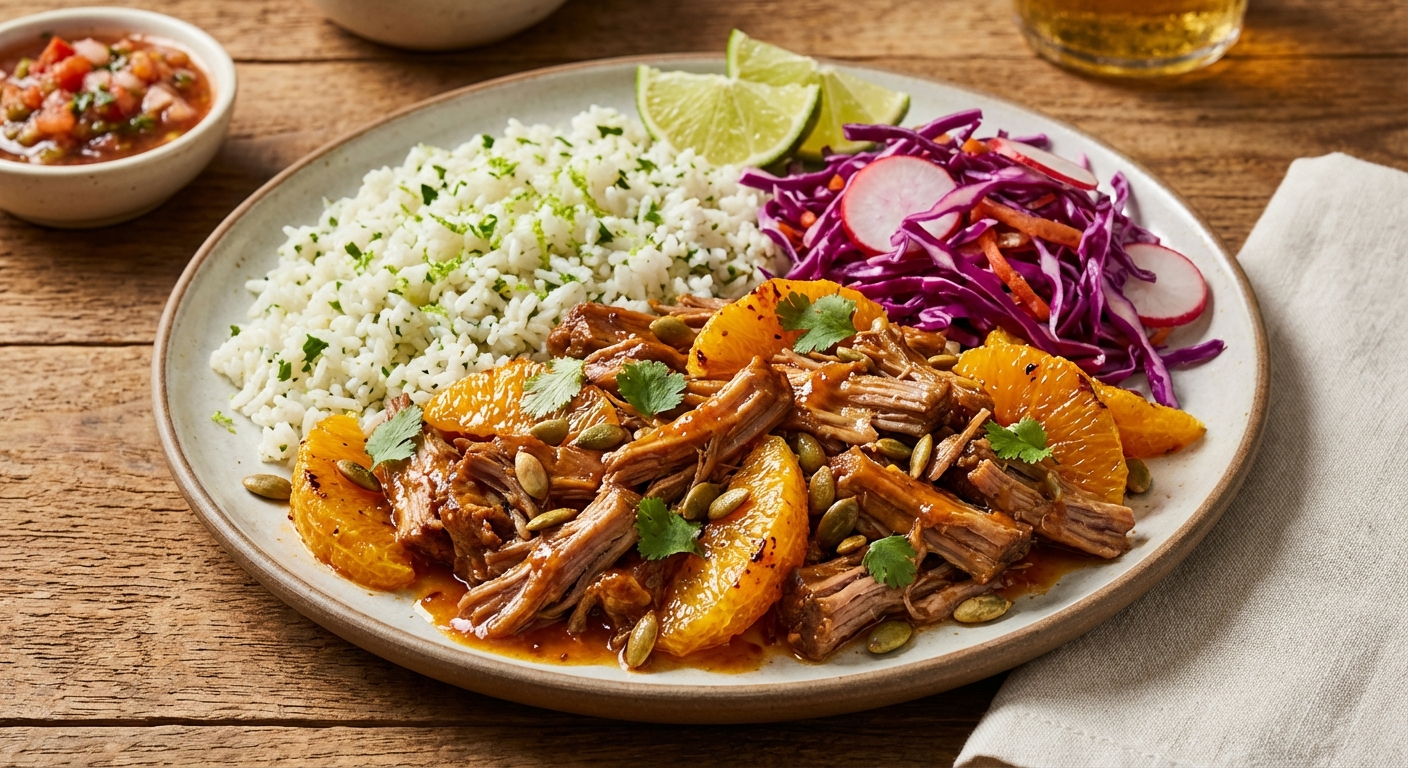
- Start with a generous spoonful of cilantro-lime rice on the plate, lay a few crisped carnitas on top, then drizzle with any leftover reduced glaze. Add a heap of pickled cabbage and finish with fresh cilantro stems and a squeeze of lime.
- A crisp-edged carnitas bite against the soft rice and the crisp-ted cabbage provides the exact contrast you crave in every bite.
- Sprinkle extra chopped cilantro and sliced scallions for a fresh, green aroma that brightens the plate as you pass the lime wedges around the table—perfect for sharing with friends or family.
- Use the carnitas as a filling for tacos, quesadillas, or a main course alongside black beans and roasted vegetables for a colorful, balanced plate that still feels fun and approachable.
If you’re serving this for a party, you’ll find that the complex flavors still retain their charm even when served buffet-style. The vibrant orange juice and chipotle in adobo give a layered heat that doesn’t overwhelm lighter sides like the cilantro-lime rice. The quick-pickle adds a pop of acidity that resets the palate between bites, making the dish feel lighter than its richness would suggest. And, when you’re ready to wind down the evening, there’s nothing quite like a plate that delivers both comfort and brightness in the same mouthful.
Want to try this exact method with a different twist next time? You can explore more about the flavor combinations and technique in related recipes under the Mexican category, or by exploring the ingredients in detail through my pork shoulder and friends like garlic and olive oil. And if you’re inspired to create your own twists, I’d love for you to start your culinary project at create.
FAQ
- How long can I store leftovers? Refrigerated, the braised pork and the pickled cabbage will keep well for 3–4 days. Reheat gently on the stove or in the oven to preserve the pork’s texture, and keep the cilantro-lime rice separate until ready to serve to avoid sogginess. The dish can also be frozen in portions for up to 2–3 months; thaw in the fridge overnight and reheat.
- Can I make this ahead? Yes. You can braise the pork up to 1 day ahead and refrigerate in the braising liquid. Rewarm slowly, then crisp in the oven or skillet as directed. The quick pickle benefits from a bit of time, so you can prepare the cabbage 2–3 hours ahead and keep it chilled; taste and adjust before serving.
- substitutions? If you can’t find chipotle in adobo, you can substitute with a milder smoked paprika plus a touch of hot sauce, though you’ll lose some of the smoky depth. For a non-pork version, chicken thighs work well, but you’ll want to adjust braising time for tenderness. If you’re avoiding alcohol, the orange juice provides moisture and flavor without wine or beer; you can add a splash of water with a bit more citrus zest.
- Can I adjust the heat level? Absolutely. Use fewer chipotle peppers or milder peppers if you’re heat-sensitive. The orange juice base keeps the dish balanced, but you can dial the smoky heat up or down to taste by adjusting the pepper amount during the initial mixing step.
With this recipe, you’re not just cooking a meal; you’re orchestrating textures, colors, and sensations that come together in a single, satisfying moment at the table. If you’re excited to explore more, remember to try your hand at crafting your own recipes at create.