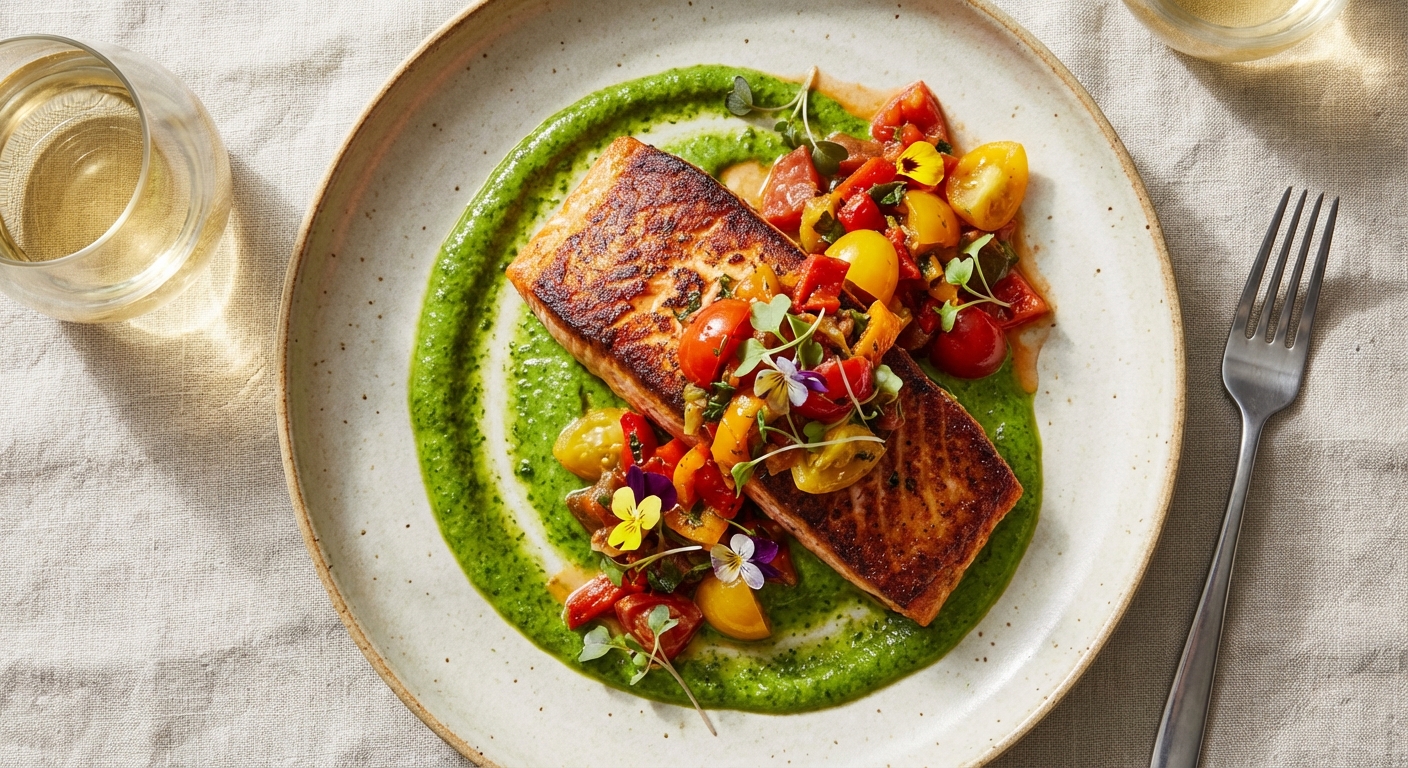
Introduction
Weeknights demand something that feels both special and doable, and this Aji Verde Seared Salmon with Tomato-Pepper Compote hits that sweet spot like a well-timed high-five. I first tasted aji verde in a bustling Peruvian bakery, where a bright, herbaceous sauce danced on the palate alongside something rich and comforting. Here, I’ve translated that bright-green kick into a pan-seared salmon dish that starts with a crackling skin and ends with a kiss of tangy, creamy heat. The tomato-pepper compote brings a sunny sweetness and a touch of acidity that cuts through the richness of the salmon, while the aji verde ties everything together with freshness and bite. It’s a dish that feels celebratory enough for a weekend dinner, yet simple enough to throw together on a busy weeknight. And yes, it’s all possible in roughly 40 minutes, from the first sizzle of the pan to the last drizzle of green sauce over glossy fish.
My favorite part is how the components work in concert. The salmon provides that lush, fatty backbone; the skin, if you choose to cook it skin-side down, becomes crisp, almost lacquered, and acts as a natural shield against overcooking. The tomato-pepper compote is where the dish loosens and brightens: onions sweat until sweet, peppers soften with a hint of roast, and tomatoes reduce into a glossy, slightly chunky glaze. Then the aji verde steps in with color, heat, and a creamy tang from mayo and yogurt, balanced by lime juice and a kiss of olive oil. It’s a balance of temperature and texture—hot pan, cool sauce, warm compote—so every bite feels dynamic. If you’re new to this kind of flavor pairing, you’ll be surprised how the heat from the jalapeño behaves when tempered by cilantro, lime, and a touch of dairy. And if you’re a long-time home cook, you’ll appreciate the way the dish comes together quickly while still feeling deliberate and chef-like.
For me, this recipe is also about confidence-building. The steps are logical: make the sauce first so flavors mingle while you cook, prepare the compote, sear the salmon, rest it, and plate with intention. The technique matters as much as the ingredients—dry the salmon thoroughly to get crisp skin, press it into the pan for even searing, and watch the color climb the sides to gauge doneness. I’ve included tips and substitutions along the way so you can adapt what you have on hand without sacrificing the bright, balanced character of the dish. And if you’re curious about the ingredients themselves, you’ll find quick notes and internal links to key components like salmon, cilantro, jalapeño, garlic, lime, tomatoes, and more—so you can explore beyond the pantry in a click.
Ingredients Benefits
This dish is built from a handful of bright, purposeful ingredients. Each one contributes a distinct layer of flavor, and together they form a harmonious plate that sings with contrast—creamy, crisp, fresh, and slightly smoky. Here’s a quick look at why these ingredients matter, and how they play nice with one another.
- Salmon (skin-on preferred) delivers a succulent, buttery texture with a rich depth of flavor. The skin, when seared properly, becomes crisp and flavorful, adding textural contrast to the tender flesh. For a food-nerd moment, think of it as a built-in crispy element that crisps up as the outside cooks and the inside remains moist. Link to the ingredient page: salmon.
- Cilantro lends a bright, slightly citrusy note that brightens the entire sauce. It’s the fragrance that wakes up the green with a punch of fresh herb. Link to the ingredient page: cilantro.
- Jalapeño or a small hot pepper brings a clean, green heat that foregrounds the aji verde’s character without turning it into a firestorm. If you prefer milder heat, seed it; if you want more kick, leave the seeds in. Link to the ingredient page: jalapeño.
- Garlic adds aromatics that perfume the sauce and the compote; two cloves in the aji verde and two more in the compote deepen the savor. Link to the ingredient page: garlic.
- Lime juice (and a touch of zest if you like) introduces vibrant acidity that lifts every element and helps cut through the richness. Link to the ingredient page: lime.
- Tomatoes and bell pepper form the base of the compote with natural sweetness and a bit of char. Tomatoes break down into a glossy, chunky glaze that’s neither too saucy nor too dry. Link to the ingredient pages: tomatoes, bell pepper.
- Onion sweats slowly to release sweetness without bitterness, creating a caramel-sweet foundation for the compote. Link to the ingredient page: onion.
- Smoked paprika adds a whisper of smoke and depth to the compote, echoing the seared salmon without overpowering it. Link to the ingredient page: smoked paprika.
- Mayonnaise and Greek yogurt form the creamy, tangy backbone of the aji verde. They emulsify into a luscious sauce that clings to the fish without sliding off. Link to the ingredient pages: mayonnaise, Greek yogurt.
- Extra virgin olive oil is used both for the sauce and the sear, adding fruity depth and helping with searing the salmon to a crisp crust. Link to the ingredient page: olive oil.
- Salt and black pepper are the quiet heroes, enhancing every nuance without shouting. Link to the ingredient pages: kosher salt (as a concept), black pepper.
Thanks to the way these elements are layered, you’ll see a path from the bright, herbaceous greens of the aji verde to the warm, glossy tomatoes of the compote. The result is a single-plate experience that feels festive yet approachable—perfect for showing off a little skill without getting overwhelmed by technique.
Expert Tips
Think of these tips as your navigation chart through a successful cook. They’re small moves, but they make a big difference in texture, flavor balance, and overall confidence in the kitchen.
- Prep the sauce first. Making the aji verde before you start the compote gives the flavors time to meld. It also gives you a moment to adjust heat and acidity. If your blender is loud in the morning, you’ll still have warm, fragrant walls of flavor ready when you need them. If you want to learn more about the key ingredients, you can explore cilantro, jalapeño, and garlic for reference as you build your pantry.
- Dry the salmon thoroughly. Patting the fillets dry removes surface moisture so the skin crisps instead of steaming. This is the moment when a low-effort technique delivers a high-impact result. If you see moisture on the skin after patting, gently blot again with a paper towel.
- Give the salmon skin contact time. When you place the fillets skin-side down, press gently for about 10 seconds to reduce cupping and ensure even contact with the hot pan. That brief step pays off in a uniform sear and more predictable doneness.
- Control the heat and doneness. Start with medium-high heat for searing, then flip after 4–5 minutes. A medium doneness target is 125–130°F (52–54°C) for the center—perfect for a fork-tender, slightly translucent middle. If you prefer firmer flesh, push toward 140°F (60°C).
- Keep the compote warm but not boiling. A gentle simmer makes the vegetables tender and glossy, but you don’t want to reduce it so far that it becomes a sauce with no bite. A little residual heat from the pan finishes the fish without drying the compote.
- Make the aji verde adaptable. If you’re sensitive to heat, seed the jalapeño or start with a smaller pepper. If you want more kick, skip the seeds and add a touch of hot sauce at the end. The sauce should feel bright and fresh, not aggressive.
- Make-ahead option. The aji verde sauce can be made a few hours ahead and kept covered in the fridge. It’ll thicken a bit, so whisk in a teaspoon of milk as needed to bring it back to a drizzle-able consistency just before serving. If you want to keep this dairy-forward profile but need dairy-free, try a dairy-free mayo and coconut yogurt option and adjust the lime to taste.
Serving Suggestions
The way you plate this dish can elevate it from a weeknight supper to a dinner party memory. I like to build color and height on the plate so the salmon feels like the star, but the components still shine in their own right.
- Start with a warm bed of the tomato–pepper compote. The compote should be glossy and slightly chunky, not a runny sauce.
- Top with a salmon fillet, skin-side up if you’ve achieved a crisp crust. The contrast between the warm, savory fish and the vibrant, glossy compote is irresistible.
- drizzle 2–3 tablespoons of the aji verde over the top or serve it on the side for guests to tailor their heat. The sauce is creamy and bright, so a little goes a long way.
- Garnish with a cilantro sprig and a lime wedge to echo the freshness in the sauce. A quick squeeze of lime brightens the plate just before serving.
Pair this dish with something that offsets its brightness—soft, fluffy rice, a light quinoa pilaf, or roasted potatoes work beautifully. A simple green salad dressed with a lemon vinaigrette can round out the meal without stealing the spotlight from the salmon. And if you’re feeling extra fancy, a crisp white wine with citrus notes or a pale lager will complement the sauce’s herbal bite and the compote’s sweetness. For more inspiration on side dishes and complementary flavors, explore other recipes in our Delicious homemade collection.
If you’re looking to explore more about the key ingredients used here, you can click through to learn about individual components: salmon, cilantro, jalapeño, garlic, lime, tomatoes, bell pepper, olive oil, mayonnaise, Greek yogurt, smoked paprika.
When you’re ready to discover more recipes that celebrate global flavors with a home-cookable twist, consider starting your next culinary project at our Create page and see what you can conjure up in your own kitchen.
FAQ
- How long can I store the components? The tomato–pepper compote will keep well for up to 2 days in the fridge. The aji verde sauce can be made a day ahead and stored in an airtight container; just whisk in a teaspoon or two of milk to loosen before serving. Tip: store sauces separately from fish until ready to plate to preserve texture.
- Can I make this dish dairy-free? Yes. Use a dairy-free mayonnaise and a dairy-free yogurt alternative, and check that your lime juice and peppers still balance the acidity and heat. The texture will be creamy even without dairy; you may want to adjust with a touch more lime or a splash of plant-based milk if needed.
- What if I don’t have a cast-iron skillet? A heavy nonstick or stainless steel skillet will work. The important part is a hot pan and a generous amount of oil to create that crisp skin. If you’re not sure about doneness, use a thermometer—the target for medium doneness is 125–130°F (52–54°C) in the center.
- How can I tailor the heat level? Seed the jalapeño and start with half the pepper if you’re sensitive to heat. The aji verde can be balanced with more yogurt, mayonnaise, and lime juice to mellow the bite. If you want more heat, leave the seeds in and add an extra dash of jalapeño or a dash of hot sauce at the end.
Ready to dive deeper into the world of home cooking with more recipes like this? Explore more in our category and then start your next kitchen adventure at Create.