
A quick, comforting weeknight main that pairs seared pork with apple–onion chutney, nutty wild rice pilaf, and crisp green beans for a balanced, flavorful plate.
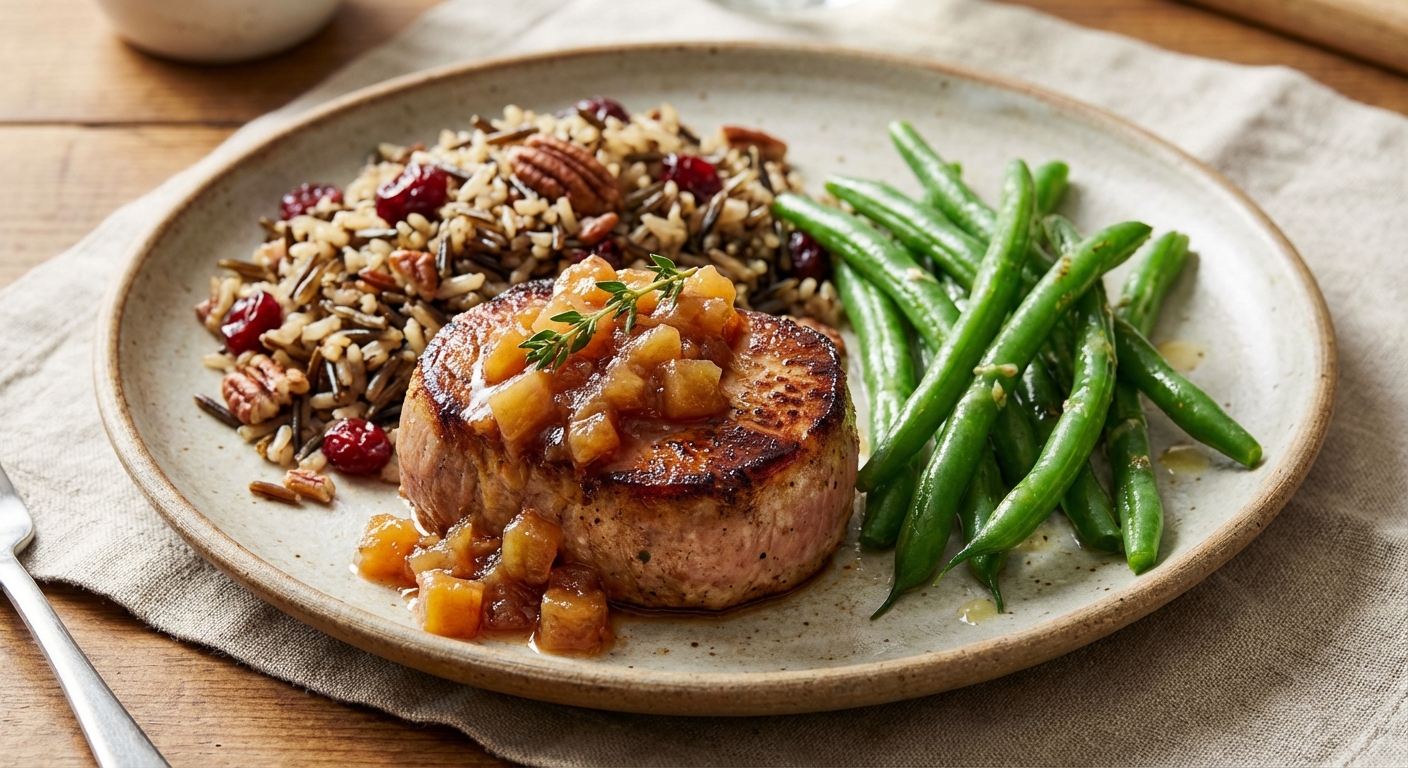
A quick, comforting weeknight main that pairs seared pork with apple–onion chutney, nutty wild rice pilaf, and crisp green beans for a balanced, flavorful plate.
Ready to cook?
Get the complete ingredient list, step-by-step instructions, and nutritional info
View Recipe →In the rhythm of weeknights, I often find myself craving something that feels indulgent without tipping into the land of heavy. This Seared Pork Tenderloin with Apple–Onion Chutney, Wild Rice Pilaf, and Steamed Green Beans hits that sweet spot perfectly. It’s the kind of meal that smells like a celebration but cooks in under an hour, leaving you with time to unwind, set the table, and savor every bite. The name sounds fancy, sure, but the technique is approachable: a well-seasoned pork tenderloin gets a fast, hot sear to lock in juices, then a quick rest while a bright, caramelized chutney comes together. On the side, the wild rice pilaf, perfumed with fresh rosemary, offers a nutty, chewy counterpoint to the tenderness of the meat, while crisp green beans provide a refreshing snap to round out the plate.
What drew me to this dish, year after year, is the way the flavors balance each other so simply. The apples bring gentle sweetness and acidity that cut through the richness of the pork, while the onions contribute depth and a touch of savoriness. The rosemary is the festive whisper here—fragrant and piney, it ties the entire dish together without overpowering the other elements. It’s a reminder that uncomplicated ingredients, treated with a bit of technique, can become something truly special. For those exploring tonight’s menu within the broader food landscape, this recipe sits comfortably in the Main Course category, with a distinctly Pork foundation and a healthy tilt, as found in the Healthy lineup.
And if you’re already planning your next kitchen adventure, think of this dish as a template you can adapt with the seasons. Swap apples for pears in winter, or brighten the chutney with a splash of citrus. The method stays the same, and the result always feels special enough for a date night, but forgiving enough for a busy week. As a blogger who loves to share the stories behind the plates, I’m excited to walk you through why each component works, how to maximize flavor in under 45 minutes, and how you can personalize it to your pantry—and your palate. If you’re curious about the individual ingredients, you can explore them here: pork tenderloin, apple, onion, wild rice, olive oil, green beans, and fresh rosemary.
There’s a lot of science tucked into this simple plate. The ingredients aren’t just flavor vehicles; they contribute nutrients, textures, and aromas that make the dish feel complete. Here’s why these components shine—and how they work together in this 45-minute dinner.
If you’re curious about how this fits into broader meal planning, this dish works beautifully as a main course in a quick weeknight menu, while still feeling special enough for guests. It balances protein, grain, and vegetables in a way that’s satisfying without feeling heavy, which is exactly what many of us are seeking in our week-night cooking. For readers who love to explore with a pantry-driven mindset, you can also browse related recipes in the American category to find other comforting, grounded meals that celebrate ingredients with simple technique.
Perfecting this dish isn’t about fancy equipment or long marinating times; it’s about timing, temperature, and a few small adjustments that elevate the flavor without complicating the process. Here are my best tips, tested in countless weeknights and a handful of weekend test runs, to ensure you nail this 45-minute meal every time.
Want a quick visual reference? Think of the dish as a three-part performance: the seared pork as the main stage, the apple–onion chutney as the supporting act that steals a few scenes, and the wild rice pilaf with rosemary as the steady ensemble that keeps everything grounded. When plated together, they tell a story of contrasts—sweet and savory, crunchy and tender, warm and fresh—without turning into a chaotic medley.
Plating this dish is all about balance and color. A nicely sliced pork tenderloin fan resting atop a bed of wild rice pilaf creates a visually appealing base. Spoon a generous ribbon of apple–onion chutney over the slices so the glaze glints against the meat, and scatter the steamed green beans to the side for a pop of green. The contrast between the light, shiny chutney and the matte, starchy pilaf makes the plate look as good as it tastes.
If you’d like to mix up the texture or add a different dimension, consider a few simple tweaks. A handful of toasted pecans sprinkled over the pilaf add crunch and a toasty note that complements the nutty rice. A squeeze of lemon over the green beans brightens the dish and lifts the natural green flavors, especially if you’re serving this on a warm evening. You can also finish the dish with a light drizzle of olive oil and a crack of black pepper for an extra layer of aroma and shine.
Wine pairing is optional but delightful. A medium-bodied Pinot Noir or a lightly oaked Chardonnay pairs nicely with pork and apples alike, echoing the apple sweetness while keeping the overall profile balanced. If you’re serving this to family or friends who lean toward beer, a Belgian dubbel or a pale ale with a touch of malt can also pair well, bringing out the roast-y notes of the pork and the leafiness of the rosemary.
For a broader exploration of similar flavors and techniques, you can explore related dishes under the American and Main Course categories, or check other pork-forward recipes in the Pork section. If you’re curious about the ingredients themselves, feel free to follow the internal links to each item’s dedicated page to learn more about their origins, health benefits, and pantry tips. And if you’re excited about crafting your own weeknight menus, consider using this dish as a jumping-off point and experiment with your own combinations at Create.
Ready to try something new tonight? Pick your favorite apple variety, grab a handful of rosemary sprigs, and cook along with me. You might also enjoy exploring other recipes in the Main Course collection, or continuing your pork journey in the Pork aisle. And if you’re inspired to compose your own kitchen stories, don’t hesitate to head to Create and start crafting your own recipes today.
Discover similar recipes you'll love