Introduction
Rasgulla has always felt like a warm hug in a bowl—the kind of dessert that sneaks up on you with a soft bounce of spongey paneer and a sweetness that’s elegantly simple. I first tasted rasgulla as a kid, perched on the edge of a sunlit Kolkata street, where the air was perfumed with cardamom, fried snacks, and stories from a dozen aunties trading recipes like precious heirlooms. Fast-forward to today, and I still chase that same feeling in my kitchen: the quiet rhythm of stirring, the careful curdling of milk, the patient shaping of tiny white orbs, and the moment they puff into pillowy spheres in a warm sugar syrup.
This Rasgulla recipe is a friendly, approachable version that honors the traditional method while inviting home cooks to enjoy the process. It clocks in at about 40 minutes from start to finish—enough time for the aroma of milk awakening on the stove, a little patience while the paneer drains, and a satisfying, almost meditative simmer as the syrup thickens and swallows the little dumplings. The result is bright, delicate, and slightly sponged—an ideal sweet to crown a festive meal or to brighten an ordinary afternoon.
If you’re new to making paneer at home, this dish is a gorgeous starting point. You’ll discover how lemon juice behaves as a friendly acid to coax the milk into curds, how kneading the paneer into a silky dough can transform texture, and how the gentle boil in sugar syrup can coax each spherical bite to yield that characteristic "pop" when you press it with your teeth. The beauty of rasgulla lies in its restraint: a few quality ingredients, thoughtful technique, and a syrup that’s neither too thick nor too liquid—just enough to cradle the balls and keep them plush for a few days in the fridge.
As you read, you’ll see how this recipe sits comfortably in a few worlds: Dessert lovers will appreciate its light, airy quality; fans of Indian Sweet traditions will recognize familiar aromatics and textures; and everyone who eats vegetarian meals will appreciate a classic, meat-free indulgence. The core ingredients—Milk, Milkmade (condensed milk), Lemon juice, Sugar, Water, and Cardamom powder—are bathed in a little nostalgia and a lot of careful technique. I’ve written this with both the curious beginner in mind and the seasoned home chef who wants a reliable, delicious outcome.
Ingredients Benefits
Every ingredient in this Rasgulla recipe plays a role beyond just adding sweetness. Understanding why each component is there helps you trust the process and makes the steps feel more meaningful.
-
Milk — The backbone of rasgulla. Whole milk gives you the richest curd, and the texture you want once the paneer is formed. This recipe uses 1 litre, enough to yield tender paneer without turning heavy.
-
Milkmade (Condensed Milk) — A soft insurance policy for kneading. The condensed milk adds a touch of sweetness and helps the paneer dough come together smoothly if it feels a bit dry. It’s optional for the kneading phase, but I find it a gentle nudge toward a glossy, pliable dough.
-
Lemon juice — The acid that curdles the milk, separating curds from whey and giving you the paneer’s clean, fresh curd. You’ll add it gradually to avoid over-curdling and to keep the texture tender.
-
Sugar — The main sweetness in the syrup. Rasgulla drinks in the sugar syrup, so a balanced, not-too-thick syrup is ideal. Here we use 1 1/2 cups, which yields a delicate syrup that coats the balls without drowning them.
-
Water — The solvent for the syrup. A generous four cups ensures the sugar dissolves evenly and the paneer balls have enough room to swim and expand as they cook.
-
Cardamom powder — A whisper of spice to lift the sweetness. Just 1/2 teaspoon adds warmth and fragrance that echo traditional rasgulla aroma without overpowering the delicate dairy notes.
If you’re curious about substitutions, you’ll find that lemon juice can be replaced with a neutral vinegar in a pinch, but the flavor and texture might shift slightly. Always aim for a gentle approach when curdling; too aggressive a curdling can yield crumbly paneer and a less tender rasgulla.
Expert Tips
- Kneading matters. After draining the paneer, knead it for about 10 minutes until the dough is smooth and cohesive. If the dough feels dry or crumbly, add a tablespoon of Milkmade to help bring it together. The goal is a velvety, pliable dough that doesn’t crack when you roll it into balls.
- Shape with care. Divide the dough into equal portions and roll between your palms into smooth, crack-free balls roughly the size of a small golf ball. Cracks or uneven surfaces can cause the rasgulla to puff unevenly in the syrup, so take a moment to polish each ball.
- Create the right curdling environment. When adding lemon juice, do it gradually while stirring consistently. If you add too much acid too quickly, you risk over-curdling and a tougher paneer. Slow, steady curdling yields tender curds that will absorb syrup beautifully.
- Underscore the syrup’s consistency. Bring sugar and water to a boil, then simmer for about 5–6 minutes to form a light syrup. The syrup should be sweet but not heavy—this balance is what makes rasgulla feel delicate rather than cloying.
- Cook covered and give them space. Drop the paneer balls into the syrup in a single layer and cook them covered on medium heat for about 15 minutes. Avoid overcrowding; they need room to expand as they cook and puff up to their signature airy texture.
- Cool gradually in syrup. Let the rasgulla cool slowly in the syrup. This helps them soak up sweetness evenly and keeps their light, tender crumb intact. They can be enjoyed warm or refrigerated for a chilled, refreshing finish.
- Flavor variation with a finish touch. If you like, you can lightly crush a few pistachios or a pinch of saffron into the syrup at the end for a subtle aroma and a splash of color. It’s a nice nod to traditional garnishes without altering the classic feel.
Serving Suggestions
Rasgulla shines on its own, but it also invites a few playful pairings and presentation ideas that make it even more special. The light, cottony texture pairs beautifully with a simple chalice of milk or a cup of strong Indian chai.
- Plain and pristine. Serve chilled or at room temperature in a shallow bowl with a spoonful of the syrup. The liquid should glisten around each ball, inviting a soft squeeze to release the aroma.
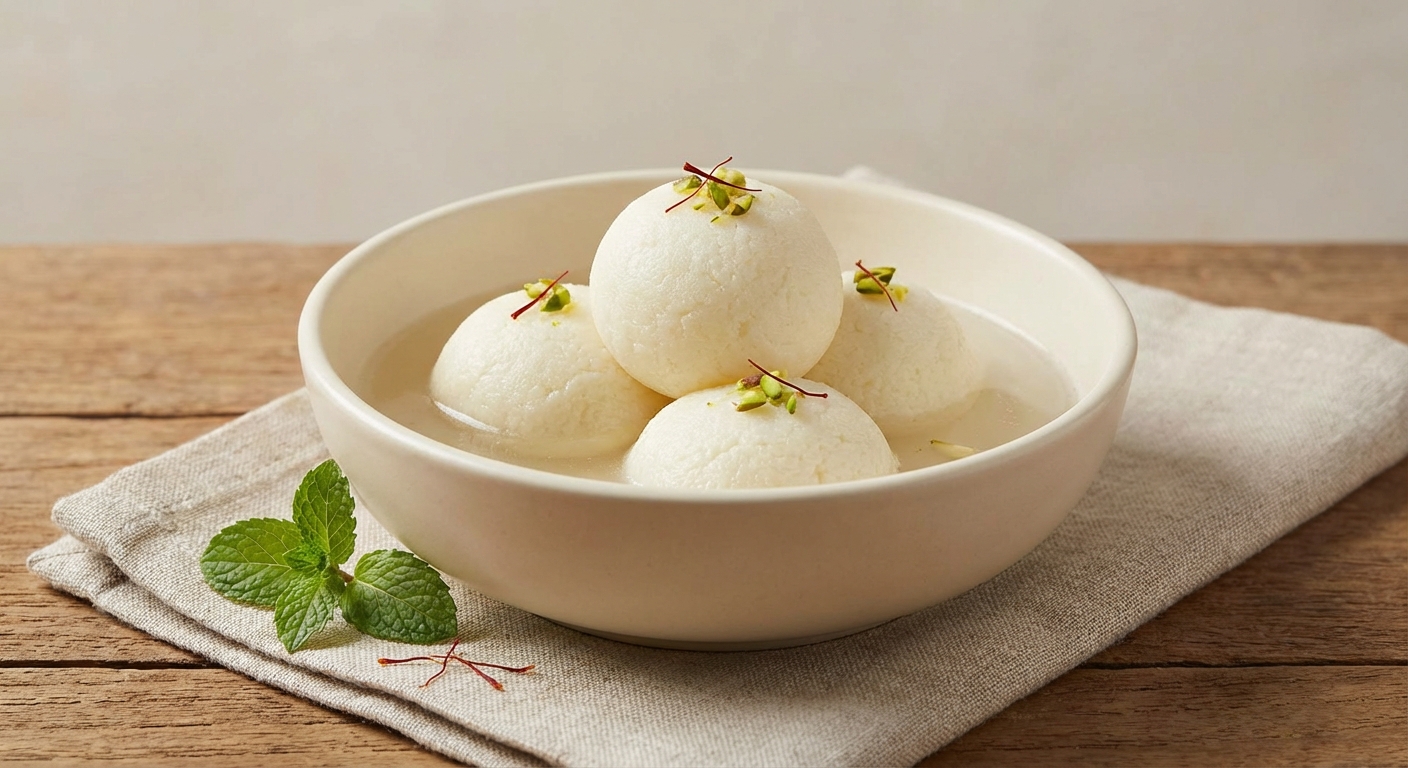
- With saffron and nuts. A touch of saffron strands and crushed pistachios sprinkled over the top elevates the visual appeal and adds a gentle, fragrant note that complements the cardamom.
- In a syrupy pool. Present rasgulla in a larger serving bowl with a little extra syrup. It doubles as a light dessert soup that’s as comforting as it is elegant.
- As a dessert course. Pair rasgulla with a small scoop of kulfi or a dollop of rabri for a more indulgent finale. The contrast between airy rasgulla and thick, creamy rabri creates a decadent winter indulgence.
- For the spice-curious. A light drizzle of rose water or a pinch of ground cardamom powder added to the syrup before simmering can introduce a gentle floral lift for a special occasion.
If you’re sharing with guests, you can present rasgulla in a pretty glass dish with a few fresh mint leaves for a pop of color. It makes a delightful centerpiece for a festive Indian-inspired menu or a sweet treat during a Sunday tea hour.
For further exploration, this dish sits squarely in the Dessert realm, celebrates the heritage of Indian Sweet traditions, and remains friendly for vegetarian kitchens. The balance of dairy, citrus, and spice is timeless, and the method invites you to slow down a little, taste as you go, and take pride in something you can recreate with your own personal touch.
Want to experiment with your own take on rasgulla? I’d love to see what you create. Create your own recipe and share your version with the community.
FAQ
-
Q: How long do rasgullas stay good?
A: When stored in the fridge in their syrup, rasgullas stay best for 2–3 days. The texture remains soft, though it may gradually become denser as the syrup thickens over time. For longer storage, you can freeze individual rasgullas in their syrup, but note that the texture may become slightly spongier on thawing.
-
Q: Can I make this ahead?
A: Yes. You can prepare the paneer and roll the balls a day in advance, then simmer them in syrup when you’re ready to serve. Alternatively, you can steam the paneer briefly to refresh texture before serving if they’ve sat in syrup for a while.
-
Q: Substitutions or variations?
A: Lemon juice is a standard acid for curdling, but you can use white vinegar if needed. For a dairy-free version, you’d be venturing into an entirely different dessert, but if you’d like to keep a similar soft-crumb texture, you could experiment with almond milk curds, though results will vary. Keep the ratio of liquid to acid balanced for best results.
-
Q: Can I freeze rasgulla?
A: Rasgulla can be frozen, but the texture often changes after thawing—the balls can become a bit denser and spongier. If you do freeze, store in the syrup to help retain moisture, and thaw slowly in the fridge before serving.
-
Q: What equipment helps?
A: A heavy-bottomed pot ensures even heating without scorching during the curdling and syrup-making stages. A fine-mesh strainer or a muslin cloth is essential for draining the paneer smoothly. And a gentle hand when turning the balls in the syrup avoids breakage.
Ready to create your own recipe and put your signature on desserts that bring people together? Start here and share your Rasgulla or a new sweet with the community.
CTA: Ready to craft your own recipes? Create your own recipe now.