
Pan-Seared Salmon with Garlic-Lemon Kale and Roasted Carrots & Parsnips is a 30-minute, flavor-packed main course that layers crispy salmon, garlicky greens, and caramelized roots for a healthy, weeknight-friendly dinner.
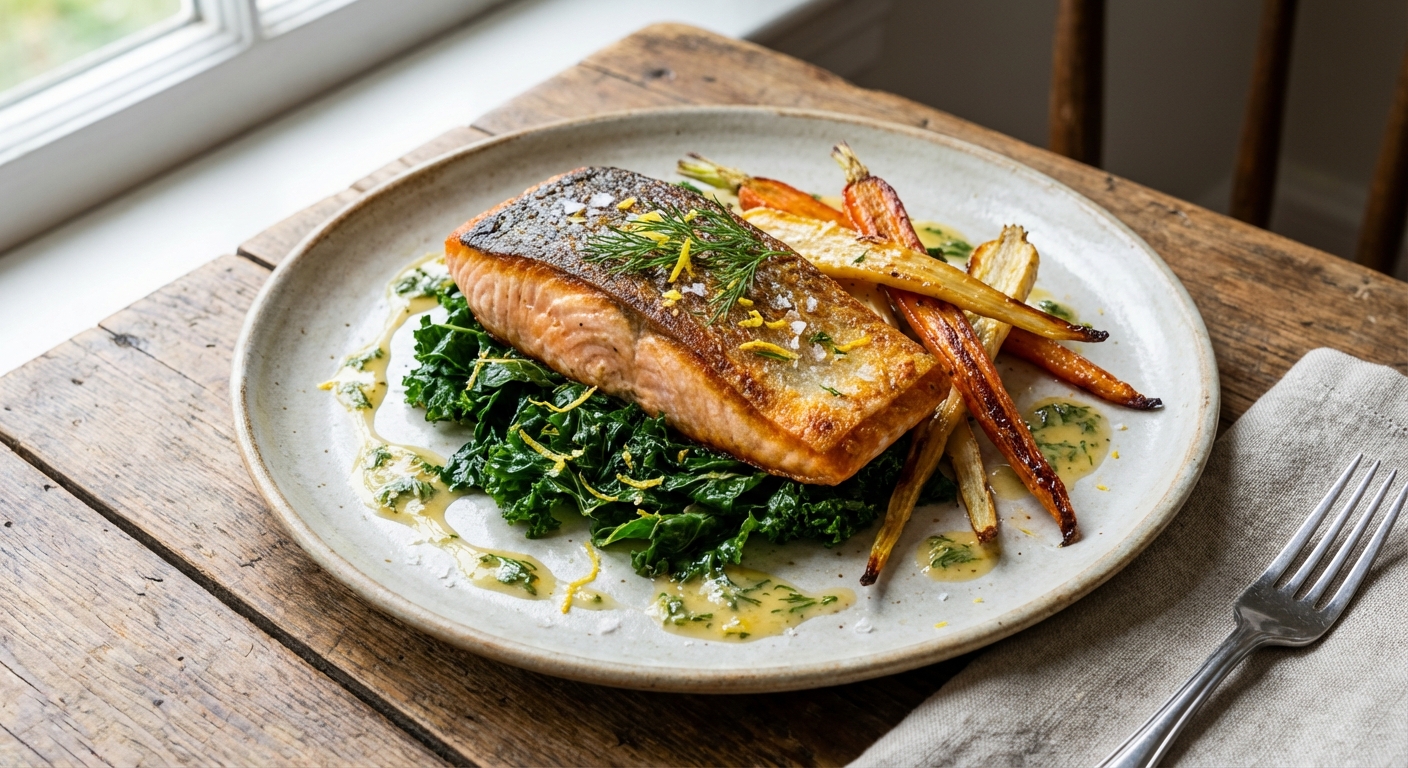
Pan-Seared Salmon with Garlic-Lemon Kale and Roasted Carrots & Parsnips is a 30-minute, flavor-packed main course that layers crispy salmon, garlicky greens, and caramelized roots for a healthy, weeknight-friendly dinner.
Ready to cook?
Get the complete ingredient list, step-by-step instructions, and nutritional info
View Recipe →On busy weeknights, I’m always chasing a meal that feels indulgent without stealing half the evening. This Pan-Seared Salmon with Garlic-Lemon Kale and Roasted Carrots & Parsnips is my answer to that quest: a dish that comes together in 30 minutes or less, delivers restaurant-worthy sizzle, and leaves you feeling nourished and satisfied. There’s something magical about the way a well-seasoned salmon fillet hits the pan—skin side down, it crisps into delicate shards of caramelized perfection while the center stays tender and moist. And when you pair it with garlicky, lemon-bright kale and a bed of roasted roots, you’ve got a meal that feels both comforting and vibrant, all in one skillet. It’s the kind of recipe that makes you smile, think of the kitchen as your favorite destination, and plan to make it again next week. If you’re browsing this post, you’re probably curious about how the flavors interact, the best way to get that salmon crisp, and how to balance the greens with the sweetness of the roasted vegetables. You’re in the right place.
For context, this dish sits comfortably in two of my favorite categories: Main Course and Salad—a reminder that healthy, thoughtfully composed meals can be centered on a protein without sacrificing color, texture, or balance. The salmon anchors the plate as a showpiece, while the garlic-lemon kale acts as a bright, verdant companion to the earthy carrots and parsnips. Together, they echo a seasonal, pantry-friendly approach: a little citrus, a little bite, and a lot of heart. In my kitchen, this has become a go-to for date night at home, a quick Sunday supper, or even a lunch-prep win that reheats without losing its charm. And if you love the idea of cooking your own recipes, you can explore more ideas and share your variations at Create.
Before you assemble, let’s talk about why these ingredients work so well together—and why they’re good for you, too.
Watching the pan for consistency rather than chasing a precise clock is the secret to this dish. Here are my fail-proof tips to help you nail it every time, with a few easy swaps if you don’t have all the exact ingredients on hand.
Presentation matters as much as flavor here. Plate a generous bed of garlic-lemon kale, lay the salmon on top so the skin catches the eye, and surround with a nest of roasted carrots and parsnips. The contrast of textures—crisp skin, tender greens, and caramelized roots—makes each bite interesting. For a little extra brightness, finish with an extra squeeze of lemon juice right before serving. If you’re keeping an eye on your intake or just love a bit of crunch, a light sprinkle of toasted sesame seeds or finely chopped herbs can transform the dish into a multi-sensory experience.
Pairing this with a simple green salad or a grain like quinoa or farro would be a natural extension if you’re feeding a crowd or want more volume. The salmon’s richness is balanced beautifully by the kale’s tang and the root vegetables’ sweetness, so you have room to add a grain or a light vinaigrette without overpowering the star ingredients. For readers curious about the broader world of flavors, think of this dish as a canvas—the lemon and garlic anchor the plate while the kale and roots offer a seasonal, earthy counterpoint. And if you’re looking for even more inspiration, I’ve shared other recipes in the same category as this one: Main Course and Salad.
Want to try this exact recipe with your own twists? Don’t hesitate to experiment—your kitchen, your rules. And if you’re eager to keep exploring, you can start crafting your own personalized recipes today at Create.
Leftovers will stay fresh for up to 3 days when stored in airtight containers in the refrigerator. Reheat gently on the stove or in a low oven to help maintain the salmon’s texture. If you’re worried about greens wilting, you can store components separately and combine just before serving.
Yes. You can roast the carrots and parsnips ahead of time and refrigerate them. The kale can be sautéed quickly just before serving, and the salmon can be seared and rested earlier in the day, then finished off when it’s time to eat. If you’re serving a crowd, consider keeping components in separate warming containers and assembling plates shortly before serving to preserve textures.
If you don’t have salmon, you can substitute trout or a firm white fish like halibut or cod, adjusting cooking times as needed. For greens, spinach or arugula can replace kale in a pinch, though the cooking time will be shorter. If you’re avoiding olive oil, you can use avocado oil or a light neutral oil, but you may lose a touch of the flavor characteristic. For a citrus variation, a pinch of orange or lime zest can be a playful alternative to lemon.
Pat the fillet dry before seasoning to promote a crisp crust. Don’t overcook—the residual heat will finish the salmon once flipped, so aim for a slightly underdone center if you’re unsure. Resting the salmon for a couple of minutes after cooking allows the juices to redistribute, keeping the fish moist and tender when you slice into it.
Discover similar recipes you'll love