Introduction
When I think of a comforting meal that feels like a warm embrace, I think of khichdi. There’s something magical about a pot that comes together with just a few simple ingredients, turning into a silky, flavorful dish that satisfies both body and soul. My first real taste of moong dal khichdi was a kitchen revelation during a monsoon visit to a bustling Indian city. The rain hammered the windows, a kettle hissed on the stove, and the aroma of toasted cumin rose in the air as if the whole kitchen were winking at me. Since then, khichdi has become my go-to without fail: a one-pot wonder that’s friendly to weeknights, infinitely adaptable, and endlessly comforting.
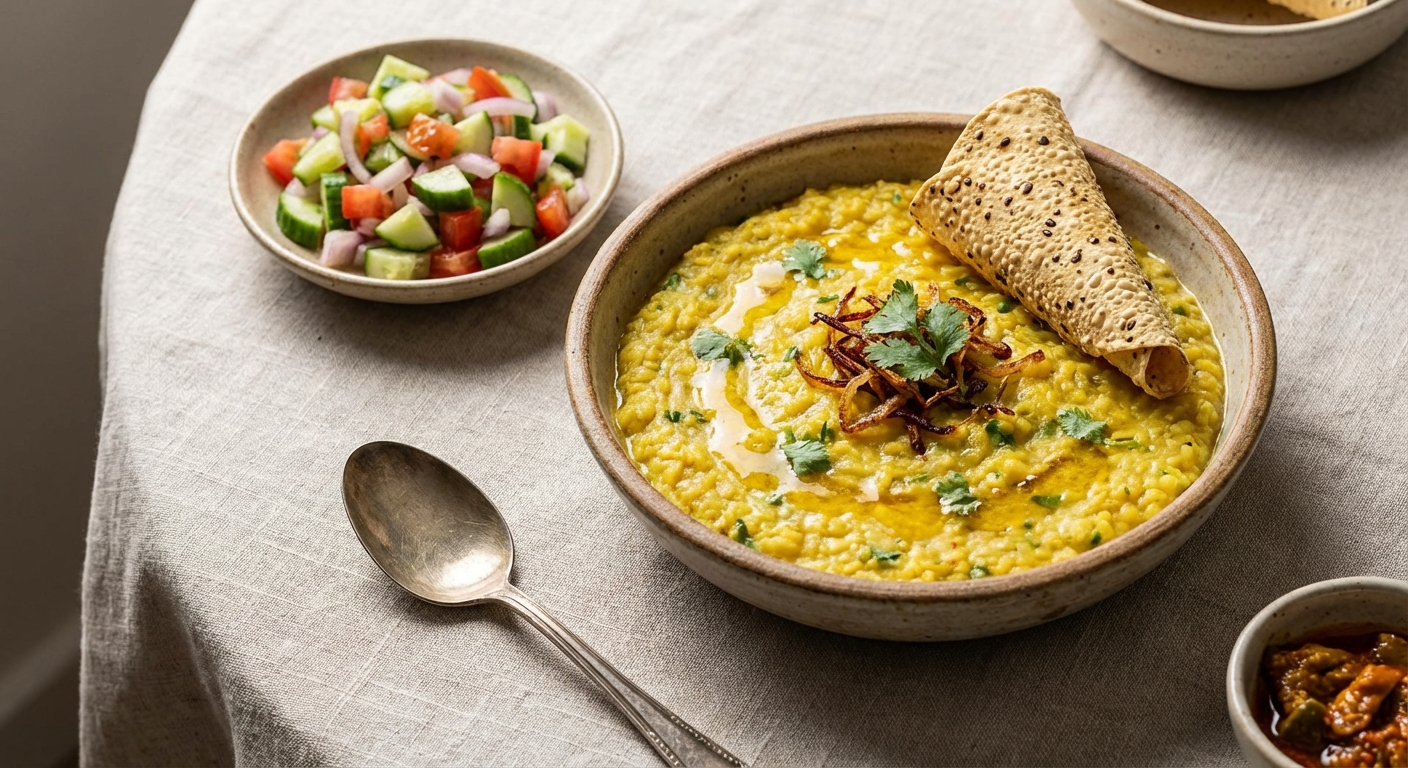
This version, Moong Dal Khichdi with Roasted Papad and Simple Kachumber, keeps the essence of that cozy memory while adding a few practical tweaks for modern cooks. It’s a balanced, vegetarian main course that comes together in about 45 minutes, with the bright crunch of a cucumber-tomato-onion kachumber on the side and the crackly, toasty notes of roasted papad. The dish sits nicely in the Vegetarian category, a stellar Main Course for weeknights, and a beloved staple in Indian cuisine lineups. If you’re new to khichdi, this version is a gentle introduction—soft, comforting, and deeply flavorful—while still letting the individual ingredients shine through.
As the pot burbles away, I’m reminded of the tiny rituals that make Indian cooking so joyful: the way cumin seeds crackle when they hit hot fat, the subtle glow of turmeric, the way ghee lends a warm, nutty finish. The beauty of this recipe lies in its simplicity. You rinse the split yellow moong dal with care (a quick, cleansing ritual for the pantry), then simmer it with basmati rice until everything melts into a tender, cohesive texture. The roasted papad adds a playful crunch, and the kachumber—cool, crisp cucumber with tomato and onion—brings a fresh brightness that keeps the dish from tipping into heavy territory. It’s a complete meal that feels both rustic and refined, a dish you can proudly serve to guests or indulge in solo after a long day.
If you’re craving a dish that’s nourishing, flexible, and deeply satisfying, this khichdi is for you. And if you need a little inspiration beyond this exact recipe, remember that the kitchen is a playground: swap ghee for oil if you prefer, adjust spices to your taste, and play with textures by mashing the khichdi lightly or leaving it as is. Welcome to a cozy bowl of warmth that travels well from stove to table.
Ingredients Benefits
Each component in this Moong Dal Khichdi plays a specific role, not just in flavor but in nutrition and texture. Here’s a quick breakdown of why these ingredients shine together, with quick notes on substitutions or enhancements. For inspiration on each key ingredient, you can explore more details on their individual pages.
- Split yellow moong dal and basmati rice: This pairing creates a soft, creamy base with a gentle bite. Moong dal is high in protein and easy to digest, making it ideal for a comforting, weeknight main course. When cooked together with rice, the dal thickens the mixture beautifully, producing a cohesive khichdi that clings softly to each grain. If you prefer, you can use only dal for a portabale dal khichdi or a more rice-forward version with extra water.
- Ghee or oil: Ghee adds a rich, nutty aroma and a silky mouthfeel that elevates the entire dish. If you want a dairy-free version, substitute with a neutral oil, but consider finishing with a small dot of oil or a splash of warm water to keep the surface glossy.
- Cumin seeds: The first crackle of cumin seeds is a doorway to fragrance. They provide warmth and a subtle earthiness that anchors the dish, especially when tempered in hot ghee.
- Turmeric: A golden thread of color and a gentle warm savor, turmeric also contributes anti-inflammatory notes that many home cooks appreciate in daily meals.
- Roasted papad: Crunchy, salty, and perfectly light, papad adds texture and a playful contrast to the soft khichdi. If you don’t have roasted papad on hand, you can substitute with papdi or crisp fried noodles of papad-ready varieties, or skip it for a gluten-free, papad-free version.
- Cucumber, tomato, onion for the kachumber salad: Fresh vegetables bring color, brightness, and crunch. Cucumbers hydrate and cool the palate, tomatoes add tang, and onions supply a sharp bite that lifts the entire plate. A simple sprinkle of salt, pepper, and a light squeeze of lemon can elevate the salad even further.
As you work through this recipe, think of each component as a note in a simple melody. The dal and rice provide the backbone, cumin and turmeric add warmth, and the papad plus kachumber offer contrasting textures and brightness. The result is a dish that’s both comforting and uplifting—like a kitchen lullaby you can sing to yourself on a busy weeknight.
Expert Tips
These practical tips will help you perfect this khichdi, whether you’re a khichdi novice or a seasoned comfort-food enthusiast. I’ve learned these through trial and error, and they really make a difference in getting that ideal texture and flavor balance.
- Rinse thoroughly: Rinse the split yellow moong dal and basmati rice together in plenty of water until the water runs clear. This removes surface starch and any dust, helping prevent a gluey texture and ensuring each grain cooks evenly. Drain well before cooking.
- Toast the spices lightly: If you have time, let the cumin seed crackle for a few seconds in hot ghee before adding the rice and dal. The aroma will bloom, and you’ll notice a more layered flavor in the finished dish.
- Water ratio and texture: The recipe calls for 5 cups of water. If you prefer a looser khichdi, add a little more water and cook a few minutes longer. For a firmer bite, reduce water by ¼ cup increments and check toward the end of cooking. Stir occasionally to prevent sticking and ensure even cooking.
- Cooking method: A pot on the stovetop works beautifully, but a pressure cooker can cut the time if you’re in a hurry. For a pressure cooker, use 3-4 whistles on medium heat after bringing to a boil and then release pressure naturally.
- Texture adjust: Once cooked, you can mash the khichdi lightly with the back of a spoon for a more uniform texture, or leave it chunkier for more bite. Taste and adjust salt and turmeric as needed—remember that roasted papad adds its own saltiness, so you may want to go easy on salt at first.
- Make it vegan-friendly: If you’re vegan or dairy-free, substitute ghee with neutral oil. You can also finish with a drizzle of sesame oil for a hint of depth, but keep it subtle so it doesn’t overpower the khichdi’s gentle flavors.
- Roasted papad options: If you’re new to roasting papad, you can do it over an open flame, in a hot dry skillet, or in a microwave as per package directions. You want them blistered and crisp, not burnt. Break them into shards so they mingle nicely with the khichdi as you scoop.
As a finishing touch, a small dollop of ghee on top just before serving can take this dish to a new level of aroma and richness. It’s not essential, but it’s a beautiful, comforting flourish that makes guests smile when the steam rises from the bowl.
Serving Suggestions
This khichdi shines as a complete, satisfying meal, but it’s also wonderfully versatile for leftovers or a casual weekend feast. Here are a few ideas to elevate the experience and keep mealtime exciting.
- Classic plating: Serve the hot khichdi in a wide, shallow bowl. Place a roasted papad on the side and scoop a generous spoon of cucumber-tomato-onion kachumber next to it. The contrast of textures—creamy khichdi, crisp papad, and crunchy salad—will keep every bite interesting.
- Flavor boosters: A tiny drizzle of ghee on top (or a few drops of good olive oil if you’re avoiding dairy) infuses aroma. A squeeze of lemon over the kachumber brightens the dish, and a sprinkle of fresh cilantro adds a fresh, herbal lift.
- Make-ahead magic: The khichdi can be gently reheated with a splash of water to loosen it if needed. The flavors deepen after resting for a few hours, making it ideal for a make-ahead lunch or a next-day meal prep option.
- Variations to explore: Swap the kachumber for a quick carrot-cucumber raita if you’re in the mood for something cool and tangy. For a gluten-free crunch, add a handful of roasted peanuts or toasted sesame seeds to the top just before serving.
- Pairing ideas: This dish pairs beautifully with a simple pickle or a mild yogurt-based accompaniment. If you want to keep it vegan, skip yogurt and rely on the papad and kachumber for texture and brightness.
As you settle into the rhythm of cooking this dish, you’ll find it’s a wonderful canvas for your own tweaks. If you’re hungry for more culinary exploration in Vegetarian delights, Main Course options, or more from Indian cuisine, let this khichdi be your gateway. And if you’re inspired to craft your own kitchen experiments, you can start your journey at our create page.
FAQ
Here are a few quick questions people often ask about this dish, along with practical, home-friendly answers.
- How long does moong dal khichdi keep in the fridge? It’ll stay good for about 2-3 days in a sealed container. Reheat gently with a splash of water or stock to restore its creaminess. The flavors will meld a bit more after resting.
- Can I make this in a pressure cooker? Absolutely. After rinsing, combine the dal, rice, water, turmeric, and salt in the cooker. Bring to pressure and cook for 3-4 whistles on medium heat, then let the pressure release naturally. Open, stir, adjust seasoning, and proceed with the serving steps as directed.
- Can I freeze khichdi? It’s best fresh, but you can freeze portions for up to a month. Keep in mind that textures may change a bit after freezing and thawing, and you might need to loosen with a splash of water during reheating.
- substitutions or additions? If you don’t have roasted papad, you can serve with fresh papdi, sev, or a light salad on the side. You can also add a handful of chopped spinach or fresh coriander at the end for extra greens and aroma.
Experiment, savor, and enjoy the gentle, nourishing warmth of this Moong Dal Khichdi with Roasted Papad and Simple Kachumber. It’s a dish made for sharing—the kind of recipe you’ll lean on again and again as the seasons change and your kitchen becomes your favorite home-away-from-home.
Want to keep exploring delicious, cozy Indian recipes? Visit our create page to start sketching your own culinary ideas: Create your own recipes.