
Classic Southern Fried Chicken with a tender buttermilk brine and a double-dredge crust delivers crisp, flavorful comfort for family meals and gatherings.
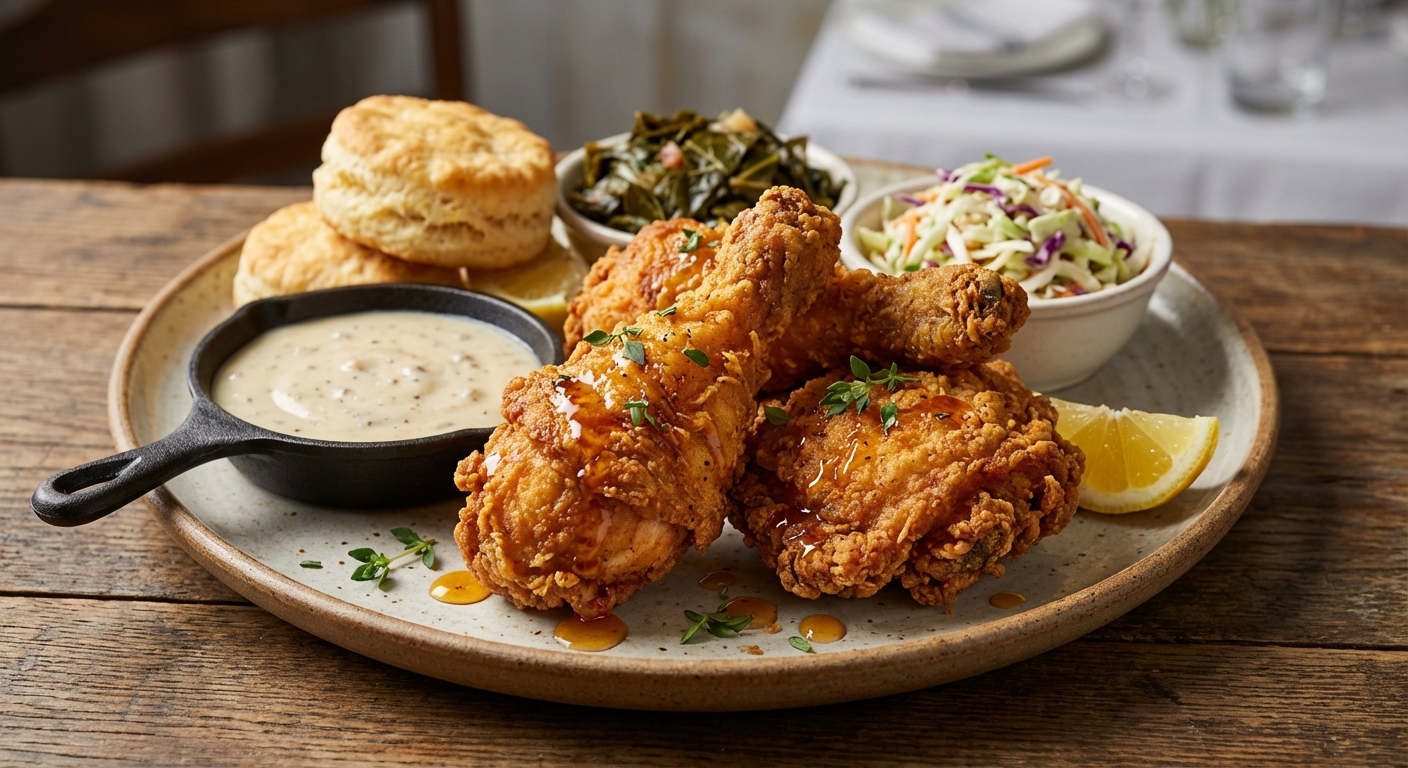
Classic Southern Fried Chicken with a tender buttermilk brine and a double-dredge crust delivers crisp, flavorful comfort for family meals and gatherings.
Ready to cook?
Get the complete ingredient list, step-by-step instructions, and nutritional info
View Recipe →There’s something almost magical about Classic Southern Fried Chicken: the way the night air fills with the scent of paprika and spice, the crust turning a glossy, burnished gold, and the interior staying juicy as a whisper. For many of us, these moments are tied to family tables, Sunday gatherings, and the comfort of a dish that feels both timeless and deeply personal. I first learned this rhythm in a tiny kitchen with a big wooden spoon and a clock that sneezed out steam every time the oil warmed up. My grandmother stood at the stove, a bowl of buttermilk brine and a plate of seasoned flour within reach, while the radio crooned old blues and the kids swore they could smell the magic from outside the screen door. Fast forward to today, and I still chase that same sense of home with every batch I fry. The recipe I’m sharing here—the Classic Southern Fried Chicken—keeps the story alive: a four-pound whole chicken cut into eight pieces, a tangy buttermilk soak, a double-dredge that locks in flavor, and a prudent fry in hot oil until the crust sings and the meat stays tender. It’s not a rushed process; it’s a little ritual that asks for patience and a hat tip to the science of texture. The result is a platter that feels celebratory and intimate at the same time, pairable with the bright crunch of coleslaw or the creamy comfort of mashed potatoes. If you’re new to the method, you’ll notice the steps are methodical but forgiving. The brine, the seasoned flour, the eggs, and the confidence to turn the pieces—slowly, without crowding—until every side glows. It’s a dish that rewards both the careful cook and the one who’s willing to learn, and it sits beautifully under the umbrella of the Delicious homemade category. For quick inspiration and more kitchen adventures, explore other recipes in Delicious homemade as you build your own weeknight lineups or weekend feasts. And if this inspires you to dabble with more ingredients, you’ll find interesting notes on each key component by visiting the ingredient pages linked below. Each piece of the puzzle—from whole chicken to buttermilk to the crisping flour—has a story that can help you cook with confidence.
Before we talk technique, let’s celebrate what makes this dish fulfilling: the ingredients themselves. The beauty of this fried chicken lies in how each element contributes flavor, tenderness, and crunch. Here’s a closer look at the stars of the show, and why they deserve a moment in the spotlight:
In practical terms, these ingredients work together as follows: the buttermilk brine tames the chicken and infuses it with flavor; the seasoned flour creates a crust that has both bite and tenderness; and the egg wash helps the crust adhere while sealing in moisture. The result is a dish that feels deeply nostalgic yet consistently reliable, whether you’re cooking for a family of four or entertaining friends who swear they can’t eat fried food without a side of nostalgia.
Over the years, I’ve learned a few tricks that elevate Classic Southern Fried Chicken from good to great. Here are the practical, chef-adjacent insights that keep this recipe reliable, repeatable, and deliciously forgiving for home cooks of all levels:
Incorporating these tips doesn’t require fancy equipment or a perfect kitchen. It’s about steady technique and a willingness to work with temperatures rather than against them. The payoff is a fried chicken that stays crisp for a comfortable moment after you pull it from the oil, inviting you to earn that first, satisfying bite.
Great fried chicken doesn’t stand alone. It thrives when paired with classic, comforting sides that echo Southern dining traditions while offering their own brightness. Here are some ideas that make a complete, balanced meal—and keep the table lively:
If you’re thinking beyond the plate, this is a dish that shines on a lazy Sunday, a busy weeknight, or a casual dinner with friends who love sharing big, comforting meals. The technique is scalable, too—if you’re feeding a crowd, you can keep your warm batches on a rack in a low oven so the crust stays crisp and the meat stays juicy. And if you’re in the mood to experiment, try small tweaks: a pinch more paprika for color depth, or a splash of hot sauce into the buttermilk brine for a subtle peppery lift. For more kitchen ideas and inspiration, don’t forget to explore other recipes in Delicious homemade.
Ready to make this your own? Start by gathering your ingredients and setting up your mise en place. The joy of home cooking is in the small decisions—the way you season, the pace you set, and the pride you feel when that first bite breaks through a crackling crust. If you’re curious to see how other home cooks are layering flavors and textures, you can also explore more personal stories and recipes at our Create page, where the kitchen becomes a canvas for your own culinary adventures.
How long can I refrigerate the marinating chicken? You can refrigerate the chicken in the buttermilk brine for at least 1 hour and up to overnight for best results. The longer it sits, the more tender and flavorful the meat will be. Just be sure to keep it well-submerged and covered to prevent any surface drying.
Can I make this ahead of time? Yes and no. You can prepare the brine and marinate the chicken ahead of time (up to overnight). The dredging and frying are best done close to serving time for maximum crispness. If you must, you can coat the pieces in the flour mixture and refrigerate them for up to an hour before frying, but for the ultimate crust, fry after the dredging step just before serving.
What substitutions work well if I don’t eat dairy? If you’re avoiding dairy, you can use a dairy-free buttermilk substitute such as milk with a splash of lemon juice or white vinegar to mimic acidity. Expect slight differences in tenderness, but the overall flavor and crust will still be delicious. You can also use a plant-based oil for frying if you prefer. For flavor-building, keep the paprika, garlic powder, onion powder, salt, and pepper in the crust as they provide essential notes to the profile.
Are there oven or air-fryer alternatives? Absolutely. For lighter results, you can air-fry or oven-fry the coated chicken at a higher heat (around 400°F / 205°C) with a light spray of oil to promote crispness. The texture won’t be exactly the same as deep-frying, but the result can be wonderfully close with less oil. If you want a full guide to air-frying or baking fried chicken, I’ll be happy to tailor a method to your equipment and preferred texture.
Looking for more ideas? This is just one chapter in a larger collection of comforting, crowd-pleasing dishes. If you’re curious to explore more recipes and techniques, head to the Create page to start your next culinary journey: create your own recipes.
Discover similar recipes you'll love