
Whip up a creamy, protein-packed Chickpea and Spinach Curry in 25 minutes—filling, comforting, and dairy-free with coconut milk and warm spices.
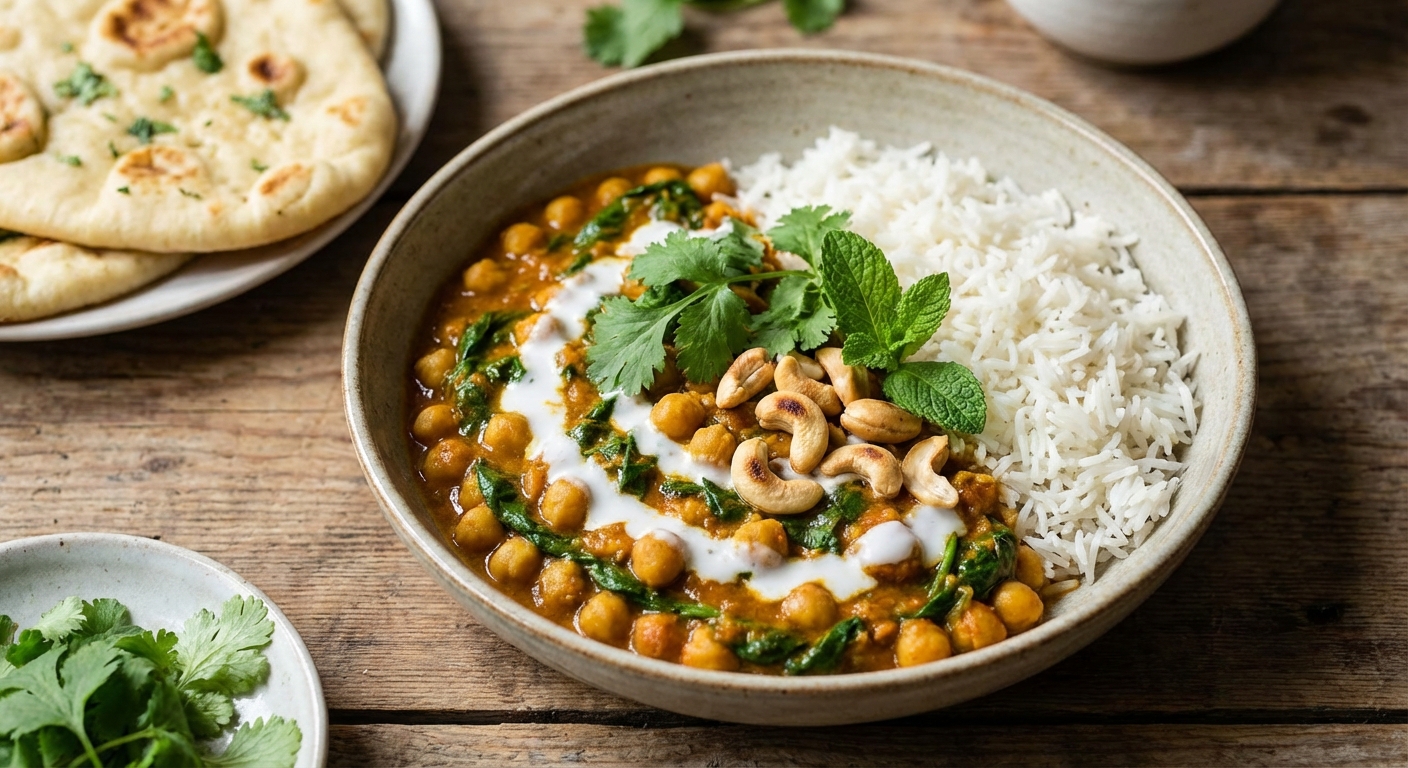
Whip up a creamy, protein-packed Chickpea and Spinach Curry in 25 minutes—filling, comforting, and dairy-free with coconut milk and warm spices.
Ready to cook?
Get the complete ingredient list, step-by-step instructions, and nutritional info
View Recipe →If there’s one weekday supper I can rely on, it’s a bowl that tastes like it simmered all afternoon but somehow comes together in under half an hour. My Chickpea and Spinach Curry is exactly that: a cozy, weeknight-friendly dish that blends pantry staples with bright greens and creamy coconut into a comforting, satisfying main course. The beauty of this curry is its simplicity—nothing fussy, nothing intimidating, just a handful of ingredients doing their best work in harmony. It starts with a familiar sizzle of onion and garlic, travels through warm spices, and finishes with a verdant handful of spinach that wilts into the thick, glossy sauce. And yes, it’s vegetarian, it’s a main course, and it’s designed for quick meals—so it fits neatly into the cadence of busy days.
When I first started cooking from scratch in college, I lived on potlucks and late-night pizza runs. But there was a turning point: a tiny kitchen, a modest grocery budget, and a craving for something nourishing that didn’t require a long shopping list. This curry grew from that need. It’s the kind of dish that feels almost magical in its speed—you set it up, you let the coconut milk do some of the heavy lifting, and you’re rewarded with a fragrant, spoon-friendly meal that tastes like a hug in a bowl. If you’re scanning a cookbook or scrolling through your pantry, you’ll notice this recipe leans on a few stalwarts: canned chickpeas for protein and fiber, spinach for color and vitamins, garlic and onion for depth, and coconut milk for creaminess—all coming together with a pinch of cumin and turmeric for warmth.
As you read through the steps below, you’ll notice how the ingredients practically narrate their own journey. Chickpeas provide substance and heartiness; spinach adds a bright green brightness that lifts the dish; and the coconut milk turns the sauce from soupy to silky, turning the skillet into a tiny, fragrant curryhouse. This isn’t merely a meal; it’s a little ritual—the onions soften, the spices bloom, and the greens soften just enough to melt into the sauce. If you’re feeling overwhelmed by weeknight chaos, remember: you can start this curry and still have a moment to breathe before serving.
If you’re curious about where this dish sits in a broader culinary collection, you’ll find it comfortably nestled under several categories on the site: Vegetarian, Main Course, and Quick Meals. It’s the kind of recipe that respects your time without sacrificing flavor, and it’s a wonderful example of how simple ingredients can become something deeply satisfying. For those who like to personalize, you can imagine this curry as a friendly canvas—swap greens, adjust the spice level, or pair it with something starchy to stretch it into leftovers that taste even better the next day.
This section isn’t just a grocery list; it’s a quick primer on why these 200 g of chickpeas or 100 g of spinach aren’t just fillers in your pan. Each component in this Chickpea and Spinach Curry carries its own healthful notes, and together they create a balanced, nourishing dish.
If you’re curious about how these flavors come together, think of it as a quick flavor framework: a base of onion and garlic, a toasty kiss from cumin, a mellow warmth from turmeric, and a silky, coconut finish that wraps the whole pan in comfort. The salt is adjustable to taste, and the pepper should be a light kiss rather than a heavy punch—seasoning tastes best when you’re aiming for even, balanced flavor rather than a single sharp note.
While the recipe is straightforward, a few pro-tips can help you nail the texture and flavor every time. Here are my go-to strategies for making this Chickpea and Spinach Curry shine, especially when you’re working with a busy schedule.
This curry loves company. The creamy, gently spiced sauce coats every bite, so you want something that can soak up the leftovers and balance the richness. Here are a few serving ideas that pair beautifully with the Chickpea and Spinach Curry.
If you’re curious about combining flavors with confidence, consider building a little “board” around this curry: a bowl of steamed rice or quinoa, a handful of greens, a tangy yogurt or cashew sauce, and a slice of warm flatbread. It becomes not just a dinner, but a little culinary ritual that invites you to slow down, even on a rushed evening.
Here are a few quick answers to common questions that come up when folks try this recipe for the first time. If you have a question that isn’t covered here, drop a comment or reach out—I’m always happy to chat about tweaks and ideas.
If you’re inspired to experiment, try pairing this curry with different greens or legumes, or adjust the spice profile to suit your pantry and palate. The joy of a dish like this is how forgiving it is while still delivering punchy flavor and comfort in every bite.
Ready to start crafting more flavors at home? I’d love to see what you create. Dive into your kitchen, gather a few humble ingredients, and let this curry be your springboard into a world of quick, flavorful, plant-forward meals. And if you’re feeling adventurous, check out more of my ideas or start building your own recipe collection by visiting the Create page.
Discover similar recipes you'll love