Introduction
There’s something exhilarating about a recipe that looks simple on paper but fills a kitchen with color, steam, and a little whisper of nostalgia. Beef and Vegetable Stir-Fry with Rice is exactly that kind of dish for me. It began as a weeknight staple in a tiny apartment kitchen where every minute counted and every pan had to earn its keep. My family didn’t want to wait around while a sauce simmered for hours; they wanted the sizzle, the bright aroma of onions and peppers, and a comforting bowl of rice at the end of it all. This recipe grew from those need-to-have-it-now weeknights into a go-to that still feels like a hug in a skillet. It’s not just a meal; it’s a little ritual—mise en place, the sound of the beef browning, and the way the vegetables stay crisp enough to remind you there’s a world beyond mushy dinners. And yes, it’s a complete one-pan wonder, which means less cleanup and more time around the table with the people you love.
If you’re new to this dish, I’ll tell you a secret: the heart of the flavor comes from how you manage color, texture, and balance. The beef browns quickly, taking on those toasty notes that pair perfectly with the sweetness of onions and peppers. The potatoes? They’re not just filler; when browned and tender, they add a comforting starchiness that keeps the stir-fry rooted and satisfying. As for the rice, I treat it as the blank canvas that soaks up those savory juices without turning into a stodgy afterthought. This combination—beef, vegetables, and a fluffy base of rice—feels like a warm welcome home, every time you plate it. And because it sits under the umbrella of several family-friendly categories—Main Course, Family Meal, and Stir-Fry—it often becomes the dish that travels from weeknight supper to Sunday lunch with easily embraced leftovers.
Ingredients Benefits
In this section I’m not just listing what you need; I’m sharing why each element matters and how it contributes to the overall harmony of the dish. I’ve linked to some of the core ingredients so you can dive deeper into their flavors, origins, and how to shop for them. Think of this as a quick tour of flavor chemistry you can carry into any kitchen experiment.
- Beef (1.5 pounds) — A sturdy protein that browns beautifully, giving the dish a satisfying bite and a savory, slightly caramelly finish. Choose a lean cut like sirloin or flank for a quicker cook and a tender finish; trim excess fat if you’re aiming for a lighter meal.
- Onions (2 medium) — The baseline sweetness in this stir-fry. When sautéed until translucent, they release aromatics that form the backbone of the sauce’s flavor pyramid. They also provide a gentle bite that contrasts nicely with the soft potatoes and crisp peppers.
- Peppers (2 medium) — Colorful bells bring brightness and a crisp-tresh texture that holds up against higher heat. The natural sugars in peppers caramelize slightly, delivering a glossy glaze that makes every bite lively.
- Tomatoes (4 medium) — They introduce a tangy, slightly acidic counterpoint that brightens the dish and keeps the overall profile balanced as the beef browns. If you love a little extra sweetness, opt for a ripe, juicy variety.
- Potatoes (2 medium) — A comforting starch that browns beautifully in the skillet and becomes creamy inside. They anchor the dish and pair beautifully with the beef’s savoriness.
- Oil (4 tablespoons) — The medium that carries heat and carries the browning process forward. A neutral oil works best for the initial brown, while you can switch to a higher-heat oil if needed for a crisper finish.
- Rice (3 cups) — The stage for the entire dish. Fluffy, well-cooked rice soaks up the juices and gives each scoop a satisfying balance of starch and sauce.
- Salt and Pepper (to taste) — Season layers throughout the process so every component shines without overpowering the dish. Salt helps draw out natural flavors, while pepper adds a gentle kick that warms the palate.
If you’re curious about substitutions, this is a forgiving recipe. You can swap in chicken for beef, or use cauliflower florets for a lighter, vegetarian twist (though keep in mind the cooking times will shift). The goal is to retain that balance between the tender, caramelized protein, the crisp vegetables, and the comforting starch of rice. And as always, use what’s seasonal and what your pantry invites you to use—this dish loves a little improv without losing its core identity.
Expert Tips
After years of testing this recipe in my own kitchen, a few pro tips emerged that can elevate your result without complicating your process. These are the kinds of moves that turn a good weeknight dinner into something you actively look forward to every time you make it.
- Prep mise en place in advance: Slice onions, peppers, and tomatoes, dice potatoes, and measure spices before you start cooking. This keeps the pace brisk and the heat steady, which is essential for a stir-fry where timing is everything. It also helps you stay present with the sizzle rather than chasing ingredients around the cutting board.
- Brown in stages for texture: Start with the potatoes until they’re browned and tender. Then remove and set aside. The same pan will brown the beef and keep the fond (the tasty browned bits) intact for later integration with the vegetables. This layering creates depth in flavor and ensures each component shines on its own before they merge.
- Manage moisture and heat: If your skillet seems crowded or the vegetables release a lot of liquid, momentarily crank the heat to high to evaporate moisture and preserve crisp-tender textures. A little dry heat at the end helps re-brown leftovers before the final toss together.
- Season in layers: A touch of salt at the potato stage, another pinch with the vegetables, and a final taste at the end ensures you’re building flavor rather than stacking salt on top of bland ingredients. Remember, you can always adjust salt at the end if needed.
- Rice timing matters: Start the rice at the beginning so it’s done as the vegetables and beef finish. If your rice is ready early, keep it warm covered to avoid drying out. The goal is fluffy grains that separate easily with a fork, not clumped starches.
- Oil choice and health tweaks: If you’re watching calories, you can reduce oil to 2–3 tablespoons and compensate with a splash of water or broth to deglaze and lift the fond. The dish will still carry a vibrant, savory punch.
- Make-ahead and leftovers: The beauty of this dish is that it reheats well. Store in an airtight container for up to 3 days. Reheat gently on the stove with a splash of water if needed to loosen any clinging sauce and maintain the texture of the vegetables.
Serving Suggestions
How you plate and serve this dish can elevate it from weeknight supper to a dinner party favorite, especially when you keep the presentation vibrant and balanced. Here are a few ideas to consider as you bring the skillet to the table.
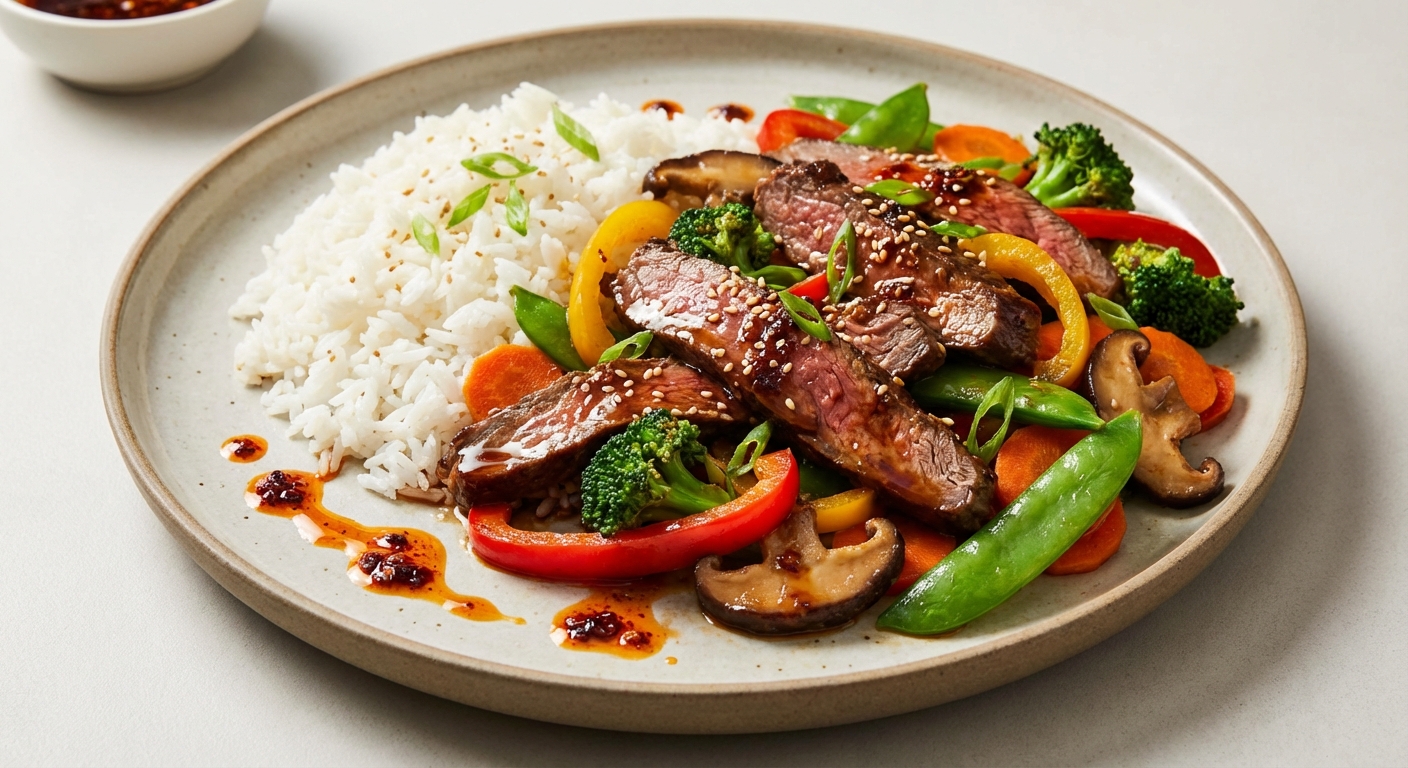
- Rice as a canvas: Fluff the rice with a fork, then mound it on plates. Spoon the beef and vegetable stir-fry over the top, ensuring each plate gets an even distribution of meat, potatoes, and the colorful peppers. The visual contrast—brown beef, bright peppers, and pale rice—is as inviting as the aroma.
- Garnishes add personality: A scatter of sliced green onions, sesame seeds, or a light drizzle of soy sauce can transform the dish’s final impression without overwhelming the flavors you’ve built.
- Complementary sides: A crisp cucumber salad with a tangy vinaigrette or a simple garlic sautéed greens side can add a refreshing balance to the richness of the stir-fry. This dish sits well within Main Course fare and pairs beautifully with light accompaniments to keep the meal lively.
- Make it your own with a twist: If you crave a touch of heat, add a pinch of red pepper flakes or a splash of chili oil. For a sweeter note, a tiny drizzle of hoisin sauce mixed into the sauce at the end can create a glossy finish and a hint of caramelized sweetness.
Whether you’re cooking for a family of four or a single hungry night owl, this dish scales beautifully. It’s the kind of recipe that invites you to play—swap peppers for zucchini, trade potatoes for sweet potato chunks, or swap in a different grain like quinoa if you’re feeling adventurous. The heart of the recipe—the seared beef, the crisp vegetables, and the comforting bed of rice—remains intact no matter how you customize it. If you’re exploring more in the same vein, this dish sits nicely alongside other Stir-Fry favorites and complementaries in the kitchen bookshelf of your culinary routine.
FAQ
- Can I make this ahead or meal-prep it? Yes. You can prep all the ingredients the night before and store them in the fridge. When you’re ready to cook, you’ll only need to execute the steps, which makes a 45-minute dinner feel like a fast sprint—no last-minute chopping chaos. The rice can be cooked ahead and reheated, though you may want to re-fluff it with a little steam to restore its light texture.
- What substitutions work well? If you’d like to swap the beef, you can use chicken breast or thigh strips. For a vegetarian version, you can add extra vegetables (like broccoli, mushrooms, or baby corn) and use a tofu substitute or tempeh for protein. Keep in mind cooking times and textures—protein and vegetables may need adjustment to stay crisp-tresh and seasoned to your taste.
- How should I store leftovers? Store cooled leftovers in an airtight container in the refrigerator for up to 3 days. Reheat gently on the stove with a splash of water or broth to rehydrate the rice and re-waken the vegetables’ crispness. For longer storage, you can freeze the beef and vegetables in a freezer-safe container for up to 2 months, though rice texture may change after freezing and thawing.
- Is there a recommended spice balance? The recipe uses simple salt and pepper to let the natural flavors shine. If you like a bolder profile, introduce a light splash of soy sauce or a tiny amount of ginger and garlic paste at the sauté stage. Always start small, taste, and adjust to your preference—this keeps the dish balanced without overshadowing the beef’s savoriness.
If you’re inspired by this approach to weeknight cooking, don’t stop here. Experiment with different combinations, keep an eye on texture, and remember that the best meals often come from a little curiosity and a willingness to adapt. And if you’re ready to keep exploring, I encourage you to share your own twists and creations—your kitchen stories could become future posts for others to savor. For more ideas, tips, and a chance to craft your own recipes, head over to Create and start building your personal collection of weeknight wonders.
Would you like to see more dishes like this, with the same balance of protein, vegetables, and a comforting starch? Explore related recipes in the Main Course catalog, or browse through other Stir-Fry favorites to keep your dinner repertoire fresh and exciting.
Now it’s your turn. Gather your ingredients, heat your skillet, and let the kitchen become your own comforting stage. This Beef and Vegetable Stir-Fry with Rice isn’t just a meal; it’s a reminder that home is where the skillet sizzles and people gather to share a good plate and a good story.
Ready to create your own variations and codify your own family favorites? Start your culinary journey today at /create.